Accessible contrast is monitored before applying custom colors.
Media
Content-first chronological workstream.
Review what LCS selected, why it matters, when it is scheduled, and the article itself without leaving the workstream.
Next operational contentWhat Happens During a Hypnosis Session in Dayton? Tue, Aug 25, 2026, 10:00 AM EDT Tue, Aug 25, 2026, 10:00 AM EDTEverleigh HypnosisWhat Happens During a Hypnosis Session in Dayton?A hypnosis session at Everleigh Hypnosis should feel structured, calm, and cooperative. Dayton-area clients can expect goal clarification, questions before the guided portion, focused attention or relaxation, suggestions connected to the goal, and practical next steps afterward.needs-owner-review LCS FBIGGBPView ArticleEditSchedule / RescheduleHoldExpand Article
Why LCS Chose This
A hypnosis session at Everleigh Hypnosis should feel structured, calm, and cooperative. Dayton-area clients can expect goal clarification, questions before the guided portion, focused attention or relaxation, suggestions connected to the goal, and practical next steps afterward.
A hypnosis session at Everleigh Hypnosis should feel structured, calm, and cooperative. Dayton-area clients can expect goal clarification, questions before the guided portion, focused attention or relaxation, suggestions connected to the goal, and practical next steps afterward.
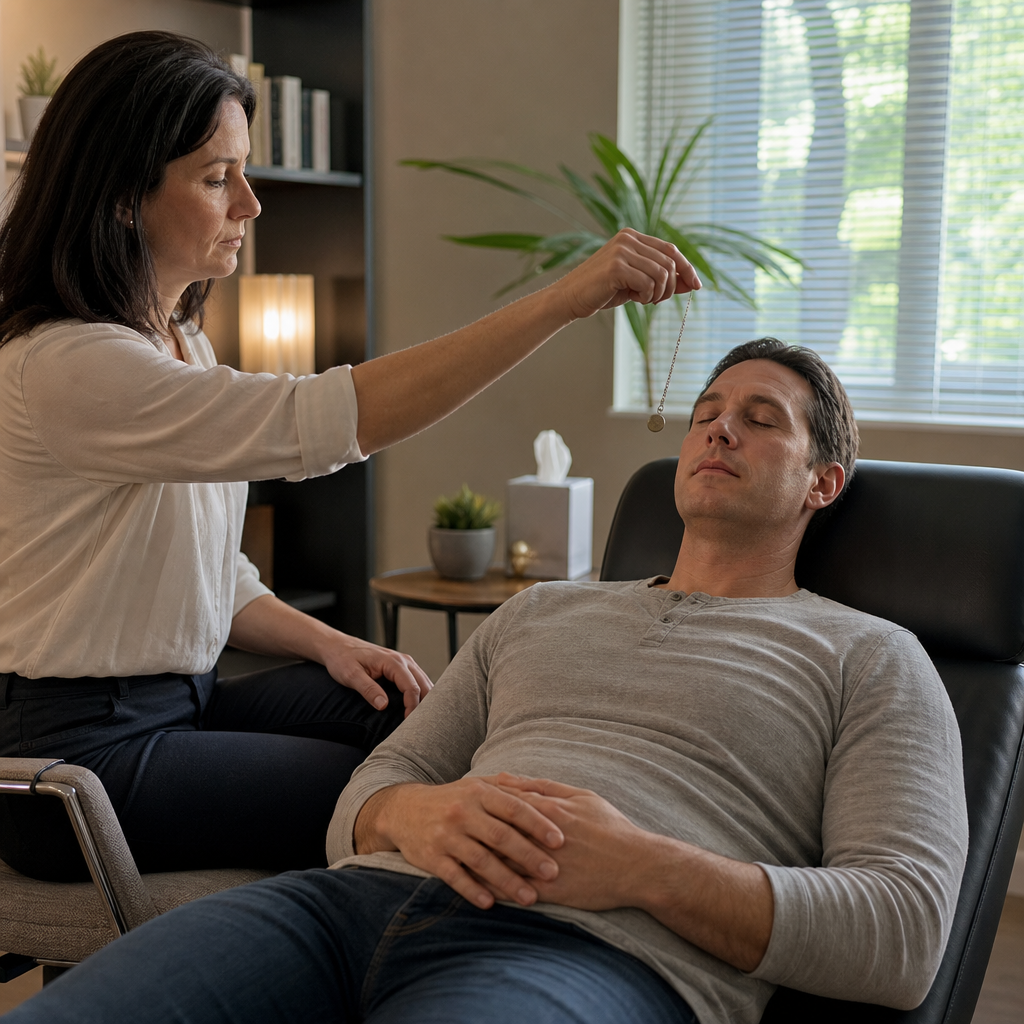
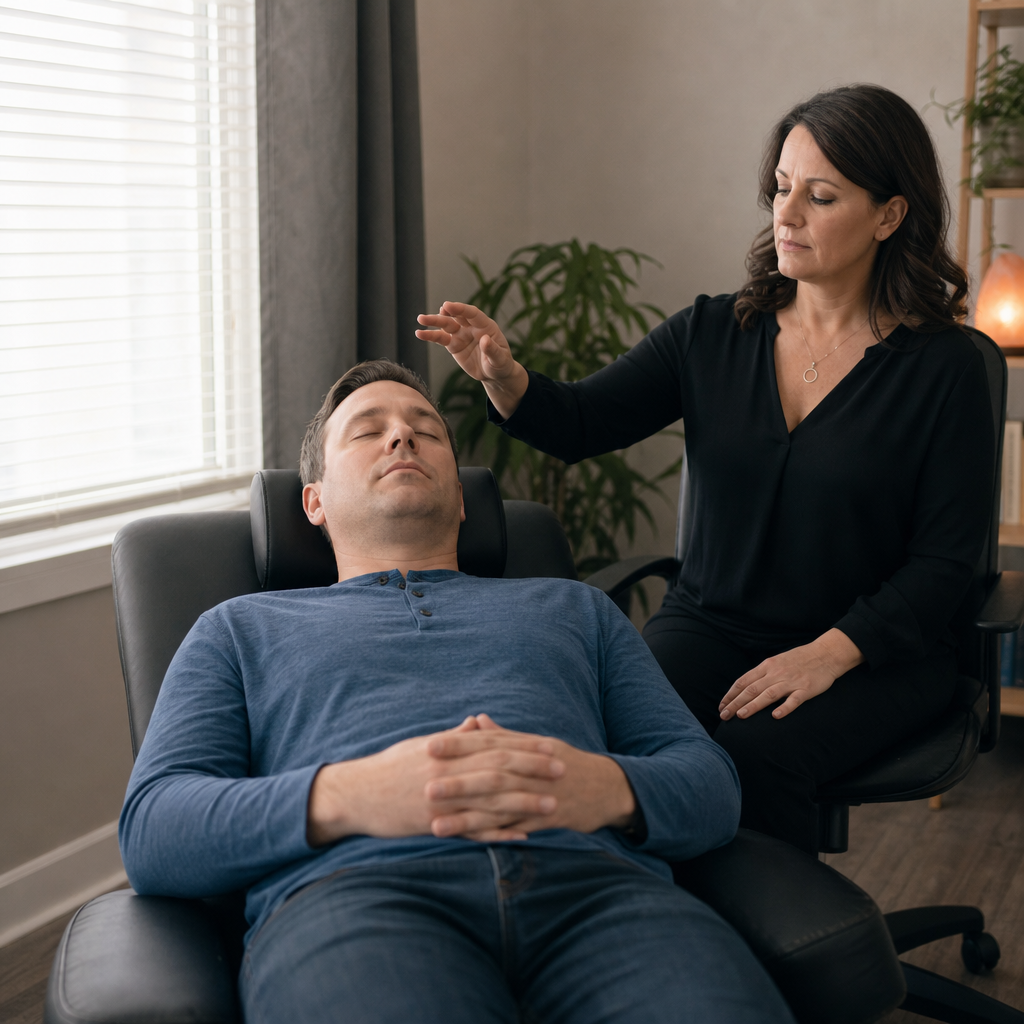
Before scheduling with Everleigh Hypnosis, many Dayton-area readers want the same practical answer: what actually happens during a hypnosis session? The short answer: a session should be structured, calm, and cooperative. It is not sleep, mind control, or a stage show. A practical appointment usually includes a conversation about the goal, a chance to ask questions, a focused induction or relaxation process, therapeutic suggestions, and next steps for using what was discussed after the appointment.
For people in Dayton, Centerville, Beavercreek, Kettering, Oakwood, Bellbrook, Miamisburg, West Carrollton, Huber Heights, Vandalia, Englewood, and nearby communities, the most useful answer is a plain walkthrough, not mystery language.
The Short Version
Most people want to know whether a session will feel strange. A practical hypnosis session should feel structured, calm, and cooperative. You should know why you're there, what goal is being discussed, and what the guided part is trying to support. You shouldn't expect a stage-show experience. You shouldn't expect to be asleep. You shouldn't expect to lose control or be forced to say or do anything against your values.
Clarify the goal and the pattern you want to work on.
Ask questions about comfort, control, expectations, and follow-up before the guided portion begins.
Practice focused attention, relaxation, imagery, suggestion, or rehearsal connected to the goal.
Return to normal alertness and discuss realistic next steps for what to notice or practice afterward.
Opening conversation: describe the concern, where it shows up, and what you want to change.
Fit and safety check: mention medical, medication, trauma, pregnancy, severe anxiety, or other concerns that may affect whether hypnosis is appropriate.
Guided focus: the practitioner uses voice, imagery, attention, or relaxation to support the agreed goal.
Return and review: you come back to ordinary alertness, talk through the experience, and identify a practical next step.
A Session Usually Starts With the Goal
Before hypnosis begins, the practitioner needs to understand what the person is asking for. That may include smoking, vaping, stress, confidence, sleep habits, preparation for a specific situation, or another personal goal. The first part of the appointment may include questions like:
For service-specific context, review Everleigh Hypnosis services before deciding what questions to bring into a consultation.
What do you want to change?
When does the problem show up most often?
What have you already tried?
What would a useful result look like?
Are there medical or mental health concerns that should be handled by another professional?
That conversation matters because hypnosis works best when it's aimed at a clear pattern, not a vague wish.
Hypnosis is usually focused attention. Cleveland Clinic describes hypnosis as deep relaxation and focused concentration guided by a trained professional. In normal language, that means you are guided into a focused, receptive state. It does not mean you are unconscious, controlled, or forced to do anything against your values.
What the Guided Part May Include. The guided portion may include relaxation, breathing, imagery, suggestion, rehearsal, or future pacing. The purpose is to help the person mentally practice a different response before the old trigger happens again.
For example, someone working on vaping may rehearse getting through a driving trigger without reaching for the device. Someone working on confidence may rehearse entering a situation with steadier breathing and clearer self-talk.
What you will not be asked to do. A serious session should not ask you to surrender control, ignore medical advice, relive trauma without proper support, or accept a guaranteed outcome. If a concern includes severe anxiety, trauma symptoms, medication questions, pregnancy concerns, self-harm thoughts, or urgent medical symptoms, the safer first step is to involve an appropriate licensed professional.
This is one reason pre-consult questions matter. A smoking or vaping habit, sleep routine, confidence goal, or stress habit can each require a different conversation.
What Happens Afterward. A session should end with practical next steps. The person may be asked to notice triggers, repeat a simple mental rehearsal, avoid testing the old habit, or prepare for follow-up support.
A good explanation should be honest: one session may be meaningful for some people, but not every concern changes instantly. Results vary, and hypnosis shouldn't replace medical or mental health care when that care is needed.
First Session Checklist Before the first session, consider writing down:
The main change you want
The situations where the problem shows up
Any previous attempts to change it
Any questions about hypnosis, safety, or follow-up
Any health or mental health details that should be mentioned
This gives the conversation more direction and makes the appointment more useful.
What to Bring to a First Session
One clear sentence describing the change you want.
Two or three real examples from your week.
A list of questions about hypnosis, expectations, and follow-up.
Any health, safety, or medical context the practitioner should know.
A realistic idea of what progress would look like after the appointment.
Common First-Session Questions. If this topic overlaps with stress, habits, or appointment fit, the Everleigh Hypnosis services page can help frame the next conversation. People from Dayton, Centerville, Beavercreek, Kettering, Oakwood, Bellbrook, Miamisburg, Vandalia, and Englewood often want to know whether they will be aware during hypnosis. In a practical, consultative setting, hypnosis is usually described as focused attention. It's not a stage-show loss of control.
Another common question is whether the first session will solve everything. A better way to think about it is that the first session should clarify the goal, begin working with the pattern, and help the client understand what the next step may be.
Local Session Questions People Often Search
Helpful Details to Share Out Loud
The exact habit, fear, routine, or situation you want to discuss.
Whether this has been going on for weeks, months, or years.
What happens right before the pattern shows up.
What you have already tried and what did not fit.
Whether you have medical, mental health, or safety concerns that should shape the conversation.
How This Connects to Daily Life Around Dayton
A good local explanation should help you picture the appointment before you walk in or join a virtual session. Ask what hypnosis can reasonably support, what it cannot promise, how privacy is handled, and when another professional should be involved. Clear boundaries help you choose the next step without pressure or exaggerated certainty.
Everleigh Hypnosis should be able to explain the process, preparation, privacy, follow-up, and limits of hypnosis in plain language. When medical care, mental health care, emergency support, or personalized licensed advice is needed, start there first.
What should I ask about the session process? Before scheduling, ask how the first conversation begins, what the hypnosis portion may feel like, how suggestions are handled, and what follow-up practice may be discussed. The answer should make the process easier to picture without promising a specific result.
What to Expect After the Session. The explanation shouldn't stop when the guided portion ends. You may also want to know what happens afterward: what to notice, what to practice, what not to over-interpret, and when to ask follow-up questions.
Someone coming from Centerville, Beavercreek, Kettering, Oakwood, Bellbrook, Miamisburg, Huber Heights, Vandalia, Englewood, or another nearby suburb may also want to know whether they should plan quiet time afterward, whether they can return to work, and whether there are specific actions to take before the next appointment. Everleigh Hypnosis can answer those questions by keeping the focus on practical use.
How to Know Whether the Session Was a Good Fit. A good fit usually feels clear and respectful. The person understands what was discussed, why the session focused on that goal, and what the next step is. They shouldn't feel pressured by guarantees or confused by vague claims.
If the concern involves medical symptoms, crisis risk, severe mental health concerns, trauma symptoms, or anything outside a hypnosis support role, you should be encouraged to involve the appropriate licensed professional. A hypnosis session is usually a focused, guided process built around a clear goal. If you are in the Dayton area and want to ask what a session could look like for your situation, use the Everleigh Hypnosis contact page or call 937-777-9293.
How do I know whether this fits my Dayton-area needs?
Questions Dayton Clients Ask
Will I be asleep during hypnosis?
Most hypnosis sessions are not sleep. You are usually aware, focused, and able to respond while the practitioner guides attention, relaxation, imagery, or suggestion.
What happens before the guided part?
The practitioner should clarify your goal, ask where the pattern shows up, answer process questions, and discuss any health or safety context that may affect fit.
What happens after a hypnosis session?
A useful session should end with practical next steps: what to notice, what to practice, what not to over-interpret, and when follow-up support may make sense.
Tue, Aug 25, 2026, 10:00 AM EDTColumbus HypnotherapyCan Hypnosis Help with CPTSD for Columbus Clients?Hypnosis may help some people with CPTSD as a supportive, skills-based approach for calming the nervous system, improving self-regulation, reducing reactivity to triggers, and building a greater sense of control. It should not be viewed as a cure, a replacement for trauma therapy, or a way to force memories to disappear. For many Columbus-area clients, virtual hypnotherapy offers a private, comfortable way to explore support from home while coordinating with medical or mental-health care when needed.blocked-rollout-readiness LCS FBIGGBPView ArticleEditSchedule / RescheduleHoldExpand Article
Why LCS Chose This
Hypnosis may help some people with CPTSD as a supportive, skills-based approach for calming the nervous system, improving self-regulation, reducing reactivity to triggers, and building a greater sense of control. It should not be viewed as a cure, a replacement for trauma therapy, or a way to force memories to disappear. For many Columbus-area clients, virtual hypnotherapy offers a private, comfortable way to explore support from home while coordinating with medical or mental-health care when needed.
Low-Hanging Gap Filled
Can Hypnosis Help with CPTSD for Columbus Clients?
Can Hypnosis Help with CPTSD for Columbus Clients?
Hypnosis may help some people with CPTSD as a supportive, skills-based approach for calming the nervous system, improving self-regulation, reducing reactivity to triggers, and building a greater sense of control. It should not be viewed as a cure, a replacement for trauma therapy, or a way to force memories to disappear. For many Columbus-area clients, virtual hypnotherapy offers a private, comfortable way to explore support from home while coordinating with medical or mental-health care when needed.
If you live in Columbus and you are wondering whether hypnosis can help with CPTSD, you are probably not looking for a dramatic sales pitch. You are looking for a clear answer, a little hope, and a practical next step that does not require fighting traffic on 270 when your nervous system is already having a full committee meeting.
That is one reason Columbus Hypnotherapy takes a remote-first approach. Virtual hypnotherapy can let you explore support from a familiar chair, under your own blanket, with your dog nearby pretending not to listen. For many people in Columbus, Reynoldsburg, Blacklick, Powell, Canal Winchester, Pickerington, Hilliard, Gahanna, Dublin, Clintonville, Polaris, and the OSU Campus area, the comfort and privacy of home can make it easier to begin.
CPTSD is not a small topic. It deserves care, honesty, and a healthy respect for the nervous system. Hypnosis may be useful for some people as a supportive tool, especially when the focus is on calming, self-regulation, confidence, boundaries, and reducing automatic reactions to triggers. It is not a magic wand. It is not a substitute for emergency care, trauma therapy, medication when needed, or a strong support system. But used carefully, hypnosis may help some people build a steadier relationship with their own mind and body.
Direct answer: Can hypnosis help with CPTSD?
Yes, hypnosis may help some people with CPTSD as a complementary, skills-based approach. It may support relaxation, emotional regulation, sleep routines, confidence, and the ability to respond differently to triggers. It may also help people practice a stronger sense of safety and control in the present moment.
No, hypnosis should not be presented as a cure for CPTSD. It should not be used to force memory recovery, push someone into reliving trauma, or replace care from a licensed mental-health professional when that care is needed. If you are in crisis, feeling unsafe, experiencing severe dissociation, or having thoughts of harming yourself or someone else, please seek immediate professional support or emergency care first.
A good way to think about hypnosis for CPTSD is this: it may help you strengthen the “now” part of your brain so the “then” part does not get to run the entire show.
What is CPTSD, in plain English?
Complex post-traumatic stress disorder, often shortened to CPTSD, is commonly associated with repeated or prolonged trauma, especially trauma that felt inescapable. This can include childhood abuse or neglect, domestic violence, coercive relationships, repeated exposure to danger, exploitation, or other long-term experiences where a person’s sense of safety and identity were deeply affected. CPTSD can include many symptoms people associate with PTSD, such as intrusive memories, avoidance, hypervigilance, sleep disruption, and feeling easily startled. It can also involve difficulties with emotional regulation, relationships, shame, self-worth, and feeling disconnected from oneself or other people.
Different diagnostic systems discuss CPTSD differently. The World Health Organization recognizes Complex Post Traumatic Stress Disorder in ICD-11. In the United States, clinicians may diagnose PTSD and also treat the additional patterns often described as complex trauma. The label matters less than the lived experience: your nervous system learned survival strategies, and now some of those strategies may be making daily life harder than it needs to be. That does not mean you are broken. It means your system adapted. Hypnotherapy, when appropriate, may help you teach that system some updated information.
Why remote hypnotherapy can feel like a sensible starting point
For service-specific context, review hypnotherapy for PTSD support in Columbus before deciding what questions to bring into a consultation. For some people with CPTSD, walking into a new office, sitting in a waiting room, and making small talk under fluorescent lighting is not exactly soothing. Add in Columbus traffic, parking, weather, construction, and the mysterious local art form known as “merging near Polaris,” and it is understandable why virtual care can feel appealing.
Remote hypnotherapy may offer several practical advantages:
Comfort: You can be in your own space, where your body may settle more easily.
Privacy: No waiting room. No running into someone you know from work, school, or the neighborhood grocery store.
Control: You can choose the chair, lighting, blanket, and environment.
Accessibility: Whether you are in Dublin between meetings, Hilliard after school pickup, Gahanna during a lunch break, or Canal Winchester without wanting to make the drive across town, virtual sessions can reduce friction.
Gentler transition: After the session, you do not have to immediately drive home. You can sip water, journal, take a walk, or simply sit quietly.
For CPTSD especially, a sense of control matters. Hypnotherapy is not something done “to” you. It is a collaborative process where your comfort, consent, and pacing should matter from beginning to end.
What hypnosis actually is — and what it is not
Hypnosis is a focused, receptive state of attention. Most people already drift into similar states naturally: getting absorbed in a movie, driving a familiar route and realizing you were on autopilot, or losing track of time while working on a project. Hypnotherapy uses that focused state intentionally, often with relaxation, imagery, suggestion, and mental rehearsal. You are not unconscious. You are not under someone else’s control. You do not have to cluck like a chicken unless that is your personal brand, and even then, we can probably find a more useful goal.
In a therapeutic setting, hypnosis may help the mind rehearse new responses. For someone with CPTSD, that might mean practicing a calmer internal response to a trigger, strengthening an inner sense of boundaries, building a safer sleep routine, or creating a mental “pause button” between a feeling and a reaction. The American Psychological Association describes hypnosis as involving focused attention and reduced peripheral awareness, often with an enhanced capacity to respond to suggestion. In everyday terms, it is a way to help the mind become more available for learning, practicing, and updating old patterns.
How hypnosis may support people living with CPTSD. CPTSD can make the present feel unsafe even when the danger is no longer happening. The body may react before the thinking mind has a chance to review the evidence. Hypnotherapy may help by working with the automatic, imaginative, body-connected parts of the mind that are often involved in those fast reactions.
Here are several areas where hypnosis may be supportive. 1. Calming the nervous system. Many people with CPTSD live with a nervous system that is quick to scan for danger. Hypnosis can include guided relaxation, breath awareness, grounding imagery, and suggestions that support a calmer state. Over time, some people find that repeated practice makes it easier to return to calm after stress.
This is not about pretending everything is fine. It is about helping the body learn, “I can notice what is happening and still have options.” 2. Building a sense of internal safety. For people with complex trauma, safety can feel unfamiliar or even suspicious. Hypnosis may use imagery and suggestion to help develop a felt sense of safety in the body. This might include imagining a protected place, strengthening the sense of being present in the room, or rehearsing boundaries in a way that feels manageable.
The goal is not to erase the past. The goal is to make the present more available. 3. Responding differently to triggers. Triggers can be sounds, smells, tones of voice, facial expressions, places, dates, conflict, silence, or even success. Hypnotherapy may help a person mentally rehearse new responses to common triggers. This can include pausing, breathing, orienting to the present, using a grounding phrase, or choosing a next action rather than automatically freezing, fawning, fleeing, or fighting.
A practical example: someone who becomes highly anxious when receiving a short text message might use hypnosis to practice noticing the reaction, relaxing the shoulders, checking the facts, and responding later instead of spiraling immediately.
4. Supporting sleep routines. Sleep can be complicated with CPTSD. The body may resist letting down its guard. Hypnosis may support bedtime routines by pairing relaxation with imagery, a sense of protection, and suggestions for allowing rest. It should not replace medical evaluation for sleep disorders, nightmares, severe insomnia, or medication concerns, but it may be one useful part of a broader plan.
5. Reducing shame and strengthening self-compassion. CPTSD often comes with harsh inner dialogue. Hypnosis can be used to practice a kinder internal voice and strengthen the idea that survival responses were adaptations, not character flaws. That shift can be powerful. People do not usually heal faster by bullying themselves more efficiently.
6. Changing habits connected to stress. Some people cope with trauma-related stress through habits they later want to change, such as smoking, overeating, nail biting, avoidance, or compulsive scrolling. Hypnosis may help with habit change when the person is ready and when the underlying stress is approached with care. For example, if smoking has become a stress-management strategy, hypnosis may support new coping patterns while addressing the habit itself. Columbus-area readers interested in that specific support can learn more here: Hypnotherapy to Stop Smoking in Columbus, OH.
What hypnosis should not do with CPTSD
Because CPTSD involves trauma, it is important to be clear about what responsible hypnotherapy should avoid. Hypnosis should not force you to relive traumatic memories. It should not pressure you to “recover” memories. It should not suggest that one dramatic breakthrough will fix your life by Thursday. And it should not ignore your medical or mental-health needs.
Memory is complex. Trauma memory can be especially complex. A trauma-informed approach should prioritize stabilization, consent, present-moment resources, and your ability to stop or slow down at any point. If a practitioner seems eager to dig for hidden memories before helping you feel stable, that is a red flag. If someone guarantees a cure, that is another red flag. If someone dismisses therapy, medication, or medical care as unnecessary for everyone, that is a whole parade of red flags.
Hypnotherapy can be supportive, but it is not the right first step for every situation. Please seek help from a licensed mental-health professional, physician, crisis service, or emergency support first if any of the following apply:
You are having thoughts of suicide or self-harm.
You feel unsafe at home or are currently in an abusive situation.
You are experiencing severe dissociation, losing time, or feeling unable to stay oriented.
You are having hallucinations, delusions, or symptoms of psychosis.
You are withdrawing from alcohol, benzodiazepines, or other substances that can involve medical risk.
You have severe depression, panic, or trauma symptoms that are interfering with basic functioning.
You need diagnosis, medication management, or formal psychotherapy.
This is not meant to discourage you. It is meant to protect you. Hypnosis works best when it is used at the right time, in the right way, and with the right supports.
What a trauma-informed virtual hypnosis session may feel like
At Columbus Hypnotherapy, the first step is not to toss you into deep emotional water and yell, “Swim toward transformation!” The practical approach starts with conversation and evaluation.
A session may include:
Talking about your goals in plain language.
Identifying what you want help with now, not every detail of your history.
Discussing what helps you feel grounded.
Explaining hypnosis so you know what to expect.
Using relaxation, imagery, and suggestion at a pace that feels manageable.
Ending with time to reorient fully before you move on with your day.
In virtual sessions, you will want a quiet place where you can sit or recline comfortably. Headphones can help. A stable internet connection is useful, though we are in Ohio, so yes, technology may occasionally decide to have its own weather system. You remain in control. You can speak, move, open your eyes, or stop the process at any time.
What results are realistic?
Realistic goals may include feeling more grounded, sleeping a little more easily, reacting less intensely to certain triggers, feeling more confident in boundaries, or having a calmer internal response to stress. Some people notice changes quickly; others need repetition and support over time. CPTSD patterns often developed over years, so it is reasonable to approach change with patience. Progress may look like:
“I still got triggered, but I recovered faster.”
“I noticed my body tense up and used a grounding skill.”
“I did not send the anxious text.”
“I slept better twice this week.”
“I felt a little more like myself.”
Those may not sound like fireworks, but they are meaningful. Healing often arrives wearing work boots, not a cape.
How to compare hypnosis options in Columbus
If you are comparing hypnosis options in Columbus, it helps to ask practical questions rather than only scanning for big promises. Consider asking:
Do you offer virtual sessions?
How do you approach trauma-related concerns?
Will I be asked to relive traumatic memories?
What happens if I become overwhelmed during hypnosis?
Do you coordinate with therapy or medical care when appropriate?
What are realistic goals for my situation?
How do you determine whether hypnosis is a good fit?
Whether you are in Pickerington, Powell, Reynoldsburg, Blacklick, Clintonville, near OSU Campus, or commuting between Dublin and downtown Columbus, convenience matters. But so does safety. Choose a provider who is honest about scope, respectful of your pace, and willing to say, “This may help, and here is where other care may also be important.”
A practical way to think about CPTSD and change
CPTSD can make life feel like you are constantly responding to old alarms. Hypnosis may help you update some of those alarms. Not by denying what happened. Not by pasting positive affirmations over pain. But by helping your mind and body practice new signals: safe enough, here now, more choice, less automatic reaction. For many people, the question is not, “Can I make the past disappear?” The better question is, “Can I have more freedom in the present?”
That is where hypnotherapy may be useful. It can be a place to rehearse steadiness. To practice calm. To strengthen the part of you that can observe a feeling without being swallowed by it. To create space between a trigger and a response. And if the most comfortable way to begin is from your home in Gahanna, your apartment near Polaris, your office in Hilliard, or your quiet room in Canal Winchester, that is not a lesser version of support. For many people, it is the doorway that finally feels usable.
Ready to explore whether hypnosis is a fit?
If CPTSD is part of your life, you deserve support that is respectful, clear, and grounded. Columbus Hypnotherapy offers a practical starting point with remote-first convenience, privacy, and a focus on helping you take the next step without pressure. Free Your Mind, Change Your World. Call 380-233-8070 to schedule a free evaluation, or visit www.columbushypnotherapy.com and complete the brief callback form.
Can hypnosis cure CPTSD? No. Hypnosis should not be described as a cure for CPTSD. It may be a supportive tool for relaxation, self-regulation, sleep routines, confidence, and changing automatic responses, but CPTSD is complex. Many people benefit from working with a licensed trauma-informed therapist, physician, or other qualified professional as part of their care.
Is virtual hypnotherapy appropriate for CPTSD? Virtual hypnotherapy can be appropriate for some people, especially when being at home feels safer and more comfortable. It may reduce stress related to travel, waiting rooms, and privacy. However, if you are in crisis, unsafe, severely dissociated, or having thoughts of self-harm, seek immediate professional or emergency support first.
Will hypnosis make me relive traumatic memories?
Trauma-informed hypnosis should not force you to relive memories. The focus should be on consent, stabilization, present-moment safety, and useful skills. You remain in control during hypnosis and can pause or stop at any time.
How do I know if hypnosis is the right next step? A free evaluation is a helpful place to start. You can discuss your goals, current supports, and whether hypnotherapy seems appropriate. If hypnosis is not the right first step, a responsible provider should encourage you to seek medical or mental-health care that better fits your needs.
Related local resources: Columbus Hypnotherapy services and Hypnosis to stop smoking in Columbus.
Questions Columbus Clients Ask
Can hypnosis cure CPTSD?
No ethical practitioner should promise to cure CPTSD. Hypnosis may support relaxation, emotional regulation, confidence, sleep routines, and responses to triggers, but CPTSD is complex and often benefits from care with a licensed trauma-informed mental-health professional.
Is virtual hypnotherapy appropriate for CPTSD?
It can be appropriate for some people because being at home may feel safer and more private. However, if someone is in crisis, unsafe at home, experiencing severe dissociation, or having thoughts of self-harm, they should seek immediate professional or emergency support before scheduling hypnosis.
Will hypnosis make me relive traumatic memories?
Trauma-informed hypnosis should not force you to relive memories. At Columbus Hypnotherapy, the practical focus is on comfort, consent, present-moment skills, and helping you build steadier responses. You remain in control and can pause or stop at any time.
How do I know whether hypnosis is a good next step for me?
A free evaluation can help clarify whether hypnotherapy may be a sensible supportive option. If your needs are outside the scope of hypnosis, Columbus Hypnotherapy will encourage you to connect with appropriate medical or mental-health care first.
Thu, Aug 27, 2026, 10:00 AM EDTEverleigh HypnosisCommon Concerns About Hypnosis and Hypnotherapy in DaytonThe article passed governance after remediation, has conservative safety language, a clear local question, and no unresolved owner-level business fact.scheduled LCS Autonomous FBIGGBPView ArticleEditSchedule / RescheduleHoldExpand Article
Why LCS Chose This
The article passed governance after remediation, has conservative safety language, a clear local question, and no unresolved owner-level business fact.
Low-Hanging Gap Filled
Dayton readers need plain answers about hypnosis control, awareness, skepticism, and safety before booking.
Common Concerns About Hypnosis and Hypnotherapy in Dayton
Most concerns about hypnosis come from not knowing what a real session is like. Hypnosis shouldn't involve mind control, unconsciousness, or guaranteed claims. Everleigh Hypnosis encourages Dayton-area readers to ask direct questions about safety, expectations, goals, and fit before scheduling.
Before scheduling, many people want to know whether hypnosis is safe, whether they will stay aware, and whether a real session is different from stage hypnosis. Those are fair questions. A professional hypnotherapy conversation should be practical, consent-based, and easy to understand before you book.
For Dayton-area readers, the useful question is not whether hypnosis is mysterious. It is whether the provider can explain what hypnosis is, what it is not, and when another kind of care should come first.
The Concerns People Usually Bring Up
Most hesitation comes down to a few understandable concerns: losing control, being asleep, not being able to relax, feeling skeptical, expecting guarantees, or wondering whether the issue is appropriate for hypnosis.
Quick comparisonUse this as a plain-language check before you decide whether to schedule.
Concern
Responsible answer
What to ask
Will I lose control?
A responsible session should keep you involved and able to respond.
How do you explain consent and stopping the session?
Will I be asleep?
Many people feel relaxed or absorbed, not unconscious.
What should I expect to notice during the session?
What if I am skeptical?
Skepticism is common and can lead to better questions.
A trustworthy provider should welcome questions about awareness, control, comfort, stopping the session, and realistic outcomes. The answer should be direct, not dismissive. It should also make room for medical or mental health care when that is the safer first step.
Hypnosis is commonly described as focused attention. You can hear, respond, and reject suggestions that do not fit. That is why preparation matters: the goal and boundaries should be clear before the session begins.
What If I Cannot Relax or Feel Skeptical?
People respond differently. Some settle into focused attention quickly; others need more explanation, time, or practice. Neither response means you failed. A slower setup can be useful when someone is anxious, skeptical, distracted, or trying to do the session perfectly.
Name the specific issue you want to discuss.
Ask what will happen during the session.
Say if something feels unclear or uncomfortable.
Avoid expecting a guaranteed result.
Mention medical, mental health, trauma, or safety concerns before starting.
When to Ask More Before Scheduling
Ask more questions before scheduling if your concern involves trauma history, severe anxiety, panic symptoms, medication questions, substance-use concerns, self-harm thoughts, or any urgent medical or mental health issue. Hypnosis may be a support tool for some goals, but it should not replace licensed care when licensed care is needed.
How to Decide Whether the Answer Feels Trustworthy
A good answer should be understandable before you book. It should explain the process, the limits, and the next step without pressuring you. If an answer sounds vague, exaggerated, or dismissive of health boundaries, slow down and ask more.
That is the local content gap this article fills: Dayton readers do not just need a directory of hypnosis providers. They need a plain explanation that helps them decide what to ask and what kind of answer should feel safe.
Questions Dayton Clients Ask
Will I lose control during hypnosis?
No. A responsible hypnosis session should not be about losing control. Clients remain involved, aware, and able to respond.
Do I have to believe in hypnosis for it to work?
You do not need blind belief, but openness, participation, and a clear goal matter. Skepticism is common and fair to discuss before scheduling.
Is hypnosis safe for everyone?
No single approach fits everyone. People with severe symptoms, trauma concerns, medical issues, medication questions, or safety concerns should speak with an appropriate licensed professional.
Tue, Sep 1, 2026, 10:00 AM EDTEverleigh HypnosisDoes Virtual Hypnosis Work for Dayton, Ohio Clients?The article answers the practical virtual-session fit question and keeps service-scope and safety boundaries clear.scheduled LCS Autonomous FBIGGBPView ArticleEditSchedule / RescheduleHoldExpand Article
Why LCS Chose This
The article answers the practical virtual-session fit question and keeps service-scope and safety boundaries clear.
Low-Hanging Gap Filled
Dayton-area search results do not strongly explain virtual hypnosis fit, privacy, technology, and when in-person or clinical care may be better.
Does Virtual Hypnosis Work for Dayton, Ohio Clients?
Virtual hypnosis may be a practical option for some Dayton-area clients when privacy, comfort, internet connection, and the session goal fit the format. It's not the right choice for every concern.
Virtual hypnosis may be a practical option for some Dayton-area clients when the goal, privacy, technology, and environment fit the format. It is not automatically right for every concern, but it can remove commute barriers for people in Dayton, Huber Heights, Beavercreek, Kettering, Centerville, Vandalia, and nearby communities.
When Virtual Hypnosis May Fit
The best virtual-session question is not simply whether online hypnosis works. It is whether your setting and goal make the format reasonable.
Quick comparisonUse this matrix to decide whether a virtual format is worth asking about.
Fit factor
Good sign
Question to ask
Privacy
You can use a quiet room without interruptions.
What should I do if privacy changes during the session?
Technology
Your camera, microphone, and internet are reliable.
What happens if the connection drops?
Goal fit
The concern is suitable for a focused hypnosis conversation.
Are there reasons this should be in person or referred out?
A virtual session works better when the setup is boring in the best possible way: private, comfortable, charged, connected, and free from multitasking.
Choose a private room where you will not be interrupted.
Test camera, microphone, battery, and internet before the appointment.
Use a safe seated or reclined position where you can relax without risk.
Do not join while driving or doing another task.
Ask what happens if the connection drops or the setting no longer feels private.
When Virtual May Not Be the Right First Step
Virtual hypnosis is not the right format for urgent medical, mental health, safety, trauma, crisis, or substance-withdrawal concerns. Those situations should begin with appropriate licensed support. Some people may also simply feel more comfortable asking for an in-person option.
For ordinary habit, stress, preparation, or confidence questions, a virtual consultation can still be a reasonable thing to ask about if the provider explains the process and the boundaries clearly.
Why This Is a Useful Dayton Answer
Current Dayton search results often show directories or broad provider claims, but they do not always answer the practical local question: what makes a virtual hypnosis session appropriate, private, and useful for someone in the Miami Valley?
That is where this article can help. It gives readers a way to decide whether to ask about virtual hypnosis before they schedule, without pretending the format is right for every person or every goal.
Questions Dayton Clients Ask
Can hypnosis be done virtually?
For some goals and some people, virtual hypnosis may be practical when privacy, technology, comfort, and the session goal fit the format.
What helps a virtual hypnosis session go better?
A quiet room, reliable internet, a charged device, a safe seated or reclined position, and no multitasking can help.
Is virtual hypnosis right for every concern?
No. Urgent medical, mental health, safety, trauma, crisis, or substance-withdrawal concerns should be handled with appropriate licensed care.
Thu, Sep 3, 2026, 10:00 AM EDTEverleigh HypnosisIs Hypnosis Safe for Dayton-Area Clients?The article uses conservative evidence wording, flags appropriate referral situations, and passed validation without unresolved owner-specific facts.scheduled LCS Autonomous FBIGGBPView ArticleEditSchedule / RescheduleHoldExpand Article
Why LCS Chose This
The article uses conservative evidence wording, flags appropriate referral situations, and passed validation without unresolved owner-specific facts.
Low-Hanging Gap Filled
Dayton-local safety guidance is weak; readers need provider red flags, green flags, and licensed-care boundaries.
Hypnosis is generally described as a focused state of attention and is not the same as sleep or mind control, but safety depends on the person, the concern, and whether medical or mental health care is needed first.
Safety is one of the first things people in Dayton and nearby suburbs ask Everleigh Hypnosis about. The short answer is that hypnosis is generally described as a focused state of attention, not sleep or mind control. Whether it is appropriate depends on the person, the goal, and whether medical or mental health care should come first.
The Practical Safety Answer
For ordinary habit-change and preparation questions, hypnosis can be a reasonable topic to ask about. The safety issue is not just "is hypnosis safe?" The better question is: "Is hypnosis appropriate for this person, this goal, and this situation?"
Quick comparisonIf you're comparing providers, here are a few things worth listening for.
Green flag
Red flag
What to ask next
The provider explains what hypnosis is and is not.
The provider promises a guaranteed cure.
What results should I consider realistic?
Medical and mental health boundaries are stated clearly.
Hypnosis is described as replacing care from licensed professionals.
When should I talk with a clinician first?
You are encouraged to ask questions before scheduling.
A responsible answer looks at the concern, the person, the setting, and the provider's boundaries. It should also make clear that hypnosis is not a substitute for emergency care, medical treatment, psychotherapy, medication advice, or personalized licensed guidance.
People with urgent medical symptoms, severe anxiety, panic, trauma symptoms, psychosis symptoms, self-harm thoughts, substance-use concerns, medication questions, pregnancy-related questions, or other significant health concerns should speak with an appropriate licensed professional.
What to Ask Before Scheduling
What happens during the session?
What should I expect afterward?
What concerns should be referred out?
Do you make guarantees?
How do you handle medical or mental health boundaries?
If the answers feel vague, extreme, or dismissive of health boundaries, slow down. Clear safety answers should reduce pressure, not increase it.
How Safety Questions Apply Around Dayton
For Dayton-area readers, safety also has a practical side: whether office or virtual support fits your schedule and privacy needs, whether you understand the process before committing, and whether the concern should begin with a licensed medical or mental health professional.
A Safer Way to Decide
Hypnosis may be a reasonable support option for some goals, but safety comes from honesty, clear expectations, consent, and respect for medical and mental health boundaries. If you want to ask whether hypnosis is appropriate for your situation, contact Everleigh Hypnosis or call 937-777-9293.
Questions Dayton Clients Ask
Is hypnosis mind control?
No. Ethical hypnosis should not be framed as mind control. The person remains an active participant.
Who should be cautious with hypnosis?
People with urgent medical or mental health concerns, trauma symptoms, severe distress, medication questions, pregnancy-related concerns, psychosis symptoms, or crisis symptoms should seek appropriate licensed care.
Can hypnosis replace medical treatment?
No. Hypnosis information should be educational and should not replace medical or mental health care.
Tue, Sep 8, 2026, 10:00 AM EDTEverleigh HypnosisCan Hypnosis Help with Weight Loss Habits in Dayton?The article is safely framed around weight-related habits, medical/nutrition/eating-disorder boundaries, and realistic expectations.scheduled LCS Autonomous FBIGGBPView ArticleEditSchedule / RescheduleHoldExpand Article
Why LCS Chose This
The article is safely framed around weight-related habits, medical/nutrition/eating-disorder boundaries, and realistic expectations.
Low-Hanging Gap Filled
Local content tends to overpromise weight loss instead of answering habit-pattern questions carefully.
Can Hypnosis Help with Weight Loss Habits in Dayton?
Hypnosis may help some people work with eating habits, emotional triggers, motivation, and mental rehearsal, but it shouldn't replace medical care, nutrition guidance, or treatment for eating disorders.
Many Dayton-area readers ask about hypnosis for weight loss, but the safer and more useful question is usually about weight-related habits. Hypnosis should not be promised as a guaranteed weight-loss method. It may be worth asking about when the goal is a specific routine, trigger, or follow-through pattern.
Weight Loss Questions Are Often Habit Questions
Before scheduling, separate the pattern you want help with from medical, nutrition, medication, or eating-disorder questions that require appropriate care.
Quick comparisonWhen weight-related habits feel tangled together, this helps sort the pattern before you ask about hypnosis.
Pattern
Helpful detail to bring
Boundary to keep clear
Late-night snacking
When the routine starts and what usually happens before it
Hypnosis should not replace medical or nutrition guidance.
Stress eating
The stress cue, setting, and first automatic action
Emotional eating may also need licensed mental health support.
A broad question like "Can hypnosis help me lose weight?" often leads to vague answers. A stronger local question names the moment: late-night snacking, eating after stress, stopping at a drive-through after work, or losing momentum after one difficult day.
What to Define Before Calling
What pattern do you want to change?
When does it usually start?
What emotion, setting, or routine comes right before it?
What support have you already tried?
Is there any medical, medication, pregnancy, eating-disorder, or mental health concern that should be handled by a licensed professional first?
Those details make the conversation more honest. Hypnosis may support habit rehearsal and self-regulation for some people, but it should not replace medical evaluation, nutrition care, or eating-disorder treatment.
Why This Is a Local Content Gap
Dayton search results often provide provider listings or broad weight-loss claims. This article is more useful when it helps a reader ask a better question: which habit pattern do I want support with, and what boundaries should I keep clear?
A Realistic Next Step
If you are considering hypnosis for weight-related habits in Dayton, start with one specific pattern and ask whether that pattern is a reasonable fit for hypnosis. If the concern is medical, complex, or connected to disordered eating, start with appropriate licensed care first.
Questions Dayton Clients Ask
Can hypnosis guarantee weight loss?
No. Hypnosis should not be promised as a guaranteed weight-loss method. It may support habit change for some people.
What habits might hypnosis focus on?
People may ask about emotional eating, late-night eating, motivation, self-talk, automatic snacking, or rehearsing healthier routines.
Who should seek medical or specialized care first?
People with medical concerns, eating-disorder symptoms, medication questions, pregnancy concerns, or significant mental health concerns should seek appropriate licensed care.
Thu, Sep 10, 2026, 10:00 AM EDTEverleigh HypnosisHow Much Does Hypnotherapy Cost in Dayton?LCS selected this as the next low-hanging local gap after the protected five because Dayton-specific cost and insurance answers are thin while business fit is strong.scheduled LCS Autonomous FBIGGBPView ArticleEditSchedule / RescheduleHoldExpand Article
Why LCS Chose This
LCS selected this as the next low-hanging local gap after the protected five because Dayton-specific cost and insurance answers are thin while business fit is strong.
Low-Hanging Gap Filled
Dayton-area hypnotherapy cost, insurance, and payment questions have mostly national pricing guides, directories, or thin local listings rather than a clear local buyer's guide.
Hypnotherapy cost in Dayton depends on the goal, session length, number of sessions, format, and provider policies. Because exact pricing and insurance rules can change, the safest first step is to ask clear questions about fees, packages, payment expectations, and whether your situation belongs with medical or mental-health care first.
If you are comparing hypnotherapy in Dayton, cost is usually part of a bigger question: how much time, money, and trust should you commit before you know whether the fit is right? A helpful answer should not pretend every person needs the same plan.
The Practical Dayton Answer
Most people should think about hypnotherapy cost by goal type and session plan, not by one universal price. A quit-smoking goal, a confidence goal, a sleep routine, and habit support may involve different preparation, session length, and follow-up needs.
Quick comparisonCost questions to compare before booking hypnotherapy in Dayton
Cost factor
Why it matters
Question to ask
Session length
Longer appointments may cost more but can also cover more preparation and debriefing.
How long is a typical session for my goal?
Number of sessions
Some goals are approached in one focused visit while others may use a short series.
What session range is realistic for this goal without promising an outcome?
In-person or virtual format
Travel time, privacy, setup, and convenience can change the true cost of care.
Is virtual hypnotherapy appropriate for my situation, or is in-person better?
Packages or follow-up
A package may be useful when the plan is clear, but it should not pressure you.
Are packages optional, and what happens if I need fewer or more sessions?
Insurance and payment
Coverage varies, and many hypnosis services are self-pay unless a specific policy says otherwise.
Do you provide receipts, superbills, or payment options, and what should I verify with insurance?
A short question list makes cost conversations clearer before you schedule.
Before you schedule, ask what is included in the appointment, how progress will be discussed, and whether your goal is a good fit for hypnosis support. It is also reasonable to ask what the provider does when hypnosis is not the right first step.
What goal are we focusing on first?
How many sessions do you usually discuss for this kind of goal?
What is included in the first appointment?
What should I verify with insurance or another provider before booking?
Does Insurance Usually Cover Hypnotherapy?
Insurance coverage for hypnotherapy can be inconsistent, especially when the service is not billed as licensed medical or mental-health treatment. If insurance matters to your decision, contact your plan directly and ask what credentials, diagnosis codes, referral requirements, or documentation they require.
Hypnosis can support behavior change and habit work, but it should not be used as a substitute for medical care, mental-health treatment, or nutrition guidance when those are needed. A careful provider should welcome that boundary.
Virtual or In-Person Can Change the Practical Cost
Virtual sessions may change convenience and preparation, but privacy and fit still matter.
A virtual session can reduce travel time for someone in the Dayton area, but it still requires a private space, a reliable connection, and enough quiet to participate comfortably. If you are comparing options, include your time, privacy, and setup needs in the real cost.
Why a Local Cost Conversation Helps
A local provider can explain how they structure appointments, what they do and do not claim to treat, and when they would recommend another kind of support first. That conversation is often more useful than a national average because it helps you decide whether this specific service is a good fit.
Questions Dayton Clients Ask
How much does hypnosis cost in Dayton?
The honest answer is that cost depends on the provider, session length, goal, and plan. Ask for the current fee, what the first appointment includes, and whether packages are optional before you commit.
Can insurance pay for hypnotherapy?
Sometimes insurance questions depend on credentials, documentation, diagnosis, and plan rules. Verify directly with your insurance company and ask the provider what documentation they can supply.
Is a package always better than paying session by session?
Not always. A package can be useful when the goal and plan are clear, but you should understand the refund, rescheduling, and follow-up policy before choosing it.
Should cost be the main factor when choosing hypnosis?
Cost matters, but fit, boundaries, experience, and comfort with the process matter too. A low price is not helpful if the service is not appropriate for your goal.
Tue, Sep 15, 2026, 10:00 AM EDTEverleigh HypnosisCan Hypnosis Help with Confidence in Dayton?The article names concrete confidence situations, avoids guarantees, and has no unresolved clinical or brand decision beyond routine final approval.scheduled LCS Autonomous FBIGGBPView ArticleEditSchedule / RescheduleHoldExpand Article
Why LCS Chose This
The article names concrete confidence situations, avoids guarantees, and has no unresolved clinical or brand decision beyond routine final approval.
Low-Hanging Gap Filled
Dayton-specific guidance for confidence around interviews, presentations, performance moments, and hard conversations is thin.
Hypnosis may help some people rehearse steadier confidence, calmer self-talk, and more useful responses before important situations, but it shouldn't be framed as a guaranteed personality change.
Confidence questions can show up before interviews, presentations, performances, or difficult conversations. Dayton-area readers often ask Everleigh Hypnosis whether hypnosis can help. A practical answer is that hypnosis may support rehearsal, calmer self-talk, and steadier responses for a specific situation. It should not be promised as an instant personality change.
The strongest local answer starts by naming the moment where confidence drops, then asking whether hypnosis is an appropriate support for that pattern.
Confidence Is Often Situation-Specific
People may feel confident in one part of life and stuck in another. Instead of treating confidence as a vague trait, use the matrix below to describe the situation, the first sign of doubt, and the question worth asking before scheduling.
Quick comparisonIf confidence feels hard to pin down, this can help you name the moment you actually want support with.
Situation
What to notice
Question to ask
Interview or presentation
Where confidence drops: before, during, or after speaking
Can the session focus on rehearsal for this specific moment?
Difficult conversation
The words, body tension, or self-talk that show up first
How would hypnosis help me practice a steadier response?
Social or performance setting
Whether the concern is preparation, anxiety, or follow-through
Should I also consider coaching, therapy, or other support?
That framing helps a consultation stay practical. Someone preparing for an interview in Centerville, a presentation in Beavercreek, or a difficult conversation in Kettering needs a different conversation than someone asking for confidence in a general way.
What Hypnosis May Support
Hypnosis may use relaxation, imagery, suggestion, and mental rehearsal to help a person practice a steadier internal response before the real situation arrives. It is most useful when the goal is specific enough to rehearse: speaking clearly, pausing before answering, staying grounded during a conversation, or recovering after an awkward moment.
It should not promise that fear, awkwardness, or self-doubt will disappear forever. Severe anxiety, panic, trauma symptoms, depression, or crisis concerns should be discussed with an appropriate licensed professional before treating hypnosis as the main next step.
What to Clarify Before Scheduling
Before calling about confidence hypnosis, write down the situation you want help with and what tends to happen first: body tension, blanking out, avoidance, harsh self-talk, or replaying the moment afterward.
What exact situation triggers the confidence drop?
What would you like to do differently in that moment?
Is the issue mostly preparation, self-talk, body tension, avoidance, or follow-through?
Is there a specific event date that should shape the preparation plan?
Is there a medical, trauma, or mental health concern that should be handled by a licensed provider first?
Why This Is a Strong Dayton Question
Local search results often give broad confidence claims or directory listings. A more useful Dayton-area article answers the real question people bring: can hypnosis support the specific moment where confidence drops, and what should I ask before I decide?
That local framing gives readers a better first step. It lets someone compare options without expecting confidence to be magically installed, and it gives Everleigh Hypnosis a clearer way to discuss fit, limits, and preparation.
A Safer Way to Ask for Help
If you are in the Dayton area, the useful starting point is not "Can hypnosis make me confident?" It is "Can hypnosis help me prepare for the specific situation where my confidence drops?" That question is easier to answer honestly and easier to turn into a practical session plan.
Questions Dayton Clients Ask
Can hypnosis make someone instantly confident?
No. Hypnosis should not be promised as an instant personality change. It may help some people rehearse steadier responses and more useful self-talk for specific situations.
What confidence issues do Dayton clients ask about?
People often ask about interviews, presentations, work conversations, performance situations, social confidence, or recovering after an awkward moment.
When should someone seek mental health support first?
Severe anxiety, trauma symptoms, depression, panic, crisis concerns, or major daily impairment should be discussed with an appropriate licensed professional.
Thu, Sep 17, 2026, 10:00 AM EDTEverleigh HypnosisHow Should I Prepare Before Hypnotherapy in Dayton?The best preparation for hypnotherapy is simple: name the pattern you want to discuss, bring two or three real examples, write down questions, mention health or safety context, and arrive with realistic expectations rather than trying to be perfectly relaxed.needs-owner-review LCS FBIGGBPView ArticleEditSchedule / RescheduleHoldExpand Article
Why LCS Chose This
The best preparation for hypnotherapy is simple: name the pattern you want to discuss, bring two or three real examples, write down questions, mention health or safety context, and arrive with realistic expectations rather than trying to be perfectly relaxed.
Low-Hanging Gap Filled
How Should I Prepare Before Hypnotherapy in Dayton?
How Should I Prepare Before Hypnotherapy in Dayton?
The best preparation for hypnotherapy is simple: name the pattern you want to discuss, bring two or three real examples, write down questions, mention health or safety context, and arrive with realistic expectations rather than trying to be perfectly relaxed.
If you are preparing for a first appointment with Everleigh Hypnosis, the useful question is simple: what should you do beforehand? You do not need a perfect goal, a perfectly calm mind, or any special talent for hypnosis. You need enough detail to explain the pattern you want to work on and what a useful change would look like in daily life.
The short answer: prepare by naming the pattern, writing down your questions, noticing real triggers, mentioning health or safety context, and arriving with realistic expectations. A little preparation can make the appointment feel calmer and keep the conversation focused on what matters to you.
A Simple Preparation Checklist
Use this as a quick pre-consult checklist:
Name the concern in one sentence.
Write down two or three situations where it shows up.
Notice whether the trigger is tied to stress, boredom, driving, food, sleep, confidence, or another routine.
Decide what you want to ask before scheduling.
Bring up any medical, medication, pregnancy, trauma, substance use, or mental health concerns.
If the session is virtual, choose a private, quiet place and test the video link ahead of time.
Do not try to force yourself to feel perfectly relaxed before the appointment.
Write the main concern in one clear sentence.
Bring two or three real examples of when the pattern usually happens.
List health, medication, trauma, pregnancy-related, substance-use, or safety concerns before the appointment.
Prepare questions about process, expectations, follow-up, and whether office or virtual support fits best.
That last point matters. You may worry that you need to be unusually relaxed or naturally hypnotizable before you arrive. You do not. It is more helpful to be honest about distraction, skepticism, nerves, or uncertainty so the provider can explain the process at a pace that makes sense.
If your appointment is virtual, prepare the room too. Choose a private space where you can sit comfortably, hear clearly, and avoid interruptions. Silence notifications, make sure your device is charged, and keep water nearby. If you are coming to an office appointment, plan enough travel time that you are not rushing in from traffic or errands.
Start With the Pattern
For service-specific context, review Everleigh Hypnosis services before deciding what questions to bring into a consultation. Instead of saying only, "I want hypnosis," try to name the pattern:
I vape when I drive.
I snack late at night.
I get tense before certain conversations.
I lose confidence in specific situations.
I have trouble settling down before sleep.
Local details can make the goal clearer. You might notice vaping during a commute from Beavercreek, late-night snacking after work in Centerville, racing thoughts at bedtime in Kettering, or tension before a presentation in Dayton. The place name itself is not the point; the repeated moment is. That kind of detail gives the session something practical to work with.
Bring a Short List of Questions
Because good questions have a habit of disappearing once an appointment begins, write yours down. A short note on your phone is enough.
Useful questions include:
What happens during the session?
How should I participate?
What should I do afterward?
How many sessions might be reasonable to discuss?
When would another type of professional support be more appropriate?
Keep expectations honest. Hypnosis should not be treated like a magic button. A serious conversation should respect motivation, habits, health context, and the fact that change may take practice or more than one kind of support.
That doesn't make hypnosis less useful. It makes the process more grounded. The goal is to help the person work with attention, imagery, suggestion, and mental rehearsal in a way that supports change.
Mention health or safety concerns. Bring up medical concerns, medication questions, pregnancy, severe anxiety, trauma symptoms, substance use, recent major life events, or anything else that may affect whether hypnosis is an appropriate fit. That information helps the provider respond responsibly; it is not something you need to hide to qualify for a session.
What not to do before the appointment. Do not spend the days before the appointment testing yourself to see whether the problem is already gone. Do not hide important health details because you think they will make the conversation harder. Do not expect hypnosis to erase the need for practical follow-through.
The better preparation is simpler: notice the pattern, ask direct questions, and be ready to discuss what kind of support makes sense.
Simple Notes to Write Before You Call
What do I want help changing?
When does the pattern happen most often?
What feeling usually comes right before it?
What have I already tried?
What would a useful first step look like?
Do I need to ask a doctor, therapist, or other licensed provider first?
Preparation works best when it stays plain and specific. A note such as, "I vape most often on the drive home and want another way to handle that transition," gives the first conversation far more direction than "I want better habits." If this topic overlaps with stress, habits, or appointment fit, the Everleigh Hypnosis services page can help frame the next conversation.
The same idea applies across the Dayton area. Your daily routine in Centerville may look different from someone else's in Beavercreek or Kettering, so describe the schedule, setting, and trigger that belong to your own pattern.
What Good Preparation Is Not
It's not memorizing a script.
It's not proving you're ready enough.
It's not pretending the pattern is simple if it's not.
It's not hiding medical, medication, trauma, or mental health details.
It's not deciding in advance that hypnosis must be the right answer.
For Dayton-area readers, preparation often comes down to ordinary life details: the commute where cravings show up, the evening routine that affects sleep, the work conversation that triggers tension, or the kitchen pattern that follows a stressful day. Before you schedule, ask what hypnosis can reasonably support, what it cannot promise, and what preparation would make the first visit useful.
Everleigh Hypnosis should be able to explain the process, privacy, follow-up, and boundaries in plain language. Clear answers should leave you more prepared, not pressured to move faster than you are comfortable with.
What should I ask about preparation? Before scheduling, ask what to bring, how to choose a goal, how to handle distraction, and whether any medical or mental health concern should be discussed with another professional first. The right answer should make preparation feel clear instead of overwhelming.
What to Bring Into the First Conversation
Preparation does not need to be complicated. The most useful step is to come in with a clear description of the pattern you want to discuss. That could be smoking, vaping, stress habits, sleep, confidence, weight-related habits, or preparation for a specific situation. Around Dayton, a practical preparation list includes when the concern usually happens, what seems to trigger it, what you have already tried, what would count as a useful next step, and whether any medical or mental health concerns should be mentioned.
Whether you are coming from Centerville, Beavercreek, Kettering, Oakwood, Bellbrook, Miamisburg, Huber Heights, Vandalia, Englewood, or elsewhere nearby, practical preparation is the same: notice the pattern in its real setting and bring the questions that matter to you.
What Not to Overthink. Preparation shouldn't feel like homework. You don't need perfect wording, and you don't need to know exactly how hypnosis works before asking questions. You simply need enough detail to explain what you want help with and what you want to understand before moving forward.
Good preparation should reduce uncertainty. You should feel informed, not pressured, and you should know the next step: bring practical details, ask honest questions, and mention anything that may require medical or licensed mental health guidance.
A simple way to arrive prepared is to know the pattern you want to discuss, the questions you want answered, and any health or safety context the provider should understand. That is enough to begin a useful conversation with Everleigh Hypnosis.
How do I know whether this fits my Dayton-area needs?
Questions Dayton Clients Ask
Do I need to be relaxed before hypnotherapy?
No. It is fine to arrive with nerves, questions, or skepticism. It is more useful to be honest about what you are feeling so the process can be explained clearly.
What should I write down before the appointment?
Write one sentence about the concern, two or three real examples of when it happens, what you have already tried, and the questions you want answered before moving forward.
How should I prepare for virtual hypnosis?
Choose a private, quiet place, test your device and connection, silence notifications, sit comfortably, and keep water nearby. The goal is fewer interruptions, not perfection.
Fri, Jul 24, 2026, 9:00 AM EDTEverleigh HypnosisCan Hypnosis Help with Sleep or Insomnia in Dayton?Hypnosis may help some people practice relaxation, bedtime routines, and calmer pre-sleep focus, but insomnia can have medical, medication, mental health, or sleep-disorder causes that need licensed care.needs-owner-review LCS FBIGGBPView ArticleEditSchedule / RescheduleHoldExpand Article
Why LCS Chose This
Hypnosis may help some people practice relaxation, bedtime routines, and calmer pre-sleep focus, but insomnia can have medical, medication, mental health, or sleep-disorder causes that need licensed care.
Low-Hanging Gap Filled
Can Hypnosis Help with Sleep or Insomnia in Dayton?
Can Hypnosis Help with Sleep or Insomnia in Dayton?
Hypnosis may help some people practice relaxation, bedtime routines, and calmer pre-sleep focus, but insomnia can have medical, medication, mental health, or sleep-disorder causes that need licensed care.
Sleep questions often come from exhausted readers who want a straight answer from Everleigh Hypnosis: can hypnosis help with sleep or insomnia? The short answer: hypnosis may help some people practice relaxation, bedtime routines, and calmer pre-sleep focus. But insomnia can have medical, mental health, medication, pain, breathing, or sleep-disorder causes that need licensed care.
If sleep has become frustrating, the first question is whether the pattern looks more like a habit, stress carryover, or something that needs medical evaluation.
Sleep Problems Can Have Different Causes
People may ask about hypnosis because they:
Can't shut off their thoughts
Feel tense at bedtime
Wake up and start worrying
Associate the bed with frustration
Stay on screens too late
Dread another poor night of sleep
Notice whether the problem is racing thoughts, body tension, schedule disruption, or waking during the night.
Write down any medical sleep symptoms, such as breathing pauses, severe daytime sleepiness, or persistent insomnia.
Ask whether hypnosis would focus on relaxation practice, bedtime routines, or a calmer pre-sleep transition.
Contact a licensed medical professional first when symptoms suggest a medical sleep concern.
Those patterns may be reasonable to bring into a hypnosis conversation. If you're dealing with breathing problems, severe daytime sleepiness, pain, medication-related sleep changes, or persistent insomnia, talk with a medical professional first.
Is This a Sleep Habit or a Medical Sleep Concern?
This is the gap most local pages don't answer clearly. Hypnosis may be a reasonable question when the issue is a bedtime habit, racing thoughts, stress, or a learned frustration response around sleep. For service-specific context, review hypnosis for insomnia in Dayton before deciding what questions to bring into a consultation.
Medical evaluation may be more important when the issue includes:
Loud snoring or breathing pauses
Severe daytime sleepiness
Chronic pain
Medication questions
Pregnancy-related sleep concerns
Persistent insomnia that affects daily functioning
Depression, trauma, panic, or severe anxiety symptoms
That distinction helps readers decide whether to ask Everleigh Hypnosis a habit-support question or contact a licensed medical professional first.
Someone may ask about hypnosis for insomnia in Dayton when the goal is to practice a calmer transition into sleep. Hypnosis may use breathing, imagery, suggestion, and mental rehearsal to help the person practice a different bedtime response.
What Hypnosis Should Not Promise. Hypnosis shouldn't promise that every sleep problem will disappear. It shouldn't replace medical care for sleep apnea concerns, medication questions, chronic pain, depression, trauma, or severe anxiety.
What to Notice Before Asking About Sleep Hypnosis Write down:
What time you usually try to sleep
What happens in the hour before bed
Whether the problem is falling asleep, staying asleep, or waking too early
Whether worry, screens, pain, caffeine, alcohol, or schedule changes are involved
Whether medical symptoms should be discussed first
That makes the first conversation more useful and keeps the article focused on practical decision-making.
Sleep Notes to Bring Before Scheduling
What time do you usually get into bed?
How long does it usually take to fall asleep?
Do you wake during the night or wake too early?
What thoughts, feelings, or routines happen before sleep?
Have you discussed persistent insomnia with a medical provider?
Are caffeine, screens, pain, medication, snoring, or breathing issues involved?
Why It Helps to Separate Habits From Health Issues. The safer way to think about sleep is to separate habit support from medical care. Hypnosis may be worth asking about for bedtime routines, stress patterns, or relaxation practice, but it shouldn't be treated as a cure for insomnia or a substitute for medical evaluation.
That distinction helps readers in Dayton, Centerville, Kettering, Beavercreek, Oakwood, Vandalia, Englewood, and nearby suburbs decide whether to ask Everleigh Hypnosis a habit-support question or contact a medical professional first.
Bedtime Habit Examples
Sleep Questions to Make Clear
Is the problem falling asleep, staying asleep, or waking too early?
How long has this been happening?
Is pain, snoring, breathing, medication, or caffeine involved?
Is the main issue stress, routine, screens, or something medical?
Have you already reviewed persistent insomnia with a medical provider?
If this topic overlaps with stress, habits, or appointment fit, the Everleigh Hypnosis services page can help frame the next conversation.
Practical First-Step Summary
If the issue is occasional bedtime rumination, start by describing the routine and trigger.
If the issue is chronic or severe insomnia, ask a medical professional about evaluation first.
If the issue is stress before sleep, write down the thought loop that repeats most often.
If the issue is screen use, caffeine, pain, snoring, or medication, include that context when asking questions.
How does this question connect to daily life around Dayton?What should Everleigh explain before you schedule? Before scheduling, ask what hypnosis can reasonably support, what it can't promise, and when another professional should be involved. Clear boundaries help you choose the next step without pressure or exaggerated certainty.
Everleigh Hypnosis should be able to explain the process, preparation, privacy, follow-up, and limits of hypnosis in plain language. When medical care, mental health care, emergency support, or personalized licensed advice is needed, start there first.
What should I clarify about sleep before scheduling? Before scheduling, clarify whether you're dealing with falling asleep, waking during the night, racing thoughts, bedtime routines, stress carryover, or another sleep pattern. The answer should explain where hypnosis may support sleep-related habits without making medical promises.
What Makes a Sleep Question Practical
A useful sleep question is specific. "Can hypnosis help me sleep?" is a starting point, but Dayton-area readers usually need to clarify what kind of sleep problem they mean. Falling asleep, waking up at 2 a.m., racing thoughts, bedtime phone habits, nicotine use, caffeine timing, shift-work disruption, and stress carryover from the day are not all the same pattern.
Someone in Dayton, Centerville, Beavercreek, Kettering, or Miamisburg may be looking for support because their bedtime routine has become automatic. Another person may be dealing with anxiety, pain, sleep apnea concerns, medication side effects, or another medical issue. Those situations shouldn't be treated as identical.
Everleigh Hypnosis should be approached as a focused habit-support and relaxation-practice conversation, not a substitute for medical evaluation. If someone has loud snoring, breathing pauses, chest symptoms, severe depression, trauma symptoms, or a sudden major sleep change, the safer next step may be a medical or licensed mental health professional before or alongside hypnosis.
Details to Bring Up Before a Sleep Session. Before scheduling, write down when the sleep problem usually starts, how long it has been happening, what you have already tried, and whether a doctor has evaluated the concern. Also note whether the problem is mostly bedtime stress, racing thoughts, nicotine or vaping, irregular schedules, or fear of not sleeping.
That helps keep the conversation grounded. A direct sleep article for Dayton readers should answer what hypnosis may reasonably support, what it shouldn't promise, and when another professional should be involved. That's the line between useful local education and generic wellness copy.
The Best Next Step for Sleep Questions. The best next step is to separate habit-based sleep disruption from medical sleep concerns. If the issue is mostly bedtime stress, racing thoughts, or repeated routines, hypnosis may be worth asking about. If breathing, pain, medication, or sudden changes are involved, start with the appropriate medical guidance.
Hypnosis may support sleep-related habits for some people, especially when the problem involves stress, rumination, or bedtime routines. If you're in the Dayton area and want to ask whether hypnosis may be appropriate for your sleep concern, use the Everleigh Hypnosis contact page or call 937-777-9293.
How do I know whether this fits my Dayton-area needs?
Questions Dayton Clients Ask
Can hypnosis cure insomnia?
No. Hypnosis shouldn't be promised as a cure for insomnia. It may support relaxation and sleep-related habits for some people.
When should sleep problems be discussed with a clinician?
Persistent insomnia, breathing issues, severe fatigue, medication questions, pain, pregnancy concerns, or mental health symptoms should be discussed with an appropriate licensed professional.
What sleep habits might hypnosis address?
Hypnosis may focus on pre-sleep rumination, bedtime routines, relaxation, and mental rehearsal of a calmer transition to sleep.
Tue, Jul 28, 2026, 10:00 AM EDTColumbus HypnotherapyHow much does a hypnotist cost to stop smoking in Columbus?Smoking hypnosis in Columbus is commonly priced by session or program; public directory context shows around $194 per session, with total cost dependent on structure and support.blocked-rollout-readiness LCS FBIGGBPView ArticleEditSchedule / RescheduleHoldExpand Article
Why LCS Chose This
Smoking hypnosis in Columbus is commonly priced by session or program; public directory context shows around $194 per session, with total cost dependent on structure and support.
Low-Hanging Gap Filled
How much does a hypnotist cost to stop smoking in Columbus?
How much does a hypnotist cost to stop smoking in Columbus?
For Columbus clients, smoking hypnosis is usually priced by the session or as a short stop-smoking program. Public directory data shows Columbus hypnotherapy listings around $194 per session, but the real total depends on the provider, the number of sessions, delivery format, specialization, and any preparation or follow-up support included.
If you live in Columbus or a nearby Central Ohio community and you are comparing ways to quit smoking, cost is probably one of your first questions. Columbus Hypnotherapy readers deserve a clear answer before they decode mysterious pricing, vague package names, and websites that seem allergic to numbers.
The short answer is that smoking hypnosis is usually priced either by the session or as a focused stop-smoking program. In the Columbus market, public directory data shows hypnotherapy listings around $194 per session, though actual pricing can vary. A stop-smoking hypnosis program may be sold as a single appointment, a multi-session plan, or a package with preparation and follow-up support.
Direct answer: what should a Columbus client expect to pay?
A Columbus-area client should expect smoking hypnosis cost to depend on the provider, the provider's experience and credentials, the practice's pricing model, the local market, and whether the service is sold as individual sessions or a stop-smoking package. Publicly visible Columbus hypnotherapy directory information from TherapyTribe lists hypnotherapy rates around $194 per session, but that is not a universal price and should not be treated as a quote from every provider. For service-specific context, review stop-smoking hypnotherapy in Columbus before deciding what questions to bring into a consultation.
Single-session pricing: you pay for one appointment at a time.
Stop-smoking package pricing: you pay for a structured program that may include more than one session.
Evaluation-first pricing: you complete a consultation or callback first so the provider can explain fit, expectations, and cost.
Why prices are not always posted clearly. People often want a menu-style answer: smoking hypnosis, one tidy price, done. Unfortunately, smoking habits are not always tidy. One person may smoke mostly in the car. Another may smoke when stressed. Someone else may smoke after meals, with coffee, during work breaks, while drinking, or after arguments.
What affects the cost of stop-smoking hypnosis?
Quick comparisonCompare the factors that shape a stop-smoking hypnosis quote so you can ask what is included before committing.
Cost factor
What to ask
Why it matters
Pricing model
Is this a session, a package, or an evaluation-first program?
It helps compare the whole service rather than only the appointment price.
Included support
Are recordings, check-ins, written exercises, or follow-up appointments included?
Included support can change the value of the program.
Delivery format
Can this be done virtually or only in office?
Remote sessions may reduce travel, parking, childcare, and schedule friction for Central Ohio clients.
Provider experience and specialization. A provider who focuses on smoking cessation or habit change may price differently than someone who offers hypnosis as one service among many. Experience matters, but so does fit. A polished website and a long list of credentials do not automatically mean the provider is right for your personality or your situation. If this topic overlaps with stress, habits, or appointment fit, the Columbus Hypnotherapy services page can help frame the next conversation.
In-person versus virtual delivery. Delivery format can also affect value. A virtual appointment may reduce travel time, parking, childcare friction, and schedule disruption, while an in-person appointment may be preferred by someone who wants an office setting. The right comparison is the full cost and fit of the service, not only the base session fee.
Is the cheapest hypnotist the best choice?
Not necessarily. Also, the most expensive option is not automatically the best. Smoking cessation work is personal. You are looking for a provider who can help you examine the pattern behind the cigarette, not just scold you with information you already know.
Does the provider explain the process clearly?
Do they avoid wild guarantees?
Do they understand smoking as a habit pattern, not a character flaw?
Do they offer remote sessions if that would help you feel more comfortable?
Do they invite questions before you commit?
Do they encourage medical support when appropriate?
A practical Columbus next step. If you are comparing hypnosis to stop smoking in Columbus, start with fit, clarity, and support. Ask what is included, how the provider handles setbacks, whether virtual hypnosis is available, and whether the approach feels respectful rather than pressured.
Questions Columbus Clients Ask
How much does a hypnotist cost to stop smoking in Columbus?
Columbus-area pricing varies by provider, but public directory data for Columbus hypnotherapy lists rates around $194 per session. Stop-smoking hypnosis may be offered as one session, several sessions, or a package, so the total cost depends on the program structure and what support is included.
Is virtual hypnosis for smoking cessation as real as an in-office session?
Yes, virtual hypnotherapy is a real session conducted by video or phone, depending on the provider. Many Columbus clients prefer it because they can be at home, avoid traffic, and choose a private setting.
Will hypnosis make me quit smoking in one session?
Some people respond quickly, while others need more practice and support. Ethical hypnotherapy should not promise a guaranteed cure. Hypnosis may help you work with cravings, routines, stress triggers, and identity patterns that keep smoking in place.
Should I use hypnosis instead of nicotine patches, medication, or medical advice?
Hypnosis should not replace medical care. If you have health concerns, are pregnant, take medication, or have a long smoking history, talk with a qualified healthcare professional.
Thu, Jul 30, 2026, 7:33 AM EDTColumbus HypnotherapyCan Hypnosis Help with Sleep Apnea in Columbus?Hypnosis should not be used as a cure or replacement treatment for sleep apnea. Sleep apnea needs medical evaluation and appropriate care. For some Columbus and Central Ohio clients, hypnotherapy may be useful as a supportive tool for CPAP comfort, bedtime relaxation, treatment consistency, smoking-related habit change, stress eating patterns, and sleep routine follow-through.blocked-rollout-readiness LCS FBIGGBPView ArticleEditSchedule / RescheduleHoldExpand Article
Why LCS Chose This
Hypnosis should not be used as a cure or replacement treatment for sleep apnea. Sleep apnea needs medical evaluation and appropriate care. For some Columbus and Central Ohio clients, hypnotherapy may be useful as a supportive tool for CPAP comfort, bedtime relaxation, treatment consistency, smoking-related habit change, stress eating patterns, and sleep routine follow-through.
Hypnosis should not be used as a cure or replacement treatment for sleep apnea. Sleep apnea needs medical evaluation and appropriate care. For some Columbus and Central Ohio clients, hypnotherapy may be useful as a supportive tool for CPAP comfort, bedtime relaxation, treatment consistency, smoking-related habit change, stress eating patterns, and sleep routine follow-through.
If you live in Columbus or the surrounding Central Ohio communities and you are searching for help with sleep apnea, you are probably not looking for a fluffy answer. You want to know whether hypnosis can actually help, whether it is safe, and whether it belongs anywhere near a condition that affects breathing during sleep.
The short version: hypnosis is not a treatment that opens your airway, fixes oxygen drops, or replaces CPAP, an oral appliance, surgery, weight-management care, or medical evaluation. Sleep apnea is a medical condition. It deserves medical attention, not wishful thinking with relaxing music.
That said, hypnotherapy may still have a useful role for some people. Not as the main treatment for sleep apnea itself, but as support for the human parts that often get in the way of treatment: mask discomfort, bedtime anxiety, frustration with CPAP, inconsistent routines, stress habits, smoking-related patterns, and the nightly mental argument that begins around 10:47 p.m. when your brain suddenly develops opinions.
For Columbus-area clients, remote hypnotherapy can be especially practical. You can work from home, stay private, avoid I-270 or High Street traffic, and practice calming bedtime patterns in the same environment where sleep actually happens.
Quick comparisonCompare sleep-habit concerns with symptoms that should be evaluated medically before considering hypnosis support.
Reader concern
What medical care handles
Where hypnosis may support
Possible sleep apnea symptoms
Diagnosis, sleep studies, CPAP or other medical treatment decisions belong with a qualified medical clinician.
Hypnosis should not be positioned as a cure; it may support relaxation, bedtime routines, or follow-through habits alongside medical guidance.
Stress or wakefulness around sleep
A clinician should still evaluate breathing, oxygen, and medical risk when apnea is suspected.
Supportive hypnotherapy may help with stress patterns, sleep-preparation routines, and confidence using the plan recommended by medical providers.
Choosing a safe next step
Medical warning signs and treatment changes should go through a doctor or sleep specialist.
A consultation can focus on fit, expectations, and whether the work is about habits and comfort rather than replacing medical care.
Direct answer: can hypnosis help with sleep apnea?
Hypnosis should not be used as a stand-alone treatment or cure for sleep apnea. Sleep apnea involves repeated breathing disruptions during sleep, and it should be evaluated and treated by a qualified medical provider or sleep specialist. Hypnotherapy may help some Columbus and Central Ohio clients with issues that surround sleep apnea care, including:
Relaxing before bed so the body is less keyed up
Reducing stress or anxiety around CPAP use
Improving consistency with prescribed sleep apnea treatment
Working with claustrophobic feelings related to a mask
Supporting healthier evening routines
Addressing habit patterns such as smoking, late-night eating, alcohol-related routines, or inconsistent sleep schedules
Practicing self-hypnosis or calming cues that make bedtime feel less like a nightly negotiation
The key distinction is simple: hypnosis may support behavior, comfort, mindset, and follow-through. It should not be presented as something that treats the airway problem or replaces medical care.
Why the answer online is often muddy
When Columbus readers search for hypnotherapy near me, Columbus hypnosis center, or sleep-related hypnosis questions, the visible results often lean toward directory listings, broad hypnotherapy pages, or general FAQs. That can be frustrating when your actual question is specific: can hypnosis help with sleep apnea, or is that a bad idea?
The missing answer is usually the middle ground. Some pages make hypnosis sound too broad, as if relaxation can solve everything. Other medical pages do not discuss the practical behavioral support that may help a person follow through with treatment. Real life sits between those extremes.
A person can need CPAP and still struggle to wear it. A person can understand the health risks and still dread bedtime. A person can be motivated and still feel tense, embarrassed, annoyed, or trapped by the equipment. That is where supportive hypnotherapy may make sense, provided the medical side is handled first.
Sleep apnea needs medical care first
For service-specific context, review hypnosis for insomnia and sleep routines in Columbus before deciding what questions to bring into a consultation. Sleep apnea is not just bad sleep. According to major health sources such as the National Heart, Lung, and Blood Institute and MedlinePlus, sleep apnea involves repeated pauses or reductions in breathing during sleep. Common signs can include loud snoring, gasping or choking during sleep, morning headaches, dry mouth, daytime sleepiness, irritability, and concentration problems.
There are different types of sleep apnea. Obstructive sleep apnea is commonly related to the airway becoming blocked or narrowed during sleep. Central sleep apnea involves the brain not sending proper breathing signals. Some people have a mixed pattern. The right treatment depends on the type, severity, medical history, anatomy, and other health factors.
That is why a sleep study, medical evaluation, and proper diagnosis matter. Hypnosis cannot tell you whether your oxygen levels are dropping. It cannot measure apnea events. It cannot determine whether you need CPAP, an oral appliance, positional therapy, surgery, medication review, or other medical care. If you suspect sleep apnea and have not been evaluated, make that your first step. If you are already diagnosed, do not stop using prescribed treatment because you feel more relaxed after hypnosis. Relaxed is lovely. Oxygen is also rather important.
Where hypnotherapy may fit alongside sleep apnea treatment. Hypnotherapy is best understood here as supportive care for patterns and responses. It may help a person practice a calmer relationship with bedtime, equipment, habits, and follow-through. Below are the most realistic areas where hypnosis may be helpful.
CPAP comfort and mask anxiety
CPAP can be extremely helpful when prescribed, but many people find it awkward at first. The mask may feel intrusive. The airflow may feel strange. Some people feel embarrassed. Others feel trapped or claustrophobic.
Hypnotherapy may help by guiding the nervous system into a calmer response while imagining or gradually rehearsing CPAP use. A hypnotherapy session might include relaxation, imagery, breathing awareness, and mental rehearsal of putting the mask on with less resistance. The goal is not to pretend CPAP is a spa day. The goal is to reduce the fight-or-flight reaction enough that the person can follow the medical plan more consistently.
This is especially suited to remote sessions because you are already at home. You can discuss your real bedtime routine, your actual room setup, and the specific moment where resistance appears. There is no need to recreate the problem in an office across town.
Bedtime stress and racing thoughts. Sleep apnea and stress can form an unhelpful loop. Poor sleep can make stress worse. Stress can make bedtime feel tense. Tension can make it harder to settle into the routines that support treatment. Hypnosis may help with the transition from day mode to sleep mode. Many people in Columbus are juggling work, family, traffic, caregiving, screens, and the mental tab count of modern life. By the time bedtime arrives, the body is tired but the mind is running a committee meeting.
A hypnotherapy approach may focus on creating a reliable wind-down sequence, building calming cues, and practicing self-hypnosis. This does not treat apnea itself, but it may help the person stop treating bedtime like a second work shift. Consistency with treatment. The best treatment plan is only useful if it is used. That sounds obvious, but it is often the hard part.
Hypnotherapy can support treatment adherence by working with motivation, identity, and emotional resistance. Instead of relying on guilt, the session may help a client connect CPAP use or other prescribed treatment with values such as energy, focus, family, work performance, and long-term health. This matters because many people do not skip treatment because they are careless. They skip it because they are frustrated, tired, uncomfortable, or discouraged. Hypnosis may help create a smoother internal path from intention to action.
Habits that can affect sleep quality
Some lifestyle patterns can worsen sleep quality or interact with sleep apnea risk. Depending on the person, medical providers may discuss weight, alcohol use, smoking, sedatives, nasal congestion, sleep position, or other factors. Hypnosis does not replace medical advice in any of these areas.
What hypnotherapy can do is help a person work with habit loops. For example, if late-night snacking is tied to stress, or smoking is tied to evening decompression, hypnosis may support a change plan by addressing cues, cravings, self-talk, and automatic routines.
Columbus Hypnotherapy often works in a practical way: what is the pattern, when does it show up, what does it do for you, and what can your mind and body learn to do instead? No shame spiral required. Shame is a terrible coach and has very poor office hours.
What hypnosis cannot do for sleep apnea
This part deserves its own section because it protects you from bad advice. Hypnosis cannot physically open a blocked airway during sleep. It cannot correct oxygen desaturation. It cannot replace a sleep study. It cannot diagnose the type or severity of sleep apnea. It cannot replace CPAP, APAP, BiPAP, an oral appliance, surgery, or medical weight-management care when those are clinically indicated.
It also should not be used to talk someone out of symptoms. If you wake up gasping, if your partner notices breathing pauses, if you are dangerously sleepy while driving, or if you have significant morning headaches or uncontrolled blood pressure, do not try to meditate your way around evaluation. Please contact a medical professional. Hypnosis is a tool for attention, learning, suggestion, and habit change. It can be powerful in the right lane. Sleep apnea treatment has medical lanes that need medical drivers.
Why remote hypnotherapy may be a good fit for Columbus-area sleep support
Remote hypnotherapy is not a lesser option for many sleep-related goals. In some cases, it is the more logical option. If you are working on bedtime routines, CPAP comfort, anxiety around sleep, or evening habits, your home is the setting where those patterns happen. A virtual session lets you stay in a familiar place, use your own chair, keep a blanket nearby, and avoid rushing across Columbus just to learn how not to rush.
For clients in Dublin, Westerville, Worthington, Gahanna, New Albany, Grove City, Hilliard, Reynoldsburg, Pickerington, Upper Arlington, and other Central Ohio communities, remote sessions can also protect privacy. No waiting room. No commute. No wondering whether the person in the parking lot recognizes your car. Just a focused appointment and a practical next step.
Remote work can also be easier for people who are tired. Daytime sleepiness is common with untreated or undertreated sleep apnea, and adding a drive may not be appealing. If you are dangerously sleepy, you should not be driving anyway. A virtual option can remove one barrier while you continue appropriate medical care.
What a Columbus Hypnotherapy evaluation may cover
A free evaluation is not a medical exam. It is a conversation about whether hypnotherapy is an appropriate supportive service for your goal. For a sleep apnea-related concern, the conversation may include questions such as:
Have you been formally diagnosed with sleep apnea?
Are you under the care of a physician, dentist, or sleep specialist?
Are you using CPAP, an oral appliance, or another recommended treatment?
What part is hardest: falling asleep, wearing the mask, keeping it on, anxiety, habits, or motivation?
Are there safety concerns such as severe daytime sleepiness or drowsy driving?
What would meaningful improvement look like in daily life?
If the situation sounds like untreated sleep apnea, the ethical next step is medical evaluation first. If you already have medical care in place and want help with the behavioral side, hypnotherapy may be a reasonable add-on.
A practical example of how support might look
Imagine a client in Westerville who has been prescribed CPAP but keeps removing the mask after an hour. The machine is not the problem in the abstract. The problem is the moment the mask touches the face and the body says, absolutely not, thank you.
A hypnotherapy plan might focus on reducing the alarm response. The client may practice relaxation, imagery, and calm association with the mask. They may rehearse a short evening routine: wash face, set equipment, sit for two quiet minutes, put on the mask, settle attention, and let the body learn that this sequence is safe and familiar.
Another client in Grove City might use CPAP regularly but stays up too late avoiding bedtime. Their work may focus on the mental pattern of postponement, the stress cue that triggers scrolling, and a more automatic wind-down ritual. A client in Upper Arlington might be working with a physician on weight-related risk factors and wants help with evening eating patterns. Hypnosis may support habit change, but nutrition, medication, exercise safety, and medical risk belong with appropriate licensed professionals.
These are not miracle stories. They are practical support stories. Often, that is what people need most.
Questions to ask your medical provider
If you are considering hypnotherapy as supportive care, it can help to ask your physician, sleep specialist, or dentist a few straightforward questions:
What type of sleep apnea do I have?
How severe is it?
What treatment should I be using right now?
Are there safety concerns if I am still tired during the day?
What should I do if CPAP feels uncomfortable or claustrophobic?
Are there lifestyle factors you want me to address?
Would relaxation, stress management, or habit-change support be appropriate for me?
Good care is not either-or. You can follow medical guidance and also get support for the patterns that make follow-through easier.
When hypnotherapy may not be the right first step. Hypnotherapy should wait if you have strong signs of sleep apnea and have not yet been evaluated. It may also not be the right fit if you are looking for someone to tell you that you do not need CPAP, or if you plan to ignore medical advice.
It is also important to get urgent help if sleepiness is putting you or others at risk, especially with driving or operating equipment. If symptoms are severe, escalating, or connected with heart, lung, neurological, or medication concerns, medical care comes first. A responsible hypnotherapist should be comfortable saying, this part is for your doctor. That is not a lack of confidence. That is knowing the difference between a helpful tool and a medical device.
So, is hypnosis worth considering?
If your question is, can hypnosis cure my sleep apnea, the answer is no. If your question is, can hypnosis help me relax, work with CPAP anxiety, improve my bedtime routine, reduce resistance, or support healthier habits while I follow medical care, the answer is maybe, and for some people that maybe is worth exploring.
The best next step depends on where you are in the process. If you have symptoms but no diagnosis, start with a medical provider. If you already have a diagnosis and treatment plan but you are struggling with the nightly human part, hypnotherapy may be a useful support.
For Columbus and Central Ohio readers, remote hypnotherapy offers a simple way to explore that support without adding another commute, another waiting room, or another layer of hassle to a life that is already tired enough.
Ready to talk through your situation? If you are managing sleep apnea care and want help with CPAP comfort, bedtime stress, or healthier sleep-related routines, you can start with a free evaluation. Columbus Hypnotherapy will help you think through whether hypnotherapy is a reasonable supportive option or whether medical care needs to come first.
Columbus Hypnotherapy - Call 380-233-8070 to schedule a free evaluation, or visit www.columbushypnotherapy.com and complete the brief callback form.
Medical claims are cautious and do not promise a cure
Sleep apnea diagnosis and treatment are directed to medical professionals
Hypnotherapy is positioned as supportive for habits, comfort, stress, and follow-through
Columbus and Central Ohio context is included naturally
Remote hypnotherapy is presented as a convenient, private option
CTA includes the required phone number and callback form direction
Related local resources: Columbus Hypnotherapy services and Hypnosis to stop smoking in Columbus.
Questions Columbus Clients Ask
Can hypnosis cure sleep apnea?
No. Hypnosis should not be considered a cure for sleep apnea or a replacement for medical treatment. Sleep apnea affects breathing during sleep and needs appropriate medical evaluation and treatment. Hypnotherapy may be supportive for stress, habits, CPAP comfort, and follow-through, but it does not replace medical care.
Can hypnosis help me tolerate CPAP better?
It may help some people. Hypnotherapy can be used to work with tension, claustrophobic feelings, frustration, and resistance around CPAP use. If CPAP has been prescribed, do not stop using it unless your medical provider tells you to.
Is remote hypnotherapy available if I live outside Columbus?
Yes. Remote hypnotherapy can be a convenient option for people in Columbus and nearby Central Ohio communities such as Dublin, Westerville, Worthington, Gahanna, Hilliard, Grove City, Pickerington, Reynoldsburg, and New Albany. It is especially practical for sleep-related routines because you can work from home.
Should I talk to a doctor before trying hypnosis for sleep apnea?
Yes. If you suspect sleep apnea or have symptoms such as loud snoring, gasping, breathing pauses, morning headaches, or daytime sleepiness, medical evaluation should come first. Hypnosis can be considered as supportive care after or alongside proper medical guidance.
Thu, Jul 30, 2026, 10:00 AM EDTColumbus HypnotherapyWhat's the Best Hypnosis for Weight Loss in Columbus?The best hypnosis for weight loss is individualized, realistic, and focused on the habits and stress patterns behind eating choices. For Columbus-area clients, virtual hypnotherapy can be a strong first choice because it offers privacy, comfort, and convenience without fighting Central Ohio traffic.blocked-rollout-readiness LCS FBIGGBPView ArticleEditSchedule / RescheduleHoldExpand Article
Why LCS Chose This
The best hypnosis for weight loss is individualized, realistic, and focused on the habits and stress patterns behind eating choices. For Columbus-area clients, virtual hypnotherapy can be a strong first choice because it offers privacy, comfort, and convenience without fighting Central Ohio traffic.
Low-Hanging Gap Filled
What's the Best Hypnosis for Weight Loss in Columbus?
What's the Best Hypnosis for Weight Loss in Columbus?
The best hypnosis for weight loss is individualized, realistic, and focused on the habits and stress patterns behind eating choices. For Columbus-area clients, virtual hypnotherapy can be a strong first choice because it offers privacy, comfort, and convenience without fighting Central Ohio traffic.
If you are searching for weight loss hypnosis in Columbus, you probably do not need another vague promise about willpower, magic motivation, or becoming a person who suddenly prefers celery at parties. You need a clear answer: what kind of hypnosis is actually worth considering, what should raise an eyebrow, and what is the next sensible step?
For many Columbus and Central Ohio clients, the best starting point is personalized, virtual hypnotherapy. Not because the internet is magical, but because privacy, comfort, and consistency matter. When you can attend from home, you skip the I-270 shuffle, avoid bad-weather cancellations, and settle into the session in a place where your nervous system is already less guarded. That is a real advantage when the work involves habits, cravings, stress eating, motivation, and the internal tug-of-war that often shows up around food.
!A comfortable home setting for a private virtual weight loss hypnosis session in Columbus
Direct answer
The best hypnosis for weight loss is not a one-size-fits-all recording or a dramatic promise to melt pounds away. The best option is individualized hypnotherapy that helps you work with the patterns behind eating behavior: stress responses, automatic snacking, emotional eating, nighttime routines, self-talk, motivation, and follow-through. For Columbus-area readers, a strong weight loss hypnosis option should include:
A practical conversation before sessions begin
Clear expectations without cure-all claims
A focus on habits and decision points, not shame
Respect for medical care, nutrition guidance, and mental health needs
A comfortable format, often virtual, so you can participate privately and consistently
A plan that fits real life in Columbus, Dublin, Westerville, Gahanna, Worthington, Hilliard, Grove City, and surrounding Central Ohio communities
Hypnosis may help people become more responsive to positive suggestions, practice new mental associations, reduce friction around healthier routines, and interrupt old automatic patterns. It should not be treated as a replacement for medical care, nutritional support, therapy, or appropriate evaluation when weight changes may have a medical cause.
Why the local search results can feel incomplete
The Columbus search landscape for hypnosis and weight loss is active, but it can be hard to compare options from the outside. Local results include full-service hypnosis practices, weight loss hypnosis pages in nearby communities such as Dublin, directory profiles, and broad hypnotherapy websites. Those listings can be useful, but they often leave the reader with the same practical question: how do I know which approach is best for me? Responsible support should be explained clearly without promising a single best method for everyone.
A directory listing can tell you that a provider exists. A service page can tell you that weight loss is offered. But when someone searches best hypnosis for weight loss in Columbus, the real question is usually more personal:
Will this help if I already know what I should do, but do not do it consistently?
Is hypnosis just relaxation, or does it address cravings and habits?
Do I need to go into an office, or can I do this privately from home?
What if my weight is connected to stress, sleep, grief, medication, or medical issues?
How do I avoid exaggerated claims?
Those are better questions than best in the trophy-case sense. The best hypnosis is the one that is ethical, personalized, practical, and easy enough to keep showing up for.
What hypnosis can and cannot do for weight loss
For service-specific context, review Columbus Hypnotherapy services before deciding what questions to bring into a consultation. Let us be refreshingly plain: hypnosis does not burn calories, change your lab work by itself, replace movement, or make nutrition irrelevant. If someone tells you hypnosis will erase the need for real-world behavior change, your skepticism is invited to pull up a chair.
What hypnosis may help with is the inner side of behavior change. Many people do not struggle because they lack information. They struggle because their habits run on timing, emotion, stress, fatigue, comfort, reward, identity, and repetition. Hypnotherapy can be used to work with those patterns in a focused, calm state.
In a weight loss context, hypnosis may support:
Pausing before automatic eating
Reducing the emotional charge around certain cravings
Strengthening motivation for chosen health behaviors
Building a calmer response to stress triggers
Rehearsing different choices before difficult moments happen
Changing the mental story from I always fail to I can return to the plan
Improving consistency with routines that support sleep, movement, hydration, and meal planning
That last point matters. Weight change is rarely about one heroic Monday. It is about hundreds of small decisions that become easier when your mind is not constantly arguing with itself.
Why virtual hypnosis can be especially helpful in Central Ohio
Columbus is convenient until it is not. A 20-minute drive can become 45 minutes because of construction, rain, an Ohio State event, a downtown slowdown, or that mysterious stretch of traffic where everyone collectively forgets how merging works. Virtual hypnotherapy removes a surprising number of obstacles:
No commute across Columbus or the suburbs
No waiting room nerves
More privacy for a personal topic
Easier scheduling around work, parenting, caregiving, or school
A familiar environment where it may be easier to relax
Less chance of canceling because the weather turned dramatic, as Ohio weather enjoys doing
For weight loss work, comfort is not a luxury. It is part of the process. If a person feels judged, rushed, exposed, or stressed before the session even begins, the work has to climb uphill. When you can settle in from a quiet room at home, use your own chair or couch, and step back into your evening without a drive, consistency becomes more realistic. That is one reason Columbus Hypnotherapy emphasizes a practical, accessible approach for Columbus and surrounding Central Ohio communities.
What to look for in a weight loss hypnosis provider. A good hypnosis provider should not make you feel like you are buying a miracle in a hurry. Weight loss is personal. It can involve health history, family patterns, emotional stress, confidence, pain, sleep, schedules, food access, medications, hormones, and years of stop-start attempts.
Look for an approach that includes these qualities. 1. A real evaluation before the work begins. Before anyone starts giving suggestions, they should understand what you are trying to change. Are you dealing with evening snacking? Portion habits? Drive-through routines? Emotional eating after work? Sugar cravings? A pattern of doing well for a few weeks and then falling off completely?
A good evaluation helps separate the surface behavior from the trigger underneath it. The plan for someone who grazes all day during remote work may be different from the plan for someone who eats reasonably until 9 p.m. and then raids the pantry like it owes them money.
2. No shame-based motivation. Shame is a terrible long-term coach. It may create a burst of effort, but it usually does not create a stable relationship with food, body, and health. Hypnosis for weight loss should be respectful, future-focused, and practical. The goal is not to bully yourself into change. The goal is to create more cooperation inside your own mind.
3. Realistic claims. Be careful with any claim that sounds like guaranteed weight loss, instant transformation, or effortless results with no other changes. Hypnosis may be helpful, but it is not a medical treatment for obesity, a substitute for nutrition advice, or a cure for underlying health conditions. A trustworthy provider will be comfortable saying what hypnosis may help with and what it cannot promise.
4. A focus on specific patterns
Weight loss hypnosis works best when it is not vague. Better targets include:
I want to stop eating when I am already full
I want to feel less pulled toward sweets after dinner
I want to stop using food as my first stress response
I want to follow through with my meal plan during busy weekdays
I want to recover faster after one off-plan choice instead of turning it into a lost weekend
Specific patterns give the subconscious mind something useful to work with. 5. Respect for medical and mental health care. This is important. If your weight concerns involve unexplained weight gain or loss, diabetes, thyroid issues, pregnancy, binge eating, purging, a history of eating disorders, medication changes, depression, trauma, or significant anxiety, talk with an appropriate licensed professional. Hypnotherapy can be a supportive tool for habits and mindset, but it should not replace medical or mental health care.
Recorded hypnosis vs. one-to-one hypnotherapy
There are plenty of recorded hypnosis tracks online. Some are relaxing. Some are thoughtfully made. Some sound like they were recorded inside a shoebox during a thunderstorm. They can be a low-cost way to explore the general experience of hypnosis, especially for relaxation. But the limitation is obvious: recordings do not know you.
They do not know that your hardest moment is the drive home from work. They do not know that Sunday night anxiety leads to snacking. They do not know that you are not actually craving food at 10 p.m.; you are craving quiet, comfort, and a moment where no one needs anything from you.
One-to-one hypnotherapy can be more useful when the issue is specific, emotional, or tied to long-standing patterns. The session can be shaped around your language, your triggers, your goals, and your real environment. That is often the difference between generic encouragement and a plan that feels personally relevant.
What a practical weight loss hypnosis plan may include. Every client is different, but weight loss hypnosis often works around a few common themes.
Craving interruption. Cravings often have a beginning, middle, and end. Hypnotherapy may help you notice the beginning earlier, create a pause, and choose a different response before the habit fully takes over. If this topic overlaps with stress, habits, or appointment fit, the Columbus Hypnotherapy services page can help frame the next conversation.
Stress response retraining. For many people, food becomes a fast way to shift state. Tired? Eat. Angry? Eat. Lonely? Eat. Overwhelmed? Eat while standing in the kitchen and pretending it does not count. Hypnosis can support a calmer internal reset so food is not the only available soothing tool. Future rehearsal. The mind learns through rehearsal. In hypnosis, you may mentally practice handling a restaurant meal, a stressful workday, a grocery trip, or an evening at home in a new way. This can make the desired behavior feel more familiar before you need it.
Identity and self-talk. People often carry old identity statements: I have no discipline, I always mess up, I cannot control myself around snacks. Hypnosis can help shift those inner statements toward something more useful and believable. Not fake cheerleading. More like a better internal operating system.
Recovery after setbacks. A major difference between people who sustain change and people who quit is not perfection. It is recovery. A useful hypnosis plan can reinforce the ability to return to the next good choice without drama after an imperfect meal, day, or week.
!A notebook, water glass, and laptop prepared for a virtual hypnotherapy appointment in Central Ohio
How to decide if Columbus Hypnotherapy is a fit
If you are comparing local options, start with fit rather than hype. Ask yourself:
Do I want a private option I can do from home?
Am I looking for help with habits, cravings, stress eating, or follow-through?
Am I willing to approach weight loss as behavior change rather than a quick fix?
Do I want a provider who will be straightforward about what hypnosis can and cannot do?
Would I benefit from a free evaluation before deciding?
If those questions sound like you, Columbus Hypnotherapy may be a sensible next step. The emphasis is on practical hypnotherapy for real-life patterns, with virtual access that serves Columbus, Ohio and nearby Central Ohio communities without making you schedule your day around traffic.
When to get medical guidance first
Please do not skip this part. Weight loss and weight gain can be connected to medical factors. Before using hypnosis for weight-related goals, it is wise to talk with a healthcare professional if any of the following apply:
Sudden or unexplained weight gain or weight loss
Diabetes, prediabetes, thyroid conditions, heart disease, or hormonal concerns
Pregnancy or postpartum health concerns
New medications or medication changes that affect appetite or weight
History of eating disorders, binge eating, purging, or severe restriction
Significant depression, anxiety, trauma, or compulsive behaviors around food
Recent surgery or medically supervised weight loss treatment
Hypnotherapy can still be part of a supportive plan for some people, but it should sit in the right lane. Medical care handles medical issues. Therapy handles diagnosable mental health concerns. Nutrition professionals can help with food planning. Hypnosis may help with the habit, mindset, and stress-response side of the work.
What to expect from a free evaluation
A free evaluation is not about being judged. It is a practical conversation to understand what you want help with and whether hypnotherapy is appropriate. You may talk about:
Your main weight loss goal
What you have already tried
The habits that feel most automatic
Times of day when choices get harder
Stress, sleep, and routine patterns
Whether medical or mental health support should be involved
Whether virtual sessions are a good fit for your schedule and privacy needs
From there, the next step can be discussed clearly. No mystery fog machine required. The bottom line for Columbus readers. The best hypnosis for weight loss in Columbus is the approach that is personalized, ethical, comfortable, and realistic. It should help you work with the mental and emotional patterns that influence eating behavior, while respecting the role of medical care, nutrition, movement, sleep, and overall health.
For many people in Columbus and Central Ohio, virtual hypnotherapy is not a second-best option. It may be the most practical option because it supports privacy, comfort, and consistency. And consistency is where change usually stops being a fantasy and starts becoming a routine. If you are ready to explore whether this is a fit, take the next simple step.
Columbus Hypnotherapy - Call 380-233-8070 to schedule a free evaluation, or visit www.columbushypnotherapy.com and complete the brief callback form.
What is the best hypnosis for weight loss?
The best hypnosis for weight loss is personalized hypnotherapy that focuses on the habits and stress patterns behind eating choices. It should be realistic, respectful, and tailored to your triggers rather than built around generic promises.
Does hypnosis make you lose weight by itself? No. Hypnosis does not directly cause weight loss or replace healthy behavior changes. It may help some people improve follow-through, reduce automatic eating, manage cravings, and respond differently to stress.
Is virtual hypnosis for weight loss effective? Virtual hypnosis can be effective for many clients because it allows them to relax in a familiar, private space. For Columbus-area clients, it also removes traffic, parking, and commute time as barriers to attending consistently.
When should I talk with a doctor before trying weight loss hypnosis. Talk with a medical professional first if you have unexplained weight changes, diabetes, thyroid concerns, pregnancy, medication-related weight changes, a history of eating disorders, or any medical condition that affects appetite or weight.
Refresh note. Before scheduling, confirm that the provider's process, availability, and callback details still fit your needs.
Questions Columbus Clients Ask
What is the best hypnosis for weight loss?
The best hypnosis for weight loss is a personalized hypnotherapy plan that works with habits, emotional triggers, stress responses, motivation, and follow-through. It should not promise instant results or replace medical care.
Does hypnosis make you lose weight by itself?
No. Hypnosis does not burn calories or override biology. It may help some people change patterns around eating, cravings, routines, stress, sleep, and self-sabotage so their health plan becomes easier to follow.
Is virtual hypnosis for weight loss effective?
Virtual hypnosis can be a strong option for many people because they can participate from a private, comfortable space. For Columbus-area clients, it also removes drive time, parking, weather, and traffic as barriers to keeping appointments.
When should I talk with a doctor before trying weight loss hypnosis?
Talk with a licensed medical professional first if you have unexplained weight changes, diabetes, thyroid concerns, pregnancy, a history of eating disorders, medication-related weight changes, or any medical condition that affects weight or appetite.
Tue, Aug 4, 2026, 10:00 AM EDTColumbus HypnotherapyWhat Are the Negatives of Hypnotherapy in Columbus?Hypnotherapy can be useful for habits, stress responses, focus, sleep routines, and performance mindset, but it is not magic, not a medical cure, and not the right first step for every concern. Columbus-area clients should understand the limits, choose a qualified practitioner, ask practical questions, and seek medical or mental-health care first when symptoms are severe, unsafe, or undiagnosed.blocked-rollout-readiness LCS FBIGGBPView ArticleEditSchedule / RescheduleHoldExpand Article
Why LCS Chose This
Hypnotherapy can be useful for habits, stress responses, focus, sleep routines, and performance mindset, but it is not magic, not a medical cure, and not the right first step for every concern. Columbus-area clients should understand the limits, choose a qualified practitioner, ask practical questions, and seek medical or mental-health care first when symptoms are severe, unsafe, or undiagnosed.
Low-Hanging Gap Filled
What Are the Negatives of Hypnotherapy in Columbus?
What Are the Negatives of Hypnotherapy in Columbus?
Hypnotherapy can be useful for habits, stress responses, focus, sleep routines, and performance mindset, but it is not magic, not a medical cure, and not the right first step for every concern. Columbus-area clients should understand the limits, choose a qualified practitioner, ask practical questions, and seek medical or mental-health care first when symptoms are severe, unsafe, or undiagnosed.
If you are searching for hypnotherapy in Columbus, you have probably seen a familiar mix of promises: stop smoking, lose weight, sleep better, feel calmer, perform better, finally get unstuck. Some of that may sound appealing. Some of it may sound like a late-night infomercial wearing a cardigan. A fair question deserves a fair answer: what are the negatives of hypnotherapy?
For many people in Columbus and surrounding Central Ohio communities, remote hypnotherapy is attractive because it lets you work from home, avoid traffic, keep things private, and settle in somewhere comfortable. No fighting I-270, no hunting for parking, no sitting in a waiting room pretending not to read the pamphlets. But convenience does not erase the need for good judgment.
Hypnotherapy can be helpful for patterns, habits, stress responses, focus, sleep routines, confidence, and performance mindset. It is not magic. It is not mind control. It is not a guaranteed cure. And it is not always the right first step.
Direct answer: the real drawbacks of hypnotherapy
The negatives of hypnotherapy are mostly about fit, expectations, safety, and practitioner quality. Hypnotherapy may not be ideal if you expect instant results, want someone else to “fix” you without your participation, have a medical or mental-health issue that needs diagnosis or treatment first, or are working with a practitioner who makes inflated claims. Some people also find hypnosis uncomfortable, too slow, too subtle, or not structured enough for their style.
In Columbus, the local search results for hypnosis often point to broad service pages, directories, and general claims about weight loss, smoking, confidence, and performance. What is harder to find is a plainspoken explanation of the downsides. That matters, because a good decision is not made from hype. It is made from knowing what hypnosis may help with, what it probably will not do, and when another kind of care should come first.
!Remote hypnotherapy session setup in a quiet Columbus home
Negative #1: hypnotherapy is not a cure-all
The biggest problem with hypnotherapy is not hypnosis itself. It is overselling. Hypnosis is often described as a focused, absorbed state of attention where a person may be more open to helpful suggestions. That does not mean the hypnotist takes over your brain like a remote control. It means you are actively participating in a process that may help you work with thoughts, habits, emotions, and automatic responses.
That is useful. It is also limited. Hypnotherapy should not be presented as a cure for medical conditions. It should not replace a doctor, therapist, psychiatrist, sleep specialist, dietitian, addiction specialist, or emergency care when those are needed. If someone has chest pain, severe depression, uncontrolled panic, fainting spells, major sleep disruption, eating disorder symptoms, substance withdrawal, self-harm thoughts, or sudden changes in mood or behavior, hypnosis is not the place to start. Medical or mental-health evaluation comes first.
A responsible hypnotherapy conversation should include boundaries. If a practitioner makes every issue sound simple, guaranteed, and fast, that is not confidence. That is a red flag wearing tap shoes.
Negative #2: results vary from person to person
Some people respond to hypnosis quickly. Others need repetition, practice, and a more gradual approach. Some people enjoy guided imagery and suggestion. Others feel awkward, skeptical, distracted, or impatient. That does not mean a skeptical person cannot benefit. It does mean hypnosis is not a vending machine: insert fee, receive transformation.
Whether stress, pain, trauma, medication, sleep, or medical issues are involved
How comfortable you feel with the practitioner
Whether the session style fits your personality
Whether you practice between sessions when asked
Whether the desired change is realistic and specific
For example, “I want to be less stressed” is understandable, but broad. “I want to stop spiraling for an hour before work meetings” gives the work a better target. “I want to sleep perfectly every night forever” may be setting the nervous system up for a courtroom drama. A good hypnotherapy process narrows the goal into something workable.
Negative #3: hypnosis can be misunderstood
Many people in Central Ohio still carry stage-hypnosis ideas into therapeutic hypnosis. They imagine clucking like a chicken at the Ohio State Fair, forgetting their name, or revealing secrets against their will. Therapeutic hypnosis is different from entertainment hypnosis. Still, misunderstanding can create problems.
If you believe hypnosis means losing control, you may be tense the entire time. If you believe hypnosis should feel like being unconscious, you may think it “didn’t work” because you heard every word. If you believe hypnosis guarantees effortless change, normal setbacks may feel like failure.
In most practical hypnotherapy work, clients remain aware. They can speak, shift position, reject suggestions, and stop the session. Many people describe hypnosis as calm focus, not blackout. The work is often less dramatic than people expect. That can be a disappointment if someone wanted thunderbolts and violins. Subtle does not mean useless. But it does mean expectations need to be grounded.
Negative #4: some concerns need medical or mental-health care first
This is worth saying plainly: hypnotherapy is not the right front door for every problem. If your concern involves severe anxiety, trauma symptoms, dissociation, hallucinations, mania, suicidal thoughts, self-harm, active addiction, eating disorder symptoms, unexplained pain, fainting, seizures, or major sleep problems, start with a qualified healthcare professional. Hypnosis may be discussed later as a complementary tool if appropriate, but it should not be used to dodge diagnosis or treatment.
Even for common goals like weight loss, smoking cessation, sleep, or stress, there may be medical factors. Weight changes can involve hormones, medication, metabolic issues, pain, mobility, food access, or mental health. Sleep problems may involve sleep apnea, medication effects, pain, alcohol use, or anxiety. Smoking cessation may involve nicotine dependence that benefits from medical support.
Hypnotherapy can sometimes support behavior change, motivation, and coping patterns. It should not pretend the body is just a stubborn motivational poster.
Negative #5: the practitioner matters a lot
Hypnotherapy is a field where training, style, ethics, and scope of practice matter. The local Columbus search landscape includes individual practitioners, directories, and broad service claims. That gives clients options, but it also means you need to ask questions. Before scheduling, consider asking:
What types of goals do you commonly work with?
What does a session actually look like?
Do you offer remote sessions?
What issues are outside your scope?
How do you handle referrals when medical or mental-health care is needed?
Do you make guarantees?
What should I expect after a session?
How will we decide whether this is a good fit?
The answer you want is not fancy jargon. It is clarity. A practitioner should be able to explain the process in normal language. They should also be willing to say, “That may need medical attention first,” or “This may not be the best fit.” A thoughtful no is often safer than an eager yes.
Negative #6: hypnosis is collaborative, not passive. One hidden downside of hypnotherapy is that it asks for participation. That sounds obvious, but it can surprise people. You may be asked to notice patterns, practice a brief technique, listen to a recording, adjust routines, or respond differently during trigger moments. If the issue is procrastination, stress eating, smoking, bedtime scrolling, or performance anxiety, the session may help you shift the internal pattern, but your daily environment still matters.
If your phone is within reach at bedtime, your pantry is stocked only with emergency cookies, and your work calendar looks like it was designed by a raccoon with a caffeine problem, hypnosis may help—but it will not delete reality. The best results usually come when hypnotic work and practical changes support each other.
Negative #7: remote hypnotherapy has practical tradeoffs
Columbus Hypnotherapy emphasizes remote access because it can be genuinely useful. Working from home can help you feel more at ease. It can be more private. It removes travel time from Dublin, Hilliard, Westerville, Gahanna, Grove City, New Albany, Pickerington, Worthington, or anywhere else in Central Ohio. It can also make scheduling less of a wrestling match. But remote sessions are not perfect.
The drawbacks are practical:
Your internet may glitch
Kids, pets, partners, or deliveries may interrupt
You may not have a quiet room
You may feel self-conscious on video
Your device may become a distraction
You may be tempted to squeeze the session between two stressful tasks
Remote hypnotherapy works best when you treat it like an appointment, not a background podcast. Choose a quiet room. Use headphones if possible. Silence notifications. Sit or recline somewhere safe and comfortable. Do not drive during hypnosis. Do not multitask. Tell the people in your home you are unavailable unless something is truly urgent. Remote can be excellent. It just needs a little setup.
Negative #8: cost and time can be frustrating if expectations are vague
Another downside is that hypnotherapy costs money and takes time, and not every person knows what they are buying. Some clients come in with a specific goal and a clear timeline. Others come in with a tangled knot of stress, habit, self-talk, sleep, motivation, and old emotional associations. Both are valid, but they are not the same project.
Before you invest, get clear on the starting point:
What are you trying to change?
How will you know it is improving?
What would count as a meaningful first step?
Are there medical or mental-health concerns involved?
Is this a habit, a fear response, a performance issue, a focus issue, or something else?
A free evaluation can be useful because it helps sort out whether hypnosis is a reasonable fit before you commit. That is especially important if you are comparing Columbus providers and every website seems to promise a different version of “change your life.” Negative #9: memory work can be risky when handled poorly. This is one of the more serious cautions.
Hypnosis should be careful around memory. People can experience vivid images, emotions, and impressions during hypnosis, but vivid does not automatically mean historically accurate. Leading questions, pressure, or suggestive techniques can create confusion or strengthen false confidence in uncertain memories. For that reason, any practitioner using hypnosis should avoid pushing clients toward specific memories or interpretations. If trauma, abuse, legal matters, or major unresolved memory concerns are involved, it is especially important to work with appropriately licensed mental-health professionals.
A practical hypnotherapy approach does not need to dig dramatically through your past to be useful. Many goals can be addressed through present-day patterns, coping responses, rehearsal, reframing, and habit support. Negative #10: some people simply do not like the experience. Not every drawback is clinical. Sometimes people just do not like hypnosis.
They may dislike closing their eyes. They may feel restless. They may prefer coaching, therapy, medical treatment, mindfulness, exercise, medication, journaling, support groups, or a very direct behavioral plan. They may not connect with the practitioner’s voice or style. They may want more conversation and less guided process. If this topic overlaps with stress, habits, or appointment fit, the Columbus Hypnotherapy services page can help frame the next conversation.
That is allowed. The goal is not to become a “hypnosis person.” The goal is to find a safe, useful way to work with the pattern you want to change. If hypnosis fits, great. If it does not, that is useful information too.
Where hypnotherapy may be a reasonable fit. After all those cautions, it is still fair to say that hypnosis can be a useful option for many people. Columbus-area clients often explore hypnotherapy for habit change, smoking cessation support, stress patterns, sleep routines, confidence, focus, motivation, performance mindset, and feeling less stuck in automatic reactions. The key is to frame hypnosis as a supportive process, not a miracle cure.
For readers interested in focus and attention-related examples, Columbus Hypnotherapy has a related service resource here: Hypnosis Case Studies for ADHD in Columbus, OH. Case-study style material can help you understand how hypnosis is discussed in real-life contexts, while still remembering that individual outcomes vary.
!Columbus-area client reviewing hypnotherapy notes at home
How to reduce the negatives before you schedule. If you are curious but cautious, that is a healthy place to be. Here is a simple pre-session checklist.
1. Name the goal clearly. Instead of “fix my life,” try “I want to reduce evening snacking,” “I want to feel calmer before presentations,” or “I want a better wind-down routine before sleep.” Specific goals are easier to work with. 2. Rule out medical concerns. If symptoms are intense, sudden, physical, dangerous, or unexplained, talk with a healthcare professional first. Hypnosis should not be used to postpone care.
3. Ask about remote setup. If you prefer remote hypnotherapy, ask what you need for the session. A quiet space, stable connection, headphones, and privacy make a difference. 4. Listen for realistic language. Be cautious with guarantees, cure claims, or one-session promises for complex issues. Look for practical explanations instead.
5. Notice how you feel with the practitioner. Trust and comfort matter. You do not need to be best friends. You do need to feel respected, heard, and not pressured.
6. Give yourself permission to choose another path. Trying hypnotherapy does not mean you are locked in. If it is not the right fit, you can pivot. A Columbus-specific note on comparing options. When people search locally, they often find pages focused on hypnosis for weight loss, smoking, performance, and confidence. Those pages may be helpful, but they do not always answer the nervous little question behind the search: “Is there a downside I should know before I do this?”
Yes. There are downsides. The good news is that most of them can be managed by choosing carefully, asking direct questions, starting with an evaluation, and keeping expectations realistic. For many people in Columbus and Central Ohio, remote hypnotherapy is a comfortable first step because it lowers the friction. You can explore the fit without adding commute stress to an already full day.
That said, comfort should not replace discernment. The right provider should welcome your questions.
When hypnotherapy is probably not the next best step
Consider pausing and seeking medical or mental-health guidance first if any of these apply:
You feel unsafe with yourself or others
You have suicidal thoughts or self-harm urges
You are experiencing hallucinations, delusions, mania, or severe dissociation
You have untreated trauma symptoms that feel overwhelming
You have unexplained pain, fainting, seizures, or major physical symptoms
You are using substances heavily or may be in withdrawal
You have significant eating disorder symptoms
You are trying to recover memories for legal or family reasons
You are being pressured by someone else to attend
This is not meant to scare you away. It is meant to point you toward the right kind of support first. Hypnotherapy can be helpful when it fits the situation. It can be inappropriate when it is used to avoid more urgent care.
So, is hypnotherapy worth trying?
It can be—if you approach it with clear eyes. The negatives of hypnotherapy are real, but they are not mysterious. It may not work the way you expect. It may take practice. It may not be appropriate for certain conditions. Remote sessions require a good setup. Practitioner quality varies. And no one should promise to cure your life in a single relaxing afternoon.
On the other hand, if you have a specific goal, you are medically and emotionally stable enough for the work, and you choose a practitioner who uses grounded language, hypnotherapy may be a useful way to work with habits, stress responses, focus, sleep routines, and performance mindset. That is the balanced answer. Not hype. Not fear. Just a practical next step.
Schedule a free evaluation. If you are in Columbus, Ohio or a surrounding Central Ohio community and want to talk through whether remote hypnotherapy makes sense for your goal, start with a simple evaluation. Columbus Hypnotherapy - Call 380-233-8070 to schedule a free evaluation, or visit www.columbushypnotherapy.com and complete the brief callback form.
What are the main negatives of hypnotherapy?
The main negatives are that results vary, it is not a cure or replacement for medical care, it may not fit every person or every concern, and the quality of the practitioner matters. Some people also dislike the relaxed focus of hypnosis, prefer a more analytical approach, or need medical or mental-health support before hypnosis is appropriate.
Is remote hypnotherapy less effective than in-person hypnotherapy? Remote hypnotherapy can be a strong option for many people because it allows privacy, comfort, and less travel stress. The downsides are practical: internet glitches, household interruptions, or not having a quiet space. A good remote setup matters.
Can hypnotherapy make anxiety or trauma worse? Hypnotherapy should not be used as a substitute for trauma therapy or mental-health care. Some people may feel emotionally stirred up when working with stressful patterns. If someone has severe anxiety, PTSD symptoms, dissociation, suicidal thoughts, or a history of psychosis, they should consult a qualified medical or mental-health professional before using hypnosis.
It also helps to ask how should a columbus-area client decide if hypnotherapy is worth trying. Start with a clear goal, ask how the practitioner works, check whether the issue needs medical evaluation first, and choose a provider who makes realistic claims. A free evaluation can help decide whether remote hypnotherapy is a reasonable next step for your situation.
Columbus and Central Ohio context included naturally
Remote hypnotherapy discussed early and practically
Medical and mental-health cautions stated plainly
No cure claims or guaranteed outcomes
Four FAQs included
Service link included
CTA included exactly with phone number and callback direction
Sources limited to Columbus Hypnotherapy and authoritative non-competitor references
Questions Columbus Clients Ask
What are the main negatives of hypnotherapy?
The main negatives are that results vary, it is not a cure or replacement for medical care, it may not fit every person or every concern, and the quality of the practitioner matters. Some people also dislike the relaxed focus of hypnosis, prefer a more analytical approach, or need medical or mental-health support before hypnosis is appropriate.
Is remote hypnotherapy less effective than in-person hypnotherapy?
Remote hypnotherapy can be a strong option for many people because it allows privacy, comfort, and less travel stress. The downsides are practical: internet glitches, household interruptions, or not having a quiet space. A good remote setup matters.
Can hypnotherapy make anxiety or trauma worse?
Hypnotherapy should not be used as a substitute for trauma therapy or mental-health care. Some people may feel emotionally stirred up when working with stressful patterns. If someone has severe anxiety, PTSD symptoms, dissociation, suicidal thoughts, or a history of psychosis, they should consult a qualified medical or mental-health professional before using hypnosis.
How should a Columbus-area client decide if hypnotherapy is worth trying?
Start with a clear goal, ask how the practitioner works, check whether the issue needs medical evaluation first, and choose a provider who makes realistic claims. A free evaluation can help decide whether remote hypnotherapy is a reasonable next step for your situation.
Tue, Aug 4, 2026, 10:00 AM EDTColumbus HypnotherapyWhat Is the Success Rate of Hypnosis to Stop Smoking in Columbus?There is no single honest success rate for hypnosis to stop smoking. Research is mixed, and results depend on motivation, nicotine dependence, session quality, follow-through, and whether hypnosis is paired with other evidence-based support. For Columbus-area clients, remote hypnotherapy can be a private, convenient way to strengthen a serious quit plan without fighting traffic.blocked-rollout-readiness LCS FBIGGBPView ArticleEditSchedule / RescheduleHoldExpand Article
Why LCS Chose This
There is no single honest success rate for hypnosis to stop smoking. Research is mixed, and results depend on motivation, nicotine dependence, session quality, follow-through, and whether hypnosis is paired with other evidence-based support. For Columbus-area clients, remote hypnotherapy can be a private, convenient way to strengthen a serious quit plan without fighting traffic.
Low-Hanging Gap Filled
What Is the Success Rate of Hypnosis to Stop Smoking in Columbus?
What Is the Success Rate of Hypnosis to Stop Smoking in Columbus?
There is no single honest success rate for hypnosis to stop smoking. Research is mixed, and results depend on motivation, nicotine dependence, session quality, follow-through, and whether hypnosis is paired with other evidence-based support. For Columbus-area clients, remote hypnotherapy can be a private, convenient way to strengthen a serious quit plan without fighting traffic.
If you are asking about the success rate of hypnosis to stop smoking, you are probably not looking for a motivational poster. You want to know whether this is worth your time, your trust, and your next Tuesday evening after work. Fair question.
For Columbus and Central Ohio readers, the answer is more practical than flashy: hypnosis can be a helpful part of a stop-smoking plan for some people, but there is no single honest success-rate percentage that applies to everyone. If a page promises a guaranteed cure, a universal 90-plus percent result, or a one-session miracle for every smoker in Franklin County, keep your wallet in your pocket and your eyebrows raised.
At Columbus Hypnotherapy, the useful conversation is not, can hypnosis magically erase nicotine from your brain? It is, can hypnotherapy help you work with the patterns that keep smoking in place, such as cravings, stress habits, routines, identity, confidence, and follow-through? For many people, the answer may be yes. Especially when sessions are convenient, private, and easy to attend from home.
If your main question is service fit, start with Hypnotherapy to Stop Smoking in Columbus, OH before comparing broader success-rate claims.
Direct answer: what is the success rate of hypnosis to stop smoking?
There is no reliable universal success rate for hypnosis to stop smoking. Research on hypnotherapy for smoking cessation is mixed, and major reviews have not established one consistent percentage that applies to all smokers. That does not mean hypnosis is useless. It means the honest answer depends on the person, the plan, and the problem being addressed.
Hypnosis may help some people change the automatic patterns around smoking: the after-coffee cigarette, the commute cigarette, the stress cigarette, the I already blew it cigarette, and the social cigarette that somehow arrives in your hand before your brain votes on it. A better question than what is the success rate? is this:
Can hypnosis help me become a more prepared, confident, consistent non-smoker when I already want to quit?
That is where hypnotherapy often fits best. It can support motivation, mental rehearsal, craving management, emotional regulation, and the inner shift from I am trying not to smoke to I am someone who does not do that anymore.
Why Columbus smokers get confusing answers online
For service-specific context, review stop-smoking hypnotherapy in Columbus before deciding what questions to bring into a consultation. When someone in Columbus searches for smoking hypnosis near me or hypnotherapy near me, the visible search results often include broad directories, review sites, training pages, and general FAQ pages. Those can be useful for finding names, but they rarely answer the real question clearly.
A directory may show who offers hypnotherapy in Columbus. A review site may list local businesses. A general hypnosis FAQ may say hypnosis can help with many issues. But the reader still walks away wondering: does this actually work for smoking, and what should I expect? That distinction makes it easier to evaluate a success-rate claim without mistaking it for a personal guarantee.
In Columbus, Ohio and the surrounding Central Ohio communities, people are balancing work, family, traffic on 315 or I-71, late meetings, school pickups, Buckeye weekends, and the general life admin that seems to multiply in the laundry. If quitting smoking requires making one more stressful drive across town, it may become easier to postpone.
That is why remote hypnotherapy is often a strong first option. You can attend from a quiet room, your office with the door closed, or your home after the day settles down. No parking. No waiting room. No explaining yourself to someone you know from Kroger. Just a focused appointment and a clear plan.
Why no one should promise a fixed hypnosis success rate
Smoking is not one behavior. It is usually a bundle of behaviors. There may be physical nicotine dependence. There may be morning rituals, stress relief habits, social cues, boredom, driving routines, reward patterns, and the emotional story of what smoking does for you. For some people, smoking feels like a break. For others, it feels like control. For others, it is a companion, a rebellion, a shield, or a reset button.
That is why a clean success-rate number can be misleading. A person who smokes two cigarettes on weekends and feels ready to stop is in a different situation from a person who has smoked a pack a day for 25 years and lights up automatically before their feet touch the floor. A person with strong support at home is in a different situation from someone whose partner, friends, or coworkers smoke around them daily.
Research also varies. Studies may define success differently. Some count short-term abstinence. Some look at long-term quit rates. Some compare hypnosis to counseling, medication, no treatment, or other interventions. Some use one session; others use multiple sessions. Some include highly motivated volunteers; others include broader groups. So when someone asks for the success rate, the most responsible answer is: hypnosis does not have one settled, universal number.
But it may still be worth considering if you want help changing the mental and emotional patterns connected to smoking.
What the research says in plain English
The research on hypnosis for smoking cessation is not as simple as hypnotherapy works or hypnotherapy does not work. Cochrane, a respected source for evidence reviews, has examined hypnotherapy for smoking cessation and found that the evidence is uncertain. In practical terms, that means hypnosis has not been proven to produce one dependable success rate across all smokers and all settings.
The CDC and Smokefree.gov emphasize evidence-based quitting supports such as counseling, quit plans, medication options, nicotine replacement therapy, and support systems. Those tools can be important, especially for people with stronger nicotine dependence. Where does that leave hypnosis?
For many people, hypnotherapy is best understood as a supportive behavioral and mindset tool. It may help you prepare for quitting, reduce emotional reactivity, rehearse new responses, build confidence, and detach from old smoking cues. It should not be framed as a guaranteed medical treatment or a replacement for healthcare.
If you are a heavy smoker, have heart or lung disease, are pregnant, take medications, have a history of severe anxiety or depression, or are worried about withdrawal, talk with a qualified healthcare professional before making major changes. That is not a buzzkill. That is being an adult with lungs.
How hypnosis may help with smoking patterns
Hypnosis is not sleep, mind control, or someone taking over your choices. In a hypnotherapy setting, you are guided into a focused, receptive state where you can work with attention, imagery, emotion, and suggestion. For smoking, the work often centers on patterns like these:
Identifying the moments when smoking runs on autopilot
Separating cravings from action
Rehearsing calm responses to triggers
Strengthening the identity of being a non-smoker
Building confidence after previous quit attempts
Reducing the emotional charge around stress-smoking
Preparing for social situations, driving, meals, breaks, and alcohol cues
Creating a plan for slips without turning them into a full relapse
This is why the topic belongs close to confidence and motivation. Many people do not need another lecture about why smoking is unhealthy. They already know. They need help becoming consistent when the craving, stress, or habit loop starts talking loudly. Columbus Hypnotherapy offers support around confidence and motivation, and those skills can matter when someone is preparing for a major behavior change. You can learn more here: Hypnosis for Confidence & Motivation in Columbus, OH.
One session or several?
Some people want to know whether hypnosis can stop smoking in one session. The honest answer is: sometimes a person experiences a strong shift quickly, but no one should guarantee that. Smoking habits often have layers. One session may help clarify motivation and create an initial change. Additional sessions may be useful for reinforcing the shift, addressing stress triggers, handling setbacks, and strengthening the new identity.
Think of it like learning to drive a new route through Columbus. The first time, you may need GPS, extra attention, and perhaps a gentle word with yourself when you miss the exit. After repetition, the route becomes familiar. Hypnotherapy can help rehearse and reinforce the new route before life throws rush hour at you. The number of sessions depends on your history, readiness, smoking level, stress load, support system, and whether you are combining hypnosis with other cessation tools.
Remote hypnotherapy can make quitting easier to start
One of the biggest advantages for Columbus-area clients is that remote hypnotherapy lowers the friction of beginning. Quitting smoking is already a big enough project. You do not necessarily need to add traffic, parking, waiting rooms, or a cross-town drive from Dublin to German Village, Westerville to Grove City, or Gahanna to Hilliard.
Remote sessions can help because:
If this topic overlaps with stress, habits, or appointment fit, the Columbus Hypnotherapy services page can help frame the next conversation.
You can be in a private and familiar environment
You avoid commute stress before and after the session
You may feel less self-conscious discussing smoking habits from home
Scheduling can be simpler around work and family life
You can set up your space to feel calm and uninterrupted
Privacy matters. So does comfort. If you are more relaxed in your own space, you may be able to focus more fully during the session. That does not mean remote is automatically better for every person, but it is a very practical option for many Central Ohio clients.
Who tends to be a better fit for hypnosis to stop smoking?
Hypnosis may be a better fit when you already have some desire to quit and want help aligning your automatic responses with that decision. You may be a good candidate if:
You genuinely want to stop or significantly change your smoking pattern
You are tired of restarting every Monday
You know your triggers but struggle in the moment
You respond well to imagination, reflection, coaching, or guided relaxation
You want a private, nonjudgmental process
You are willing to follow through between sessions
You can combine hypnosis with medical or cessation support when appropriate
You may need additional support first if:
You feel pressured to quit but do not personally want to
You expect hypnosis to do all the work for you
You have unmanaged mental-health symptoms that need clinical care
You have medical risks that should be discussed with a healthcare provider
You are experiencing strong withdrawal concerns
Hypnosis works best when it supports your agency. It is not there to overpower you. It is there to help you use your own attention, motivation, and decision-making more effectively.
What to ask before booking smoking hypnosis in Columbus
Before scheduling, ask practical questions. You are allowed to be a thoughtful consumer. This is your health, your money, and your nervous system. Good questions include:
Do you offer remote hypnotherapy sessions?
How do you approach smoking habits and cravings?
Do you promise a specific success rate, or do you individualize the plan?
What should I do before the first session?
Do you recommend I talk with my doctor about nicotine replacement or medications?
How do you handle setbacks or slips?
How many sessions might be appropriate for my situation?
Be cautious if someone says hypnosis works for everyone, guarantees a permanent quit, or tells you to ignore medical advice. Confidence is useful. Overclaiming is not.
A realistic way to measure success
Instead of asking only whether hypnosis has a fixed success rate, consider tracking your own success markers. These might include:
Fewer cigarettes per day as part of a planned reduction
Longer periods without smoking
Less panic when a craving appears
More confidence after meals, driving, or stressful calls
A clearer quit date and plan
Better response to slips
Stronger ability to say no in social situations
More emotional distance from the old smoker identity
For some people, the goal is complete abstinence. For others, the first milestone is interrupting the automatic pattern and building the confidence to quit fully. A responsible hypnotherapy conversation should meet you where you are while still being honest about the work involved.
A quick readiness checklist
Before you book, take two minutes and ask yourself:
Do I want to quit for my own reasons, not only because someone is pressuring me?
Do I know my top three smoking triggers?
Am I willing to change routines that keep smoking convenient?
Have I considered medical or cessation support if I have strong nicotine dependence?
Can I create a quiet space for a remote session?
Am I willing to practice between sessions?
If you answered yes to most of those, hypnosis may be worth exploring. If you answered no to several, that does not mean you failed. It means your first step may be preparation. Preparation is not procrastination when it leads to action.
So, should you try hypnosis to stop smoking?
If you are looking for a guaranteed success rate, hypnosis is not something anyone can honestly package that way. If you are looking for a private, focused, practical way to work on the habits, cravings, emotions, and identity patterns that keep smoking in place, hypnotherapy may be a worthwhile part of your quit plan.
For Columbus-area clients, remote sessions can make the first step easier. You can begin from your own space, avoid traffic, and have a direct conversation about what you want to change and what has made quitting difficult before. You do not need shame. You do not need another lecture. You need a plan that respects both the real pull of smoking and the part of you that is ready to be done.
When you are ready to compare fit, contact Columbus Hypnotherapy or call 380-233-8070 to ask about a free evaluation and what a realistic stop-smoking hypnosis plan may involve.
What is the success rate of hypnosis to stop smoking?
There is no dependable universal success rate. Research is mixed, and results vary by motivation, nicotine dependence, triggers, session approach, and follow-through. Hypnosis may help some people change smoking-related habits, cravings, and confidence, but it should not be sold as a guaranteed cure.
Can hypnosis make me quit smoking in one session? Some people feel a strong change after one session, but a one-session result should not be promised. Smoking often involves physical, emotional, social, and routine-based patterns. A structured plan with reinforcement may be more realistic, especially for long-term or heavy smokers.
Is remote hypnosis for smoking effective? Remote hypnosis can be useful when you have privacy, a quiet space, and a stable connection. Many Columbus-area clients appreciate avoiding traffic and attending from a familiar environment. The quality of the session, your readiness, and your follow-through matter more than whether you are sitting in an office or at home.
Should I talk to my doctor before using hypnosis to stop smoking? If you smoke heavily, have a medical condition, are pregnant, take medication, or are concerned about withdrawal, talk with a qualified healthcare professional. Hypnosis can support mindset and behavior change, but it should not replace medical advice, nicotine replacement therapy, medication, or counseling when those are appropriate.
Questions Columbus Clients Ask
What is the success rate of hypnosis to stop smoking?
There is no reliable universal success rate. Some people report strong results, while research reviews find mixed evidence. A better measure is whether hypnosis helps you reduce cravings, interrupt smoking routines, strengthen motivation, and follow through with a quit plan.
Can hypnosis make me quit smoking in one session?
Some people experience a meaningful shift after one session, but it is not something anyone should promise. Smoking is tied to nicotine dependence, habit loops, stress responses, identity, and environment, so many people do better with a structured plan and reinforcement.
Is remote hypnosis for smoking as useful as in-person hypnosis?
Remote hypnotherapy can be a strong option when you can relax in a private, familiar space. It also removes Columbus traffic, parking, and scheduling friction. The most important factors are focus, comfort, preparation, and the working relationship with your hypnotherapist.
Should I use hypnosis instead of nicotine patches, medication, or medical advice?
No. Hypnosis should not replace medical care or evidence-based smoking cessation support. If you use tobacco heavily, have medical conditions, take medications, are pregnant, or have concerns about withdrawal, talk with a qualified healthcare professional about your quit plan.
Thu, Aug 6, 2026, 10:00 AM EDTColumbus HypnotherapyCommon Hypnotherapy Questions in ColumbusThe most commonly asked hypnotherapy questions are about whether hypnosis works, what it feels like, whether you stay in control, what virtual sessions are like, how many sessions may be needed, and when medical or mental-health care should come first. For Columbus-area clients, remote hypnotherapy can be a comfortable, private option that avoids traffic and lets you do the work from home.blocked-rollout-readiness LCS FBIGGBPView ArticleEditSchedule / RescheduleHoldExpand Article
Why LCS Chose This
The most commonly asked hypnotherapy questions are about whether hypnosis works, what it feels like, whether you stay in control, what virtual sessions are like, how many sessions may be needed, and when medical or mental-health care should come first. For Columbus-area clients, remote hypnotherapy can be a comfortable, private option that avoids traffic and lets you do the work from home.
The most commonly asked hypnotherapy questions are about whether hypnosis works, what it feels like, whether you stay in control, what virtual sessions are like, how many sessions may be needed, and when medical or mental-health care should come first. For Columbus-area clients, remote hypnotherapy can be a comfortable, private option that avoids traffic and lets you do the work from home.
!A comfortable home setup for a private virtual hypnotherapy session in Columbus, Ohio If you have been thinking about hypnotherapy but still have a few tabs open, a few doubts in the background, and maybe one eyebrow raised, you are in good company. Most people do not begin by asking, “Where do I sign?” They begin with much more human questions: Will I be aware? Is this weird? Can it help with stress? Do I have to drive across Columbus at 5:15 p.m. and pretend that is relaxing?
That last question matters more than people admit. For many Columbus and Central Ohio clients, virtual hypnotherapy is not a backup plan. It can be the more comfortable option from the start. You can be in your own space, avoid traffic, keep the appointment private, and settle in without a waiting room, parking lot, or last-minute sprint down I-71, I-70, 315, or whichever road has decided to become a slow-motion group project.
Before scheduling a free evaluation, Columbus clients often want practical answers about fit, process, expectations, and safety. Hypnotherapy may support patterns, habits, stress responses, focus, sleep routines, confidence, and performance mindset. It isn't magic or mind control, and it doesn't replace medical or mental health care when that care is needed.
Direct answer: what are the most commonly asked questions about hypnotherapy?
The most commonly asked hypnotherapy questions are: Does hypnosis really work? Will I lose control? What does hypnosis feel like? Can virtual hypnotherapy work? How many sessions will I need? Can hypnotherapy help with stress, anxiety, sleep habits, smoking, weight-related patterns, confidence, or focus? Is it safe? What if I cannot be hypnotized? And when should I talk to a doctor or therapist first?
For Columbus-area clients, another common question is whether remote sessions are a good fit. In many cases, virtual hypnotherapy is a practical first choice because it lets you participate from a quiet, familiar place. That can make it easier to relax, easier to be candid, and easier to fit the appointment into real life in Columbus, Dublin, Westerville, Worthington, Hilliard, Grove City, Gahanna, New Albany, Reynoldsburg, Pickerington, Delaware, and nearby Central Ohio communities.
Why Columbus clients are asking these questions now
When people search locally for hypnosis or hypnotherapy, the visible results often include directory listings, broad service pages, or clinics that mention many possible concerns at once. The local market clearly has options. Search results include providers serving Columbus and Central Ohio, pages focused on smoking cessation, review listings, and hypnosis centers describing work with stress, phobias, pain, panic, and other concerns.
What is often missing is a plain-language answer page for the person who is still deciding whether hypnotherapy even makes sense. That person may not be ready to compare packages. They may simply want to know what a session is like, whether they will be embarrassed, whether remote sessions are legitimate, and whether they need to talk with a healthcare provider first. That is the gap this article fills. No stage-hypnosis drama. No “swinging watch” nonsense. No promise that one session will transform your life before your coffee gets cold. Just useful answers.
Question 1: Does hypnotherapy really work?
Hypnotherapy may help some people change patterns by using focused attention, guided relaxation, suggestion, imagery, and rehearsal. In a session, the goal is often to help the mind become more receptive to new responses and more flexible around old automatic habits.
That does not mean hypnosis works the same way for every person or every concern. It also does not mean hypnosis is a cure. A realistic way to think about hypnotherapy is this: it can support change when the goal is clear, the client is willing to participate, and the issue is appropriate for this kind of work. For service-specific context, review hypnotherapy for stress and anxiety in Columbus before deciding what questions to bring into a consultation.
People often seek hypnotherapy for habit change, stress responses, performance mindset, confidence, sleep routines, smoking cessation support, cravings, procrastination, and anxiety-related patterns. For medical or mental-health symptoms, it is important to be careful. If you are experiencing severe anxiety, panic that feels unmanageable, depression, trauma symptoms, substance dependence, suicidal thoughts, chest pain, fainting, unexplained pain, or sudden changes in health, contact a qualified medical or mental-health professional first. Hypnotherapy can be helpful support. It should not be used as a replacement for diagnosis, emergency care, prescribed treatment, or therapy when those are needed.
Question 2: Will I be under someone else’s control? No. In clinical or professional hypnotherapy, you are not giving away control. You are not unconscious, powerless, or secretly turned into a puppet with better posture.
Most people experience hypnosis as a focused, absorbed state. You may feel relaxed, mentally alert, inwardly focused, imaginative, or physically calm. You can usually hear the practitioner. You can respond. You can reject suggestions that do not fit. You can open your eyes if needed.
This is one reason the “mind control” myth is so unhelpful. Hypnotherapy is collaborative. The practitioner guides the process, but the client participates. The work is aimed at helping your own mind and body practice a more useful response.
Question 3: What does hypnosis feel like?
Hypnosis does not feel the same for everyone. Some people feel deeply relaxed. Some feel lightly relaxed but very focused. Some notice heaviness in the body. Others notice mental clarity, images, memories, or a sense of quiet distance from the usual mental noise. A useful comparison is the feeling of being absorbed in a book, a movie, a prayer, a long drive, a creative project, or music. You are not gone. You are simply focused in a different way.
During a virtual session, many clients appreciate being able to settle into a familiar chair or couch. You do not need a special room. You do need a private, quiet space where you will not be interrupted. Pets are optional, though some cats believe all calming work requires their supervision.
Question 4: Is virtual hypnotherapy effective?
Virtual hypnotherapy can be a strong option for many clients because hypnosis relies heavily on attention, communication, comfort, and guided process. Those can happen through a secure video or phone-based setting when the client has a quiet environment and reliable connection. For Columbus-area clients, the practical benefits are obvious:
You do not have to drive through rush-hour traffic.
You can keep the appointment discreet.
You can relax in a familiar environment.
You can schedule more easily around work, family, and weather.
You can transition gently after the session instead of immediately getting back into traffic.
Remote work is not the right fit for every situation. If a person cannot find privacy, has unreliable internet, is in crisis, or needs medical or mental-health care first, that should be addressed. But for many everyday goals involving habits, stress responses, confidence, sleep routines, and focus, virtual sessions can be convenient and comfortable. You can learn more or request a callback through Columbus Hypnotherapy.
Question 5: How many hypnotherapy sessions will I need?
The honest answer is: it depends on the goal, the person, and the complexity of the pattern. Some people want help with a specific habit or performance issue. Others are dealing with long-running stress patterns, emotional eating triggers, sleep routines, or avoidance loops that have been reinforced for years. A free evaluation is useful because it helps clarify what you want to change and whether hypnotherapy is a reasonable fit. It also gives you a chance to ask direct questions before committing to anything.
Be cautious with any provider who guarantees a specific result for every person. Humans are not vending machines. You do not insert one hypnosis session and receive “new personality, lightly chilled.” Real change often involves readiness, repetition, a clear goal, and follow-through outside the session.
Question 6: What kinds of goals are a good fit for hypnotherapy?
Hypnotherapy is often considered for goals involving patterns and automatic responses. Common examples include:
Managing everyday stress responses
Building calmer routines around sleep
Supporting smoking cessation efforts
Working with food-related habits and cravings
Improving confidence for speaking, tests, interviews, or performance
Reducing avoidance and procrastination patterns
Building focus and follow-through
Preparing mentally for sports, work, or creative performance
Creating a more settled response to common triggers
The key phrase is “may help.” Hypnotherapy is not a guaranteed fix and should not be framed as a cure for medical conditions. It can be part of a broader plan for change, especially when the client is motivated and the goal is specific.
Question 7: Can hypnotherapy help with stress and anxiety?
Hypnotherapy may help some people work with stress responses and anxiety-related patterns by practicing calm focus, reframing automatic reactions, and rehearsing new responses. Many people are not trying to eliminate every bit of stress. They are trying to stop their nervous system from treating an email, a meeting, or a bedtime thought spiral like an actual bear in the room.
That said, anxiety exists on a spectrum. If your anxiety is severe, worsening, connected with trauma, causing panic attacks, interfering with daily functioning, or leading to thoughts of self-harm, contact a licensed mental-health professional or medical provider. If you are in immediate danger or considering harming yourself, call emergency services or a crisis line right away.
For milder or situational stress patterns, hypnotherapy may be a useful support. A Columbus client might use it to prepare for work presentations, reduce bedtime rumination, feel more composed before travel, or interrupt the habit of carrying the workday into the evening.
Question 8: What happens in a first session or evaluation?
A first conversation is usually about fit. You discuss your goal, what you have already tried, what you hope will be different, and whether there are medical or mental-health considerations that should be addressed first. You can also ask practical questions such as:
How are virtual sessions handled?
What should I do to prepare?
What if I am nervous?
What if I do not feel deeply hypnotized?
What happens between sessions?
How will we know whether the work is helping?
For virtual sessions, preparation is simple: choose a quiet space, silence notifications, use headphones if helpful, avoid multitasking, and make sure you are seated or reclined safely. Do not participate while driving. That sounds obvious, but it is worth saying plainly.
!A laptop, notebook, and cup of tea arranged for a private online hypnotherapy appointment in Central Ohio If this topic overlaps with stress, habits, or appointment fit, the Columbus Hypnotherapy services page can help frame the next conversation.
Question 9: What if I cannot be hypnotized. Many people worry they are too analytical, too skeptical, or too busy-minded for hypnosis. Being analytical does not automatically prevent hypnosis. In fact, focused people often do well once they understand the process.
You do not have to “blank your mind.” You do not have to feel dramatically different. You do not have to perform relaxation like you are auditioning for a spa brochure. The goal is not to win a relaxation contest. The goal is to engage your attention in a way that supports the change you want. If you are skeptical, that is fine. Healthy skepticism can be useful. The best starting point is curiosity plus a willingness to participate.
Question 10: Is hypnotherapy safe. For many people, hypnotherapy is a low-risk, noninvasive process when used appropriately by a trained professional and when the client’s goal is suitable. However, “low risk” does not mean “right for every situation.”
Talk to a healthcare provider first if you have symptoms that are severe, sudden, medically unexplained, or connected with a diagnosed condition that requires treatment. People with certain psychiatric conditions, active psychosis, severe dissociation, uncontrolled seizures, or acute crisis needs should get appropriate medical or mental-health guidance before pursuing hypnosis. A responsible hypnotherapy practice should welcome these questions. If something needs a doctor, therapist, or emergency support first, that should be said clearly and kindly.
Question 11: How should I compare hypnotherapy options in Columbus?
When comparing Columbus and Central Ohio providers, look beyond the most polished headline. Ask whether the provider explains the process clearly, avoids exaggerated claims, offers a practical way to ask questions, and respects the difference between supportive habit-change work and medical treatment. Local search results show that Columbus has multiple hypnosis-related businesses and listings. Some emphasize full-service hypnosis across Central Ohio. Others mention smoking cessation, anxiety, panic, stress, phobias, or reviews. That variety can be helpful, but it can also make the first decision feel crowded.
A simple comparison checklist can help:
Does the provider explain what hypnosis is and is not?
Do they offer a clear next step before you commit?
Do they avoid promising guaranteed cures?
Do they make virtual access simple and comfortable?
Do they speak to your actual goal, not just a generic list of services?
Do you feel respected in the conversation?
For many clients, the best next step is not to keep reading 14 more tabs. It is to have a brief evaluation and ask the questions that matter to your situation.
Question 12: What should I ask before scheduling?
Before scheduling hypnotherapy, consider asking:
Is my goal a reasonable fit for hypnotherapy?
Do you offer virtual sessions for Columbus and Central Ohio clients?
What should I expect during the first appointment?
How should I prepare my space for a remote session?
Are there any reasons I should speak with a doctor or therapist first?
What kind of follow-through helps between sessions?
How do you approach stress, habits, sleep routines, or confidence work?
These questions are not rude. They are smart. A good evaluation should make you feel clearer, not pressured. A realistic way to think about hypnotherapy. Hypnotherapy is best understood as a focused change process. It can help you practice a different internal response before you need it in real life. For example, a client might mentally rehearse feeling steady before a presentation, choosing a different response to a craving, winding down at night, or interrupting a stress loop before it takes over the whole afternoon.
It is not about being forced. It is about training attention, expectation, imagery, and response. That may sound less dramatic than movie hypnosis, but it is much more useful. In real life, most people do not need drama. They need a workable next step that fits into a Tuesday.
What are the most commonly asked questions about hypnotherapy?
People most often ask whether hypnotherapy works, whether they will be in control, what hypnosis feels like, whether online sessions are effective, how many sessions are needed, and whether hypnosis can help with stress, habits, sleep routines, confidence, or performance mindset.
Is virtual hypnotherapy a good option for Columbus clients? Yes, virtual hypnotherapy can be a practical option for many Columbus and Central Ohio clients because it allows privacy, comfort, and convenience without driving across town. A quiet room, stable internet, and a comfortable chair are usually enough to get started.
Can hypnotherapy replace medical or mental-health care? No. Hypnotherapy should not replace medical treatment, emergency care, medication guidance, or therapy from a licensed mental-health professional. If symptoms are severe, sudden, dangerous, or medically unexplained, it is best to contact a qualified healthcare provider first.
How do I know if hypnotherapy is right for me? A brief evaluation is the best next step. You can discuss your goal, ask questions, and learn whether hypnotherapy is a reasonable fit. Columbus Hypnotherapy offers a free evaluation by phone or callback request.
Sources and local context
This article was prepared for Columbus Hypnotherapy using the current Columbus/Central Ohio search context described in the brief, including local hypnosis providers and listings that show how the market is answering related questions. It also uses broadly authoritative, non-competitor sources for general context around hypnosis and relaxation-based approaches.
Ready to ask your own questions. If you are in Columbus, Ohio or a surrounding Central Ohio community and you are wondering whether hypnotherapy is a fit, start with a conversation. You do not have to arrive certain. You only have to arrive curious, honest about your goal, and willing to ask the questions that matter. Columbus Hypnotherapy - Call 380-233-8070 to schedule a free evaluation, or visit www.columbushypnotherapy.com and complete the brief callback form.
Questions Columbus Clients Ask
What are the most commonly asked questions about hypnotherapy?
People most often ask whether hypnotherapy works, whether they will be in control, what hypnosis feels like, whether online sessions are effective, how many sessions are needed, and whether hypnosis can help with stress, habits, sleep routines, confidence, or performance mindset.
Is virtual hypnotherapy a good option for Columbus clients?
Yes, virtual hypnotherapy can be a practical option for many Columbus and Central Ohio clients because it allows privacy, comfort, and convenience without driving across town. A quiet room, stable internet, and a comfortable chair are usually enough to get started.
Can hypnotherapy replace medical or mental-health care?
No. Hypnotherapy should not replace medical treatment, emergency care, medication guidance, or therapy from a licensed mental-health professional. If symptoms are severe, sudden, dangerous, or medically unexplained, it is best to contact a qualified healthcare provider first.
How do I know if hypnotherapy is right for me?
A brief evaluation is the best next step. You can discuss your goal, ask questions, and learn whether hypnotherapy is a reasonable fit. Columbus Hypnotherapy offers a free evaluation by phone or callback request.
Thu, Aug 6, 2026, 10:00 AM EDTColumbus HypnotherapyWhere Can I Get Hypnosis to Stop Smoking in Columbus?Columbus-area clients can request stop-smoking hypnosis through Columbus Hypnotherapy, with remote sessions available for privacy, comfort, and avoiding Central Ohio traffic. Hypnosis may help people work with smoking triggers, automatic routines, cravings, and motivation, but it should not replace medical care or evidence-based quit-smoking support when those are needed.blocked-rollout-readiness LCS FBIGGBPView ArticleEditSchedule / RescheduleHoldExpand Article
Why LCS Chose This
Columbus-area clients can request stop-smoking hypnosis through Columbus Hypnotherapy, with remote sessions available for privacy, comfort, and avoiding Central Ohio traffic. Hypnosis may help people work with smoking triggers, automatic routines, cravings, and motivation, but it should not replace medical care or evidence-based quit-smoking support when those are needed.
Low-Hanging Gap Filled
Where Can I Get Hypnosis to Stop Smoking in Columbus?
Where Can I Get Hypnosis to Stop Smoking in Columbus?
Columbus-area clients can request stop-smoking hypnosis through Columbus Hypnotherapy, with remote sessions available for privacy, comfort, and avoiding Central Ohio traffic. Hypnosis may help people work with smoking triggers, automatic routines, cravings, and motivation, but it should not replace medical care or evidence-based quit-smoking support when those are needed.
Direct answer
If you are in Columbus, Ohio or a surrounding Central Ohio community and you are looking for hypnosis to stop smoking, Columbus Hypnotherapy offers stop-smoking hypnotherapy with a strong remote option. That means you can work on quitting from home, in a private space, without driving across town, hunting for parking, or white-knuckling your way through I-270 traffic after a stressful day.
The service page to start with is Hypnotherapy to Stop Smoking in Columbus, OH. From there, the next step is simple: request a free evaluation so you can talk through your smoking pattern, your goals, and whether hypnotherapy is a reasonable fit. Hypnosis is not magic, and it is not a medical cure. It may, however, help many people work with the automatic parts of smoking: the hand-to-mouth habit, the after-meal routine, the drive-home cigarette, the stress response, the social cue, the I-already-blew-it spiral, and the mental bargaining that can show up when cravings get loud.
If you need medical help, nicotine replacement therapy, prescription medication, or mental-health support, those can matter too. A practical quit plan does not have to be either hypnosis or healthcare. Often, the smartest plan is the one that respects both the mind and the body.
Why this question is harder than it should be
When Columbus-area readers search for where to get hypnosis to stop smoking, the results can feel oddly incomplete. You may see a few local providers, directories, review sites, broad hypnosis pages, and national quit-smoking information. Some pages talk about hypnosis in general. Some lean hard on big promises. Others give you a phone number but not much help deciding what to do next. That leaves the real question unanswered: Where can I go, locally, if I want a clear, low-pressure conversation about whether hypnosis can help me stop smoking?
For many people in Columbus, the answer starts with comfort and convenience. If you live in Clintonville, Dublin, Westerville, Grove City, Hilliard, Gahanna, Reynoldsburg, Upper Arlington, Worthington, Pickerington, New Albany, or anywhere else in the Central Ohio orbit, getting across town can be its own stress event. Remote hypnotherapy can remove that barrier. You can be in your own chair, with your own water, your own blanket, and zero need to explain to a coworker why you are leaving early.
That privacy matters. Quitting smoking can feel personal. Some people feel embarrassed that they still smoke. Some have quit before and restarted. Some hide it from family. Some only smoke at work, in the car, or when drinking. A remote appointment can make it easier to be honest because you are not sitting in a waiting room wondering who will see you. For service-specific context, review stop-smoking hypnotherapy in Columbus before deciding what questions to bring into a consultation.
What stop-smoking hypnosis is trying to change
Smoking is rarely just one thing. Yes, nicotine dependence is physical. But the day-to-day pattern usually has layers. There is the chemical pull. There is the emotional routine. There is the identity piece: I am a smoker, I am trying to quit, I always fail, I need this to calm down. There are environmental cues: coffee, commutes, breaks, arguments, alcohol, boredom, late-night scrolling, or a certain friend who always has a lighter.
Stop-smoking hypnosis focuses on the learned and automatic side of that pattern. In a hypnotic state, people are usually relaxed but alert. You are not unconscious. You are not under someone else’s control. You are focusing your attention in a way that can make suggestions, imagery, rehearsal, and new associations feel more vivid and usable.
For example, hypnotherapy may help you rehearse yourself moving through a craving without lighting up. It may help you mentally unlink cigarettes from stress relief. It may help you picture your quit date with more confidence and less dread. It may help you build a new response to the moment when your hand reaches for the pack before your conscious brain has voted on it. That is the practical territory: patterns, cues, attention, motivation, self-talk, and follow-through.
Why remote sessions can be a good fit for Columbus clients
Remote stop-smoking hypnotherapy is not a second-best option. For many clients, it is the better option.
You do not have to plan around rush hour on 315. You do not have to sit in a parking lot feeling tense before the session. You do not have to add another errand to a packed day. And after the appointment, you can stay in a calm environment instead of immediately re-entering traffic, noise, and the temptation loop of a convenience store stop.
There is also a useful psychological benefit: the work happens in your real life. If your main smoking trigger is your back porch, your garage, your home office, or your evening routine, then doing change work from home can feel relevant and grounded. You are not practicing change in a distant office and hoping it transfers later. You are building a new association closer to the place where the habit often lives.
A good remote session still needs the basics. You need a quiet space, a stable connection, headphones if possible, and enough privacy to speak honestly. You should not be driving, multitasking, cooking dinner, or half-listening while answering emails. Hypnotherapy is active participation, not background audio.
What to ask before you schedule
Before choosing hypnosis to stop smoking, ask a few plain questions. You do not need to become a professional researcher. You just need enough information to feel comfortable. Ask whether the provider works with smoking cessation specifically. Ask what the evaluation includes. Ask how they handle cravings, triggers, relapse prevention, and follow-up. Ask whether remote sessions are available. Ask what you should do before the first appointment. Ask what hypnosis can and cannot reasonably do.
A grounded answer should sound practical, not theatrical. Be cautious with anyone who guarantees a cure, shames you for smoking, tells you to avoid medical advice, or acts as if nicotine dependence is simply a lack of willpower. Smoking is a real behavior pattern with physical, emotional, social, and environmental parts. You deserve help that treats it that way. It is also fair to ask yourself a few questions:
Do I actually want to stop, or am I mainly trying to satisfy someone else?
What are my top three smoking triggers?
When have I quit before, and what pulled me back?
Do I want to stop completely, or am I still negotiating with the habit?
Would I benefit from combining hypnosis with medical quit-smoking tools?
Honest answers are more useful than perfect answers.
Does hypnosis replace nicotine patches, medication, or counseling?
No. Hypnosis should not be presented as a replacement for appropriate medical care, mental-health care, or evidence-based quit-smoking tools. The CDC points people toward proven quit-smoking supports, including counseling, quitlines, medications, and practical planning. Smokefree.gov also offers tools for cravings, quit plans, texting support, and everyday strategies. Those resources can be valuable, especially for people with heavy nicotine dependence, long smoking histories, health concerns, or repeated relapses.
Hypnotherapy can fit into that bigger picture by focusing on the mental and behavioral side of quitting. It may help you strengthen motivation, interrupt routines, reduce the emotional charge around cravings, and rehearse better responses. But if you are using nicotine replacement therapy or prescription medication, talk with a qualified healthcare professional about what is right for you.
If you have chest pain, trouble breathing, severe withdrawal symptoms, pregnancy-related concerns, major depression, panic symptoms, substance-use concerns, or any other significant medical or mental-health issue, please involve a licensed healthcare provider. Hypnosis can be supportive, but it is not emergency care and it is not a substitute for diagnosis or treatment.
What a practical quit-smoking hypnosis plan may include
Every provider works a little differently, but a sensible plan usually starts with a conversation. You should be able to talk about when you smoke, why you smoke, what you have tried, what worked briefly, what failed spectacularly, and what you want life to look like after cigarettes. If this topic overlaps with stress, habits, or appointment fit, the Columbus Hypnotherapy services page can help frame the next conversation.
From there, hypnotherapy may include several pieces. First, there is the quit identity. Many smokers get stuck in the identity of someone trying not to smoke. That sounds harmless, but it can keep the cigarette at the center of the story. Hypnosis may help you rehearse the identity of someone who is done, someone who handles stress differently, someone who does not need to check pockets before leaving the house.
Second, there are trigger rehearsals. If coffee is a trigger, your mind may need a new coffee routine. If driving is a trigger, you may need a new car ritual. If stress is a trigger, you may need a response that is faster than lighting up. Hypnosis can use mental rehearsal to make those alternatives feel more familiar before the real test arrives.
Third, there is craving management. A craving can feel like a command, but it is usually more like a wave. It rises, peaks, and falls. Hypnotherapy may help you notice that wave without treating it as an emergency. That matters because many people do not relapse after hours of careful debate. They relapse in a fast, automatic moment.
Fourth, there is future pacing. This is a fancy way of saying you mentally practice upcoming situations: the first smoke-free commute, the first cookout, the first argument, the first patio drink, the first bad day at work. Your brain learns through rehearsal. If you only rehearse failure, the old pattern stays polished. If you rehearse success in a believable way, you give yourself more options.
How to know whether you are ready
You do not have to feel 100 percent confident before you schedule. Most people do not. If confidence were enough, fewer people would be searching for help. Readiness is more about willingness. Are you willing to stop treating cigarettes as your best stress tool? Are you willing to be honest about the situations where you are most vulnerable? Are you willing to practice a new response even when the old one feels easier? Are you willing to get support instead of turning quitting into a private wrestling match?
It is fine if part of you wants to quit and part of you is nervous. That ambivalence is common. Hypnotherapy can be useful precisely because it works with the part of change that does not respond well to lectures, scare tactics, or another list of reasons smoking is bad. Most smokers already know the reasons. The missing piece is often how to get through the moments when knowing is not enough.
Where Columbus Hypnotherapy fits. Columbus Hypnotherapy is a local option for Columbus and Central Ohio clients who want a practical, private way to explore stop-smoking hypnosis. The remote-first convenience is especially helpful if your schedule is full, you prefer privacy, or you simply do not want your quit plan to depend on whether traffic cooperates.
The first step is not a dramatic commitment. It is a free evaluation. That conversation helps clarify your goal, your smoking pattern, and whether hypnotherapy is a sensible next step. If it is not the right fit, that matters too. Good help should be honest help. You can learn more on the stop-smoking service page here: Hypnotherapy to Stop Smoking in Columbus, OH.
A simple pre-session checklist
Before your evaluation or first session, it can help to write down a few details. Keep it simple. This is not homework for a grade.
How many cigarettes do you typically smoke in a day?
When is the first cigarette of the day?
What are your strongest triggers?
What have you tried before?
What helped, even briefly?
What situations are you worried about after quitting?
Are you using or considering patches, gum, lozenges, medication, counseling, or a quitline?
What would be better in your life if smoking were no longer running the schedule?
That last question matters. Quitting is not only about removing cigarettes. It is about getting something back: breath, money, taste, energy, confidence, time, self-respect, freedom from planning the next smoke break. Your reason does not have to impress anyone else. It just has to mean something to you.
Where can I get hypnosis to stop smoking in Columbus?
Columbus-area clients can contact Columbus Hypnotherapy for stop-smoking hypnotherapy, including remote sessions for people in Columbus and surrounding Central Ohio communities. Start with the stop-smoking service page or request a free evaluation by phone or callback form.
Can hypnosis make me stop smoking in one session? Some people experience a strong shift quickly, but a guaranteed one-session cure is not a responsible promise. Smoking involves habit, nicotine dependence, triggers, stress responses, and identity. Hypnosis may help with those patterns, but your results can depend on readiness, follow-through, and whether additional support is needed.
Is virtual hypnosis a real option for quitting smoking? Yes, virtual hypnotherapy can be a strong option when you have a quiet, private space and can participate without distractions. Many Columbus clients prefer remote sessions because they are comfortable, discreet, and do not require travel across Central Ohio traffic.
Should I use hypnosis by itself or combine it with other quit-smoking support? That depends on your situation. Some people choose hypnosis as their main support. Others combine it with medical guidance, nicotine replacement therapy, quitlines, counseling, or digital tools. If you have health concerns, take medication, are pregnant, or have significant withdrawal or mental-health symptoms, involve a qualified healthcare professional.
If you are ready to ask whether this is a good fit, contact Columbus Hypnotherapy or call 380-233-8070 to request a free evaluation.
Questions Columbus Clients Ask
Where can I get hypnosis to stop smoking in Columbus?
Columbus-area clients can contact Columbus Hypnotherapy for stop-smoking hypnotherapy, including remote sessions for people in Columbus and surrounding Central Ohio communities. Call 380-233-8070 or visit www.columbushypnotherapy.com to request a free evaluation.
Can hypnosis make me stop smoking in one session?
Some people report meaningful change quickly, but no ethical hypnotherapist should promise a guaranteed one-session cure. Stop-smoking hypnosis is best viewed as a focused change process that may help with triggers, habits, motivation, and self-control while you also use appropriate medical or behavioral support when needed.
Is virtual hypnosis effective for stopping smoking?
Virtual hypnotherapy can be a strong option because the client can participate from a comfortable, private place without driving across Columbus traffic. The session still depends on attention, cooperation, rapport, and a clear plan for handling real-life smoking triggers.
Should I talk to a doctor before using hypnosis to quit smoking?
If you have a medical condition, take medication, are pregnant, have significant anxiety or depression, or plan to use nicotine replacement or prescription quit-smoking medication, talk with a qualified healthcare professional. Hypnosis may be supportive, but it does not replace medical advice or treatment.
Tue, Aug 11, 2026, 9:00 AM EDTEverleigh HypnosisWhat Questions Should I Ask Before Scheduling Hypnosis in Dayton?Before scheduling hypnosis, ask what the session will focus on, how to prepare, what outcomes are realistic, what happens afterward, and when medical or mental health care may be more appropriate.needs-owner-review LCS FBIGGBPView ArticleEditSchedule / RescheduleHoldExpand Article
Why LCS Chose This
Before scheduling hypnosis, ask what the session will focus on, how to prepare, what outcomes are realistic, what happens afterward, and when medical or mental health care may be more appropriate.
Low-Hanging Gap Filled
What Questions Should I Ask Before Scheduling Hypnosis in Dayton?
What Questions Should I Ask Before Scheduling Hypnosis in Dayton?
Before scheduling hypnosis, ask what the session will focus on, how to prepare, what outcomes are realistic, what happens afterward, and when medical or mental health care may be more appropriate.
Before you schedule hypnosis in Dayton, it helps to ask a few questions that make the process, expectations, and next steps clear. The short answer is to ask what the session would focus on, how you should prepare, what results are realistic, and when medical or mental health care may be the better place to start. Those questions are not a formality; they help you decide whether the provider and the approach fit what you actually need.
Prepare for a Clear First Conversation
You do not need to arrive with a polished explanation of everything you want to change. A few honest notes can keep the first conversation focused. This comparison gives you a practical way to listen to the answer, not just a list of questions to recite.
Quick comparisonUse this guide to judge whether a provider's answers give you enough clarity to make an informed scheduling decision.
Question to ask
What a useful answer should clarify
When to ask a follow-up
Is my goal a reasonable fit for hypnosis?
The provider should connect the process to your specific concern without promising a guaranteed result.
Ask more if the answer stays vague or sounds as though hypnosis works the same way for everyone.
What happens during the first session?
You should hear a plain-language explanation of preparation, participation, comfort, and what you can expect during the process.
Ask more if the process is described with mystery, pressure, or claims that you will lose control.
How will we define realistic progress?
A useful answer should describe practical changes you can notice rather than a perfect outcome or fixed success rate.
Ask more if the provider guarantees a cure, a precise result, or a result in a fixed number of sessions.
What should I do before scheduling?
The provider should explain any preparation, health considerations, cost, follow-up, and whether office or virtual support fits your situation.
Ask more if important logistics or boundaries are postponed until after you commit.
When should another professional be involved?
A responsible answer should clearly separate hypnosis support from medical, mental health, emergency, or other licensed care.
Ask more if hypnosis is presented as a replacement for care you may need.
The point is not to find a provider who says yes to everything. It is to find someone who can explain where hypnosis may help, where its limits are, and what a sensible next step would look like for you.
What should you understand before deciding?
Start with the concern itself. Describe the moment when the pattern shows up, what you have already tried, and what you hope would feel different. Then ask:
For service-specific context, review Everleigh Hypnosis services before deciding what questions to bring into a consultation.
Is this a good fit for hypnosis?
What makes this issue more or less appropriate?
What information do you need from me first?
When would you refer someone to a licensed professional?
That gives the provider something concrete to respond to. It is much more useful than asking whether hypnosis works in a general sense, because fit depends on the goal, the surrounding health considerations, and the kind of support you need.
How should the provider explain the process?
A responsible provider should be able to make the session feel understandable before it begins. Useful questions include:
What happens during the session?
Will I be awake and aware?
How should I prepare?
What should I do afterward?
Is follow-up usually discussed?
Clear answers should leave you less uncertain, not more impressed by mystery. You should understand what you will be asked to do, what you remain in control of, and how the session connects to the goal you described.
Which claims deserve a closer look? Be cautious with guarantees. Hypnosis may support some people with habits, stress responses, confidence, and preparation, but no responsible provider can promise the same outcome for everyone.
Ask what can be said honestly, what cannot be promised, and what would make the provider recommend a different kind of care. A careful answer is usually more useful than an exciting one.
What happens after the first conversation?
Once the basic process is clear, bring the conversation back to daily life. A smoking or vaping trigger on the drive through Dayton is different from racing thoughts at bedtime or anxiety before a presentation. The details below help turn a broad question into something the provider can answer usefully:
If I vape mostly while driving through Dayton or Kettering, how would we talk about that trigger?
If I snack late at night in Centerville or Miamisburg after work, what should I notice before the appointment?
If I feel anxious before meetings, interviews, or public speaking, what details should I bring?
If I want to sleep better, when should I talk with a medical professional first?
If I am comparing in-person and virtual hypnosis, what setup do I need at home?
You can also read the relevant Everleigh service information before you call, especially for smoking and vaping, confidence, or sleep. That background can help you notice which questions still need a personal answer. When you are ready, use the Everleigh Hypnosis contact page and lead with the concern you want to discuss. You do not need to diagnose yourself or know exactly what kind of session you need.
What should a trustworthy answer help you understand?
A trustworthy answer should be specific enough to help you make a decision. It should explain the likely process, the limits of hypnosis, and what the provider needs to know before suggesting a session.
You should also hear how office and virtual sessions differ, what privacy and preparation look like, and when another licensed professional should be involved.
It should be specific to your goal.
It should explain what hypnosis can and can't reasonably promise.
It should respect medical and mental health boundaries.
It should give you a clear next step.
It shouldn't pressure you with unrealistic certainty.
This matters in ordinary Dayton-area life. If you are coming from Kettering, Beavercreek, Centerville, or another nearby community, you may need to know how long the first appointment runs and whether an office or virtual visit fits the rest of your day. Those practical details belong in the conversation.
Clear boundaries are just as important. Hypnosis should not be presented as a replacement for medical care, mental health treatment, emergency help, or personalized advice from a licensed professional when those supports are needed. An answer deserves a closer look if it promises guaranteed results, pressures you to schedule before your questions are answered, or makes the process sound more mysterious than it is. A trustworthy provider should respect your comfort level and explain the limits in plain language.
Useful examples can make an answer easier to understand, but they should never stand in for a conversation about your own goals, health considerations, and expectations.
How to Use These Questions Before You Call
Before you call, choose the questions that match your situation. Smoking or vaping, sleep, stress, confidence, and weight-related habits each involve different triggers and different safety considerations. Mention what you want help with, where the pattern shows up, how long it has been happening, and what you have already tried. If you are near Dayton, ask whether office or virtual support would fit your schedule better.
A good first conversation should answer the concern without pressure. It should clarify fit, preparation, realistic expectations, privacy, follow-up, cost, and any boundaries that apply to your situation. Those questions do not make you difficult. They make the conversation safer and more useful before you decide whether to schedule.
By the end, you should have a clearer sense of whether the next step is an Everleigh consultation or guidance from a medical or mental health professional first.
A Simple Way to Decide Whether to Schedule If your concern involves a habit, confidence, stress, sleep, preparation for an event, or smoking or vaping, ask whether hypnosis is a reasonable fit. If diagnosis, medication, crisis symptoms, severe distress, or another safety concern is involved, begin with the appropriate licensed professional.
The best questions are practical: what is the goal, what happens in the session, what is realistic, and when is another kind of help needed? A clear answer should make the next step easier to choose. If the fit sounds reasonable, you can decide whether an office or virtual conversation works better for your schedule. If it does not, a responsible provider should still help you understand why.
Questions Dayton Clients Ask
What's the most important question before scheduling hypnosis?
Ask whether the concern is a good fit for hypnosis and what realistic next steps would look like.
Should someone ask about guarantees?
Yes. Be cautious with guaranteed-outcome claims. Serious hypnosis support should be honest about limits.
Should someone ask about medical or mental health boundaries?
Yes. Ask when another licensed professional should be involved.
Wed, Aug 12, 2026, 10:00 AM EDTColumbus HypnotherapyCan a Person Be Hypnotized to Quit Smoking in Columbus?Yes, a person may use hypnosis as part of a quit-smoking plan, but it should not be treated as a guaranteed cure or a replacement for medical advice. For Columbus and Central Ohio residents, remote hypnotherapy can be a convenient, private way to work on smoking triggers, routines, stress responses, and motivation while avoiding traffic and making the process easier to start.needs-owner-review LCS FBIGGBPView ArticleEditSchedule / RescheduleHoldExpand Article
Why LCS Chose This
Yes, a person may use hypnosis as part of a quit-smoking plan, but it should not be treated as a guaranteed cure or a replacement for medical advice. For Columbus and Central Ohio residents, remote hypnotherapy can be a convenient, private way to work on smoking triggers, routines, stress responses, and motivation while avoiding traffic and making the process easier to start.
Low-Hanging Gap Filled
Can a Person Be Hypnotized to Quit Smoking in Columbus?
Can a Person Be Hypnotized to Quit Smoking in Columbus?
Yes, a person may use hypnosis as part of a quit-smoking plan, but it should not be treated as a guaranteed cure or a replacement for medical advice. For Columbus and Central Ohio residents, remote hypnotherapy can be a convenient, private way to work on smoking triggers, routines, stress responses, and motivation while avoiding traffic and making the process easier to start.
If you are in Columbus or somewhere nearby in Central Ohio and wondering whether hypnosis can help you quit smoking, you are asking a refreshingly direct question. You probably do not need another directory page, another vague promise, or another lecture about how smoking is bad for you. You already know. That is why you are here.
You want to know whether hypnosis can actually help a real person put down cigarettes, stop reaching for the vape, or finally break the ritual that has followed every cup of coffee, work break, commute, patio conversation, or stressful Tuesday since forever. Let us answer that clearly.
Direct answer
Yes, a person can use hypnosis as part of a plan to quit smoking. Hypnosis may help by working with the automatic patterns behind smoking: cravings, routines, stress reactions, identity, and the mental link between cigarettes and relief. It is not magic, it is not mind control, and it should not be promised as a guaranteed cure.
For Columbus-area clients, remote hypnotherapy can be especially useful because you can do the work from home, privately, without driving across I-71, 315, 270, or trying to find parking when you are already cranky enough from nicotine math. A quiet room, a comfortable chair, and a reliable connection can be enough to begin.
Hypnosis may fit well alongside other smoking cessation supports, including medical guidance, nicotine replacement therapy, prescription options when appropriate, coaching, support groups, and practical behavior changes. If you smoke heavily, have medical concerns, are pregnant, or have a history of significant anxiety, depression, trauma, or substance use issues, talk with a qualified healthcare professional before making major changes.
!Remote hypnotherapy session setup for smoking cessation in Columbus, Ohio
Why this question is different from “does hypnosis work?”
The better question is not simply, “Does hypnosis work?” The better question is, “What part of my smoking pattern am I trying to change, and is hypnosis a reasonable tool for that?” Smoking is rarely one single behavior. It can be a bundle of smaller habits stitched together over time:
The first cigarette in the morning
The drive-home cigarette
The “I need five minutes away from people” cigarette
The coffee pairing
The after-meal ritual
The social cigarette
The stress cigarette
The boredom cigarette
The “I already messed up today, so why bother?” cigarette
Nicotine dependence has a physical component. That part matters. But many people also smoke because the behavior has become mentally rehearsed thousands of times. The hand motion, the breath, the timing, the excuse to step outside, the feeling of a pause, the tiny moment of control when life feels loud. Hypnosis is often used to work with that learned, automatic side of the pattern. For service-specific context, review stop-smoking hypnotherapy in Columbus before deciding what questions to bring into a consultation.
This is why a person may consciously want to quit and still find themselves smoking before they have fully decided to smoke. The conscious mind says, “I am done.” The habit system says, “Cute speech. We are doing the 3:15 p.m. thing.” Hypnotherapy aims to help those parts of the mind get on the same page.
What hypnosis for quitting smoking is actually like
A smoking-focused hypnotherapy session is usually much more ordinary than people imagine. No swinging watch. No theatrical commands. No clucking like a chicken unless your uncle does that at family cookouts already, in which case hypnosis is not the issue.
In a typical session, the hypnotherapist may help you enter a focused, relaxed state. You remain aware. You can hear what is being said. You are not unconscious. Many people describe it as being absorbed, calm, and inwardly focused, similar to the way you can become completely caught up in a movie, a good book, or a long drive where your mind is alert but settled.
From there, the work may include:
Clarifying why you want to quit now
Identifying your strongest smoking triggers
Mentally rehearsing high-risk situations
Reframing cigarettes as something you are finished with, not something you are being deprived of
Strengthening your confidence in uncomfortable moments
Practicing a replacement response for stress, boredom, or social pressure
Building a future image of yourself as a non-smoker
The goal is not to force you. The goal is to help your mind practice becoming the person who no longer needs the cigarette in that familiar moment.
Why remote hypnotherapy can be a smart Columbus option
Columbus is a great city, but it is not always a relaxing city to cross at 5:15 p.m. If you live in Dublin, Westerville, Grove City, Hilliard, Worthington, Gahanna, Reynoldsburg, Upper Arlington, New Albany, Pickerington, or anywhere around Central Ohio, a session that does not require travel can make the first step much easier.
Remote hypnotherapy can be useful for smoking cessation because it gives you:
Privacy in your own space
Less time lost to traffic
Fewer excuses to postpone the appointment
A calmer transition before and after the session
The ability to practice new responses in the same environment where cravings may happen
That last point is important. If your smoking pattern is tied to your porch, your garage, your home office, your kitchen after dinner, or your favorite chair during late-night scrolling, doing the work from home can help connect the change to the real setting where you need it. With Columbus Hypnotherapy, the next step is designed to be simple: start with a free evaluation, talk through what is going on, and decide whether hypnotherapy is a good fit.
What the research says, in plain English
Research on hypnosis for smoking cessation is mixed. That does not mean hypnosis is useless, and it does not mean it is a guaranteed answer. It means the evidence is not as simple as a billboard would like it to be.
The National Center for Complementary and Integrative Health describes hypnosis as a state of focused attention and increased responsiveness to suggestion, and it notes that hypnosis has been studied for several conditions and behavior changes. Cochrane, which reviews medical research, has examined hypnotherapy for smoking cessation and has reported that the evidence has not clearly proven hypnosis to be more effective than other interventions. So where does that leave a normal person who wants to quit?
It leaves you with a practical view: hypnosis may help some people, especially when it is used as part of a thoughtful quit plan. It may be particularly helpful for people who recognize that smoking is not only about nicotine, but also about stress, routine, self-image, and automatic behavior.
The CDC emphasizes that quitting smoking often takes support and planning. Many people use more than one strategy. That is not failure. That is being realistic. If one tool helped everyone instantly, nobody would be searching for this question at midnight with a half-empty pack on the counter.
Who may be a good fit for hypnosis to quit smoking?
Hypnosis may be worth considering if you:
Have tried to quit before and keep returning to the same triggers
Smoke during stress, boredom, driving, drinking, or after meals
Feel mentally ready but stuck in automatic behavior
Want a private, nonjudgmental place to work on the habit
Prefer a calm, focused process rather than a confrontational one
Like the idea of remote sessions from home
Are willing to practice new responses between sessions
It may be less appropriate as a stand-alone approach if you are dealing with heavy nicotine dependence, complex medical issues, unmanaged mental health symptoms, or other substance use concerns. In those cases, hypnotherapy may still be part of your support system, but it should be coordinated with medical or mental health care. A good hypnotherapy conversation should not shame you. Most smokers have already shamed themselves plenty. Shame is a terrible quit plan. It has the motivational value of a wet paper towel.
A better approach is curiosity: When do you smoke? What do you get from it? What do you fear losing if you stop? What would become easier if smoking were no longer part of your day?
What hypnosis cannot honestly promise
Let us be clear about the lines. Hypnosis cannot ethically promise that you will quit forever after one session. It cannot guarantee that you will never crave nicotine again. It cannot erase withdrawal symptoms. It cannot replace medical advice, medications, nicotine replacement products, or counseling when those are needed.
It also cannot make you do something against your will. If part of you genuinely does not want to quit, that matters. Hypnosis works best when there is at least some real readiness, even if you also feel nervous, skeptical, or annoyed that quitting has become such a project. What hypnosis can do is help you work with your attention, imagination, emotional associations, and automatic patterns. For many people, those are exactly the places where smoking keeps winning.
How to prepare for a smoking hypnosis session
If this topic overlaps with stress, habits, or appointment fit, the Columbus Hypnotherapy services page can help frame the next conversation. You do not need to be perfectly ready. You do not need to arrive with a heroic speech. But it helps to think through a few things before your evaluation or first session.
Ask yourself:
When do I most often smoke?
Which cigarette would be hardest to give up?
What have I already tried?
What worked even a little?
What usually pulls me back?
Why do I want to quit now, not someday?
What would I like my life to feel like without smoking?
If you use nicotine replacement, medications, or other cessation tools, mention that. If you are under medical care, mention that too. Hypnotherapy does not need to compete with other supports. In many cases, the smarter plan is to combine tools.
For remote sessions, choose a quiet place where you can sit comfortably and will not be interrupted. Use headphones if possible. Let the dog out first, unless your dog is also trying to quit smoking, in which case please call a veterinarian and possibly a documentary crew.
!Columbus-area client preparing for a private online hypnotherapy appointment
What a practical quit plan can include
A strong smoking cessation plan may include several layers. Hypnosis can be one of them. Consider combining:
A quit date or gradual reduction plan
Medical guidance if appropriate
Nicotine replacement therapy or prescription support if recommended by a clinician
Hypnotherapy for triggers, motivation, and identity change
Replacement rituals for breaks, stress, and driving
Removing cigarettes, lighters, ashtrays, and visual cues
Support from one or two trustworthy people
A plan for slips that does not turn one cigarette into a full return
That final piece matters. A slip is information, not a personality verdict. If you smoke after a stressful day, the question is not, “What is wrong with me?” The question is, “What did this moment need that my plan did not yet cover?” That is the kind of practical thinking that helps people continue instead of collapse into all-or-nothing mode.
Why the local search results can feel unsatisfying
If you search for smoking hypnosis near Columbus, you will likely see a mix of directory listings, broad hypnosis pages, reviews, and local providers around Columbus, Dublin, and nearby suburbs. Those pages can be useful if you are comparing options, but they often do not answer the actual question clearly.
A Columbus-area reader usually wants to know:
Can hypnosis help with smoking specifically?
Is it available remotely?
What happens in a session?
Is it backed by any evidence?
What should I do if I have tried everything already?
How do I take the next step without being pressured?
You don't need hype or mystery. You need a grounded answer and a next step that feels clear.
Quick readiness check
You may be ready to explore hypnotherapy for quitting smoking if most of these are true:
You are tired of planning your day around smoking or vaping
You can name at least one strong personal reason to quit
You are open to changing routines, not just wishing cravings away
You understand hypnosis is a tool, not a guarantee
You are willing to be honest about your triggers
You would appreciate a private, remote option from home
You want help getting your mind and habits working in the same direction
If that sounds like you, a free evaluation is a reasonable next move.
Can hypnosis make me quit smoking in one session?
Some people report a strong shift after one session, but it is not realistic or ethical to promise that hypnosis will make every person quit smoking in one visit. Smoking is often tied to habit loops, stress, identity, environment, and nicotine dependence. A practical plan may include hypnotherapy, medical support, nicotine replacement or other clinician-recommended tools, and follow-up practice.
Is remote hypnosis for smoking cessation effective? Remote hypnosis can be a strong option for many people because hypnosis is guided through focused attention, relaxation, imagery, and suggestion. Being at home may help clients feel comfortable and private, and it removes the need to drive across Columbus traffic. A quiet space, headphones, and a reliable internet connection are usually enough for a productive session.
Should I talk to my doctor before using hypnosis to quit smoking? Yes, especially if you have a medical condition, use nicotine heavily, take medications, are pregnant, or have concerns about withdrawal, anxiety, depression, or other health factors. Hypnosis can be part of a broader quit plan, but it should not replace medical care or evidence-based cessation support recommended by a qualified healthcare professional.
What does hypnosis for quitting smoking usually focus on? Hypnosis for smoking cessation often focuses on interrupting automatic smoking routines, changing the emotional association with cigarettes, strengthening motivation, rehearsing high-risk moments, and building replacement responses. It is less about control and more about helping the mind respond differently when old triggers show up.
Ready to talk it through. If you are in Columbus, Ohio or the surrounding Central Ohio area and you are wondering whether hypnosis belongs in your quit-smoking plan, start with a conversation. You do not have to know exactly how you will quit before you ask for help. That is the point of asking.
Columbus Hypnotherapy - Call 380-233-8070 to schedule a free evaluation, or visit www.columbushypnotherapy.com and complete the brief callback form.
Questions Columbus Clients Ask
Can hypnosis make me quit smoking in one session?
Some people report a strong shift after one session, but it is not realistic or ethical to promise that hypnosis will make every person quit smoking in one visit. Smoking is often tied to habit loops, stress, identity, environment, and nicotine dependence, so a practical plan may include hypnotherapy, medical support, nicotine replacement or other clinician-recommended tools, and follow-up practice.
Is remote hypnosis for smoking cessation effective?
Remote hypnosis can be a strong option for many people because hypnosis is guided through focused attention, relaxation, imagery, and suggestion. Being at home may help clients feel comfortable and private, and it removes the need to drive across Columbus traffic. A quiet space, headphones, and a reliable internet connection are usually enough for a productive session.
Should I talk to my doctor before using hypnosis to quit smoking?
Yes, especially if you have a medical condition, use nicotine heavily, take medications, are pregnant, or have concerns about withdrawal, anxiety, depression, or other health factors. Hypnosis can be part of a broader quit plan, but it should not replace medical care or evidence-based cessation support recommended by a qualified healthcare professional.
What does hypnosis for quitting smoking usually focus on?
Hypnosis for smoking cessation often focuses on interrupting automatic smoking routines, changing the emotional association with cigarettes, strengthening motivation, rehearsing high-risk moments, and building replacement responses. It is less about control and more about helping the mind respond differently when old triggers show up.
Thu, Aug 13, 2026, 9:00 AM EDTEverleigh HypnosisCan Hypnotherapy Help with PTSD, Smoking, and Weight Habits in Dayton?Hypnotherapy may support some people with habit loops, stress responses, smoking cues, vaping patterns, and weight-related routines, but it should not be framed as a guaranteed cure for PTSD, addiction, or medical concerns.needs-owner-review LCS FBIGGBPView ArticleEditSchedule / RescheduleHoldExpand Article
Why LCS Chose This
Hypnotherapy may support some people with habit loops, stress responses, smoking cues, vaping patterns, and weight-related routines, but it should not be framed as a guaranteed cure for PTSD, addiction, or medical concerns.
Low-Hanging Gap Filled
Readers need triage between PTSD-related stress, smoking/vaping, and weight-habit concerns, but the combined intent may be strategically too broad.
Can Hypnotherapy Help with PTSD, Smoking, and Weight Habits in Dayton?
Hypnotherapy may be useful support for some people working on smoking, stress responses, and weight-related habits, but it shouldn't be framed as a guaranteed cure for PTSD, addiction, or medical concerns. Everleigh Hypnosis can help you understand where hypnosis may fit and when licensed medical or mental health support is also important.
Some questions arrive at Everleigh Hypnosis bundled together: PTSD, smoking or vaping, and weight-related habits. Those are very different concerns, and they should not be lumped together as if one simple promise covers all of them. Hypnotherapy may support some people with habit loops, stress responses, cravings, motivation, and rehearsal. It should not be described as a guaranteed cure for PTSD, addiction, or medical weight concerns.
Under LENS governance, this article remains useful only if it clearly separates the concerns. It should not become a broad promise page.
Start With the Specific Concern
The most useful first step is to identify which concern is actually driving the question. A smoking habit, a trauma-related stress response, and a weight-related routine may all involve automatic patterns, but they do not call for the same answer.
Quick comparisonWhen several concerns are in the mix, this can help you decide what belongs in the hypnosis conversation first.
Concern
What hypnosis may discuss
When to seek other support
Smoking or vaping
Triggers, routines, readiness, and replacement responses
Nicotine dependence or medical concerns may need clinical guidance.
Weight-related habits
Eating routines, stress cues, motivation, and rehearsal
Medical weight concerns, medication questions, or eating disorders require appropriate care.
PTSD-related stress questions
Grounding, preparation, and non-emergency habit support
Trauma symptoms, crisis risk, or severe distress need licensed mental health support.
Hypnotherapy may be worth asking about when someone wants help interrupting a repeating pattern, such as smoking after meals, vaping while driving, eating in response to stress, or feeling stuck in a body response that turns on too quickly. It is less useful when it is sold as a shortcut around appropriate care.
PTSD and trauma-related symptoms can be serious. Smoking can involve nicotine dependence and withdrawal. Weight-related concerns may involve medical, metabolic, emotional, sleep, medication, or behavioral factors. Hypnosis can be part of a support conversation for some people, but it is not a substitute for medical treatment, mental health care, emergency help, or evidence-based cessation support.
Smoking and Vaping Questions
Smoking and vaping are often tied to cues such as stress after work, driving routes, coffee, meals, alcohol, social settings, cravings, and the identity of being a smoker or someone who vapes. Hypnosis may focus on rehearsing a different response before the old cue takes over, but it should not be the only support considered for nicotine dependence.
When do cravings hit hardest?
Is the habit tied to stress, boredom, driving, meals, alcohol, or social settings?
Have you tried quitlines, nicotine replacement, medication, counseling, or other support?
Is the goal to stop smoking, stop vaping, stop chew, stop marijuana use, or reduce a combination?
Weight-Related Habit Questions
Weight-related goals are rarely just about willpower. Many people describe eating patterns connected to stress, boredom, evening fatigue, reward, sleep disruption, or an "I already blew it" mindset. Hypnosis may support habit rehearsal, but it should not replace nutrition advice, medical evaluation, or support for eating disorders.
PTSD-Related Stress Questions Need Extra Care
PTSD is not the same as ordinary stress. It can involve intrusive memories, avoidance, sleep disruption, startle responses, intense body reactions, and changes in mood or attention. A person dealing with trauma symptoms should not be told that hypnosis is a simple fix.
Hypnosis may be discussed as a support tool for calming, grounding, focused attention, and self-regulation, but trauma-related work needs special care. Severe symptoms, dissociation, self-harm thoughts, panic, substance use, or major daily impairment should involve an appropriate licensed mental health professional.
Best-Fit and Poor-Fit Signals
The best-fit use for this article is triage: helping a Dayton-area reader decide which concern to ask about first and when another form of care belongs in the plan. The poor-fit use is trying to sell one hypnosis answer for PTSD, addiction, and weight loss all at once.
LENS recommends owner review on the strategic question: keep this as a careful triage article, split it into narrower articles, or retire it if Everleigh does not want a combined PTSD/smoking/weight-habits page in the queue.
Questions Dayton Clients Ask
Can hypnosis cure PTSD, smoking addiction, or weight problems?
No. Hypnosis should not be presented as a cure for PTSD, addiction, or medical weight concerns. It may support some people with habit patterns, stress responses, motivation, and triggers, but results vary and appropriate licensed care may also be needed.
When should someone talk to a licensed clinician before hypnotherapy?
A person should speak with an appropriate licensed professional when symptoms are severe, trauma-related, urgent, tied to medication, connected to safety, or affecting daily functioning or medical care.
Should this article stay combined?
It can stay combined only as a careful triage article. If Everleigh wants focused service pages, LENS recommends narrowing or splitting the topic before publication.
Thu, Aug 13, 2026, 10:00 AM EDTColumbus HypnotherapyHow Successful Is Hypnosis for Weight Loss in Columbus?Hypnosis may support weight loss by helping people change eating patterns, stress responses, cravings, self-talk, and routines, but it is not a guaranteed or stand-alone cure. For Columbus and Central Ohio clients, virtual hypnotherapy can be a comfortable, private first step because sessions can happen from home without fighting traffic.blocked-rollout-readiness LCS FBIGGBPView ArticleEditSchedule / RescheduleHoldExpand Article
Why LCS Chose This
Hypnosis may support weight loss by helping people change eating patterns, stress responses, cravings, self-talk, and routines, but it is not a guaranteed or stand-alone cure. For Columbus and Central Ohio clients, virtual hypnotherapy can be a comfortable, private first step because sessions can happen from home without fighting traffic.
Low-Hanging Gap Filled
How Successful Is Hypnosis for Weight Loss in Columbus?
How Successful Is Hypnosis for Weight Loss in Columbus?
Hypnosis may support weight loss by helping people change eating patterns, stress responses, cravings, self-talk, and routines, but it is not a guaranteed or stand-alone cure. For Columbus and Central Ohio clients, virtual hypnotherapy can be a comfortable, private first step because sessions can happen from home without fighting traffic.
If you live in Columbus or the surrounding Central Ohio communities and you have searched for hypnosis for weight loss, you have probably noticed something odd: there are plenty of listings, broad claims, and directory pages, but not many straight answers. So let’s answer the real question without the smoke machine.
Direct answer
Hypnosis can be successful for weight loss when it helps a person change the patterns that keep pulling them off track: stress eating, late-night snacking, grazing, all-or-nothing thinking, cravings, emotional triggers, and the quiet little negotiations we make with ourselves in front of the pantry.
It is not a magic switch, a medical cure, or a guaranteed way to lose a specific number of pounds. The more realistic answer is this: hypnosis may help you become more consistent with the healthy choices you already know matter, especially when it is used alongside appropriate nutrition, movement, sleep, stress management, and medical support when needed.
For Columbus-area clients, virtual hypnotherapy is often the easiest way to begin. You can meet from home, stay comfortable, protect your privacy, and avoid a round trip across I-270, I-71, 315, or whichever road is testing everyone’s character that day.
Why the local answer is hard to find
The Columbus search results for hypnotherapy tend to lean heavily toward directories and general service pages. You may see therapist listings on sites like Psychology Today, review-style pages such as Yelp, or broad hypnosis FAQ pages that talk about many issues at once. That can be useful if you are trying to learn who is nearby, but it does not always answer the question you actually typed:
How successful is hypnosis for weight loss?
That question deserves a practical answer, not a salesy one. Success depends on what is getting in the way. A person who overeats mainly when stressed may need different hypnotic work than someone who eats well all day and then snacks at night because their nervous system finally collapses onto the couch. Someone who has tried every diet may not need more information; they may need help changing the automatic pattern that makes the plan hard to follow.
That is where hypnosis may be useful.
What hypnosis is trying to change
Hypnosis is not about losing control. It is more like using focused attention, relaxation, and guided suggestion to work with the subconscious patterns behind behavior. For service-specific context, review Columbus Hypnotherapy services before deciding what questions to bring into a consultation.
Most people do not struggle with weight because they have never heard of vegetables. Columbus has grocery stores, walking trails, gyms, meal-prep videos, and enough wellness advice online to wallpaper the Ohio Statehouse. Information is not always the missing ingredient. The missing ingredient is often follow-through.
Hypnotherapy may help with the internal patterns that make follow-through difficult, such as:
Eating when stressed, bored, lonely, or overstimulated
Feeling pulled toward sugar, salty snacks, or fast food after a long day
Using food as a reward, comfort, or pause button
Losing momentum after one imperfect meal
Feeling disconnected from hunger and fullness cues
Associating healthy choices with punishment instead of care
Repeating a pattern of starting strong and fading out
That is why a hypnosis session for weight loss is usually not about shaming the body or forcing motivation. It is about helping the mind rehearse a different response before the old one takes over.
What the research can and cannot say
Research on hypnosis and weight loss is mixed, partly because studies vary in design, population, session structure, and what hypnosis is paired with. Some research suggests hypnosis can be helpful as an adjunct to behavioral or cognitive-behavioral approaches, meaning it may improve results when added to a broader change plan. That is different from saying hypnosis alone guarantees weight loss.
A well-known meta-analysis in the *Journal of Consulting and Clinical Psychology* looked at hypnosis as an addition to cognitive-behavioral psychotherapy and found that adding hypnosis improved outcomes across studied conditions. While that does not mean every person will lose weight with hypnosis, it supports the larger idea that hypnosis can strengthen behavior-change work for some clients. The National Center for Complementary and Integrative Health also emphasizes that weight control is not usually solved by one technique. Sustainable weight management often involves behavior, food choices, physical activity, sleep, medical factors, and long-term support.
So the honest conclusion is this: hypnosis may be a useful support for weight loss, especially when the main obstacle is habit, stress response, emotional eating, self-image, or consistency. It should be treated as one tool, not the whole toolbox.
What success may look like before the scale changes
A scale can give information, but it is not the only early sign that hypnosis is helping. In fact, if the only thing you measure is weight, you may miss the changes that make weight loss more sustainable. Early signs of success may include:
Pausing before eating instead of going on autopilot
Feeling less urgency around cravings
Leaving food on the plate without an internal debate tournament
Recovering faster after an imperfect choice
Feeling more willing to prepare food at home
Choosing water, walking, sleep, or rest without making it a moral drama
Noticing hunger and fullness sooner
Feeling less rebellious around structure
These changes matter because weight-related habits are often layered. If hypnosis helps you interrupt the old pattern sooner, that can create room for better decisions to repeat. And repeated decisions are where the real work happens.
Why virtual weight-loss hypnosis can work well in Central Ohio
Columbus is wonderfully convenient until everyone decides to be on the road at once. Between downtown commutes, OSU-area traffic, suburban school schedules, and the daily mystery of why a short drive became 38 minutes, in-person appointments can be a barrier. Virtual hypnotherapy can make the process easier to start and easier to continue.
For weight-loss hypnosis, remote sessions may be especially useful because:
You can relax in a familiar environment
You do not have to rush from work to an office
You can avoid weather, parking, and traffic stress
You have more privacy if you do not want to sit in a waiting room
You can transition gently after the session instead of immediately driving
Many clients find that being at home helps the session feel less performative. No fluorescent lights. No awkward lobby music. No wondering if you parked in the correct lot. Just a quiet place, a device, headphones if you like them, and time set aside to focus. That does not mean virtual work is casual. It still deserves the same respect as an in-person appointment. You will want a private space, a stable connection, and enough time afterward to come back into your day without sprinting into the next obligation.
Who may be a good fit
Hypnosis for weight loss may be a good fit if you recognize the pattern but cannot seem to change it consistently. For example, you may benefit from an evaluation if you think:
“I know what to do, but I keep talking myself out of it.”
“I eat well until the evening, then everything changes.”
“Stress sends me straight to snacks.”
“I start strong, then one bad day turns into a bad month.”
“I want to feel calmer around food.”
“I am tired of fighting myself.”
Hypnosis may also be helpful when weight loss is connected to confidence, motivation, sleep routines, performance mindset, or another habit loop. It may not be the right first step if there is an urgent medical issue, an active eating disorder, severe depression, untreated trauma symptoms, medication-related weight changes, or unexplained rapid weight gain or loss. In those cases, medical or mental-health care should come first. Hypnotherapy can sometimes be part of a larger support plan, but it should not be used as a substitute for appropriate care.
What a responsible hypnotherapy approach avoids
A responsible hypnosis provider should not promise that you will lose a certain number of pounds in a certain number of days. They should not tell you to stop prescribed medication. They should not diagnose medical conditions unless they are licensed to do so. And they should not make you feel ashamed for having a human nervous system that reaches for comfort when life gets loud. Weight loss is personal. For many people, it is tangled with stress, family patterns, health scares, self-esteem, past attempts, and old comments that should have expired years ago.
A practical approach should be respectful and specific. Instead of treating weight loss as a character problem, hypnosis can focus on building new associations:
Food as nourishment, not rebellion
Movement as care, not punishment
Pausing as power, not deprivation
Consistency as flexible, not perfect
The body as something to work with, not fight against
That shift may sound simple, but the subconscious mind often responds to repetition, imagery, emotion, and identity. Hypnosis uses those ingredients on purpose. If this topic overlaps with stress, habits, or appointment fit, the Columbus Hypnotherapy services page can help frame the next conversation.
How Columbus Hypnotherapy thinks about next steps. Columbus Hypnotherapy works with people in Columbus, Ohio and surrounding Central Ohio communities who want a practical, private way to address habits and patterns. The goal is not to hype hypnosis as a miracle. The goal is to help you find out whether it is a reasonable fit for the change you want to make.
If your main issue is weight loss, the evaluation can help clarify what you want, what has not worked, what patterns keep repeating, and whether hypnotherapy makes sense for your situation. And if your concern is a different habit, such as tobacco use, Columbus Hypnotherapy also provides hypnotherapy to stop smoking in Columbus, OH. Different goal, similar principle: the work often centers on changing automatic patterns and strengthening follow-through.
Questions to ask before booking weight-loss hypnosis
Before you schedule, it helps to get honest with yourself. Not harsh. Honest.
Ask:
What eating pattern do I most want to change?
When does that pattern happen most often?
What emotion or situation usually comes before it?
Have I talked with a healthcare professional about medical factors if needed?
Am I looking for support with behavior change, or am I hoping for a magic fix?
Would I feel more relaxed starting virtually from home?
That last question matters. The more comfortable and focused you are, the easier it may be to engage in the process. A free evaluation is not a lifelong commitment. It is a practical first conversation.
A realistic definition of success
For hypnosis and weight loss, success should be measured in layers. The first layer is awareness: noticing the habit before it happens.
The second layer is interruption: pausing long enough to choose differently. The third layer is repetition: making the new response easier over time.
The fourth layer is identity: beginning to see yourself as someone who can care for your body without constant self-argument. Weight change may follow for some people, especially when hypnosis supports a broader plan. But even then, the healthiest goal is usually sustainable change, not a dramatic burst that vanishes the moment life gets complicated.
Life in Central Ohio will continue to include birthdays, tailgates, late meetings, family dinners, winter gloom, summer cookouts, and the occasional day when dinner is assembled from whatever is closest. The point is not to become a robot. The point is to build a steadier relationship with your choices.
When to get medical guidance first
Please talk with a qualified healthcare professional before beginning weight-loss hypnosis if you have:
A history of anorexia, bulimia, binge eating disorder, or other eating disorder concerns
Diabetes, thyroid disease, heart disease, pregnancy-related concerns, or another medical condition affected by weight or diet
Unexplained weight gain or loss
Medication changes that may affect appetite or weight
Severe anxiety, depression, trauma symptoms, or other mental-health concerns that need direct clinical care
This is not meant to scare you away from hypnosis. It is meant to keep the work appropriate and safe. Hypnosis can be supportive, but it is not a replacement for medical diagnosis, treatment, nutrition guidance, or therapy when those are needed.
Bottom line for Columbus-area readers
So, how successful is hypnosis for weight loss? It can be successful when the goal is to change the inner patterns that drive outer habits. It may help with cravings, emotional eating, motivation, stress response, self-talk, and consistency. It works best when you view it as support for real-life behavior change, not a shortcut around it.
If you are in Columbus, Dublin, Worthington, Westerville, Grove City, New Albany, Pickerington, Hilliard, or elsewhere in Central Ohio, virtual hypnotherapy can make the first step easier. You do not have to rearrange your whole day, battle traffic, or explain where you are going. You can simply set aside time, get comfortable, and find out whether this approach fits. Columbus Hypnotherapy - Call 380-233-8070 to schedule a free evaluation, or visit www.columbushypnotherapy.com and complete the brief callback form.
How successful is hypnosis for weight loss?
Hypnosis can help some people become more consistent with weight-loss behaviors by addressing cravings, emotional eating, self-talk, and automatic habits. It is not guaranteed, and it should not replace medical care, nutrition support, movement, or other appropriate treatment.
Can hypnosis make me stop craving certain foods? Hypnosis may help reduce the intensity of cravings or change how you respond to them. The aim is usually not to make you hate food. The goal is to create more choice in the moment, so a craving does not automatically become an action.
Is virtual hypnosis effective for weight-loss goals? Virtual hypnosis can be a strong option for many people because comfort and privacy matter. Being at home may make it easier to relax and focus, and it removes the added stress of Columbus traffic, parking, and rushing between appointments.
How do I know if weight-loss hypnosis is right for me? A free evaluation is the best next step. It gives you a chance to talk through your goals, health considerations, and patterns without assuming hypnosis is the answer for everyone. If medical or mental-health care should come first, that should be discussed plainly.
Hypnosis can be successful for some people when success means improving habits, reducing emotional eating, strengthening motivation, and making a weight-loss plan easier to follow. It should not be viewed as a guaranteed cure or replacement for nutrition, movement, sleep, or medical care when needed.
Can I do weight-loss hypnosis virtually in Columbus?
Yes. Virtual hypnotherapy can be a strong fit for weight-loss work because it lets you participate from a familiar, private place without driving through Columbus traffic. Many people find it easier to relax when they are at home.
How many hypnosis sessions are needed for weight loss?
The number of sessions varies because goals, habits, stress patterns, and medical factors are different for each person. A free evaluation is the best way to discuss whether hypnosis is a reasonable fit and what a practical plan might look like.
Should I talk with a doctor before hypnosis for weight loss?
If you have a medical condition, eating disorder history, unexplained weight change, pregnancy-related concerns, or medication questions, talk with a qualified healthcare professional first. Hypnosis can support behavior change, but it does not replace medical or mental-health care.
Tue, Aug 18, 2026, 9:00 AM EDTEverleigh HypnosisHow Mindfulness Supports Hypnotherapy for Stress in DaytonMindfulness can support hypnotherapy by helping you notice stress cues earlier, slow automatic reactions, and practice a calmer response. It is not a cure for anxiety or trauma, but it may be a practical skill when you want more focused support.needs-owner-review LCS FBIGGBPView ArticleEditSchedule / RescheduleHoldExpand Article
Why LCS Chose This
Mindfulness can support hypnotherapy by helping you notice stress cues earlier, slow automatic reactions, and practice a calmer response. It is not a cure for anxiety or trauma, but it may be a practical skill when you want more focused support.
Low-Hanging Gap Filled
How Mindfulness Supports Hypnotherapy for Stress in Dayton
How Mindfulness Supports Hypnotherapy for Stress in Dayton
Mindfulness can support hypnotherapy by helping you notice stress cues earlier, slow automatic reactions, and practice a calmer response. It's not a cure for anxiety or trauma, but it may be a practical skill when you want more focused support.
People dealing with stress in Dayton and the surrounding suburbs sometimes ask Everleigh Hypnosis whether mindfulness actually makes hypnotherapy work better. The practical answer is this: mindfulness can support hypnotherapy because it helps a person notice what is happening before the automatic reaction takes over. That can matter for stress, worry, tension, nervous habits, overthinking, sleep disruption, and emotional eating patterns.
Mindfulness is not a cure. Hypnotherapy is not a replacement for licensed mental health care. But together, they can give some people a clearer way to practice calm, focused attention.
Stress Questions People Commonly Ask First
People usually ask about mindfulness and hypnotherapy because a stress pattern is already showing up in daily life. Around Dayton, the practical questions often sound like:
How does mindfulness help hypnotherapy?
Can hypnosis help with stress or anxious habits?
What's the difference between mindfulness and hypnosis?
Is hypnotherapy a replacement for anxiety treatment?
How can someone in Dayton ask Everleigh Hypnosis about stress before scheduling?
Notice the first sign of stress, such as tension, rushing thoughts, or a craving cue.
Pause long enough to name what is happening.
Use a breathing or attention cue to settle the body.
Rehearse the response you want to practice during hypnosis.
Those questions matter because they connect the idea of mindfulness to real moments: cravings, tension, bedtime overthinking, emotional eating, or the pause before a reaction. Mindfulness supports hypnotherapy by helping a person pause, notice, and redirect. Hypnotherapy then uses focused attention and suggestion to rehearse a preferred response.
For example, someone in Centerville may notice stress building before an evening snack habit. Someone in Beavercreek may notice shoulder tension before a difficult conversation. Someone in Kettering may notice racing thoughts before bed. The useful moment is the pause before the pattern runs. For service-specific context, review hypnosis for anxiety in Dayton before deciding what questions to bring into a consultation.
That pause is where hypnosis and mindfulness can work together. Mindfulness and Hypnosis Are Related, But Not Identical. People sometimes use the terms as if they mean the same thing. They don't.
Why This Comes Up In Daily Life
People usually don't ask about mindfulness and hypnotherapy because they want a textbook definition. They ask because something in daily life keeps repeating. Around Dayton, that might sound like:
"I know I am stressed, but I react before I can stop myself."
"My mind won't shut off at night."
"I understand what I should do, but my body does something different."
"I want to stop smoking, snacking, scrolling, or overthinking when I am tense."
"I want hypnosis, but I also want to feel in control and grounded."
That's where the question becomes practical. Mindfulness can help someone notice the start of the pattern. Hypnosis can help rehearse a better response to that pattern.
Why This Matters for Stress in Dayton-Area Life
Stress is not abstract. It shows up in ordinary routines:
Commuting between Dayton, Beavercreek, Centerville, and Kettering
Work pressure near Wright-Patterson, hospitals, schools, offices, or service businesses
Family stress after a long day
Sleep disruption
A nervous stomach or tight chest before meetings
Snacking, smoking, vaping, scrolling, or shutting down as a coping pattern
Mayo Clinic describes stress as a normal physical, mental, and emotional response to difficulty. The problem is not that stress exists. The problem is when the stress response becomes the default setting. Hypnotherapy may help some people practice a different default.
The Habit Loop Mindfulness Helps Reveal. Stress often moves fast. A person may only notice the problem after they already smoked, snapped at someone, opened the refrigerator, cancelled plans, or stayed awake for another hour.
Mindfulness slows the sequence enough to see the parts:
What a Session May Focus On
For stress-related hypnosis, a session might focus on:
Recognizing early body cues
Practicing calm breathing or a settling image
Rehearsing a response to a predictable trigger
Separating a thought from an automatic action
Strengthening a cue word, phrase, or mental anchor
Building confidence that calm can be practiced, not just wished for
You can review Everleigh's service pages for hypnosis for anxiety and hypnosis for generalized anxiety disorder. For a newer local article on this topic, read Can Hypnosis Help With Stress and Anxious Habits in Dayton?
What to Track Before Calling
If you're considering hypnosis for stress, track the pattern for three normal days. Don't try to write a perfect journal. Just note the repeat moments. If this topic overlaps with stress, habits, or appointment fit, the Everleigh Hypnosis services page can help frame the next conversation.
Useful notes include:
Time of day the stress pattern appears
Location, such as work, car, kitchen, bedroom, or phone
Body signal you notice first
The behavior you want to change
What a better response would look like
This gives Everleigh a clearer starting point if you call with questions. It also helps avoid vague goals like "I just want to be less stressed." A clearer goal might be, "I want to stop carrying work stress into my evening routine."
What This Does Not Mean. This is important: mindfulness and hypnotherapy shouldn't be used to minimize serious symptoms.
If anxiety, panic, trauma symptoms, depression, substance use, self-harm thoughts, or medical symptoms are present, a person should speak with an appropriate licensed professional. Hypnosis may be discussed as support, but it shouldn't replace care that's needed for safety, diagnosis, medication, or treatment planning.
A Simple Preparation Exercise
Before asking about hypnotherapy for stress, write down three details:
The moment stress usually starts.
The behavior or body reaction that follows.
What you would rather do in that same moment.
For example, you might write: "Stress tends to spike after work, I reach for my phone or a snack before I notice it, and I'd like to pause long enough to choose a calmer next step."
That kind of detail gives a hypnosis session something useful to work with.
How This Supports A Practical Next Step
The best next step is not to decide from one article whether hypnosis is definitely right for you. The better next step is to ask whether your specific stress pattern is a reasonable fit. When you contact Everleigh, it helps to mention the exact issue:
Stress and anxious habits
Racing thoughts at night
Smoking or vaping when tense
Emotional eating after work
Confidence before an event
Trouble settling after conflict
That keeps the consult focused and makes it easier to route you to the right Everleigh service page or article.
How do I know whether this fits my Dayton-area needs?
A good fit conversation should leave you with a practical next step, not pressure. If your concern involves medical symptoms, severe mental health concerns, crisis risk, trauma symptoms, medication questions, or urgent safety needs, involve the appropriate licensed professional first.
What Dayton Readers Usually Want to Know. People searching for mindfulness and hypnotherapy in Dayton are usually not looking for abstract wellness language. They want to know whether learning to notice stress cues earlier can help them respond differently. They may be dealing with work stress, sleep disruption, smoking or vaping triggers, anxious habits, or the feeling that their body reacts before they have time to think.
In practical terms, mindfulness can support hypnotherapy by helping you notice cues, slow automatic reactions, and rehearse calmer responses. It shouldn't be framed as a cure for anxiety, trauma, medical symptoms, or every stress pattern. The useful question is whether this approach fits the specific stress pattern you want to work on.
How to Make the Question More Specific. Before contacting Everleigh Hypnosis, a reader can ask: when does the stress show up, what does the body do first, what habit follows, and what response would be more useful? Those details make the conversation more actionable than simply saying, "I need to be more mindful."
That's where plain language helps. You should be able to understand the process, the limits, and the next step without feeling pushed by big promises.
Questions Dayton Clients Ask
Is mindfulness the same as hypnosis?
No. Mindfulness often focuses on noticing the present moment without immediately reacting. Hypnosis typically uses focused attention and suggestion to support a specific change or goal.
Can mindfulness make hypnotherapy more useful?
For some people, yes. Mindfulness can help a person notice stress cues sooner, which may make hypnosis practice and follow-through more practical.
Can hypnosis replace anxiety treatment?
No. Hypnosis shouldn't replace medical or mental health care. People with severe anxiety, trauma symptoms, panic, medication concerns, or safety concerns should work with an appropriate licensed professional.
Can Dayton-area readers ask Everleigh Hypnosis about stress before scheduling?
Yes. Everleigh Hypnosis can answer preparation and fit questions before someone schedules a session.
Tue, Aug 18, 2026, 10:00 AM EDTColumbus HypnotherapyCommon Hypnotherapy Questions Columbus Clients AskThe most common questions about hypnotherapy are usually about what hypnosis feels like, whether remote sessions work, whether you stay in control, how many sessions may be needed, and what hypnotherapy can realistically support. Columbus Hypnotherapy offers a practical, remote-first approach so clients can explore change from home with comfort, privacy, and less hassle.blocked-rollout-readiness LCS FBIGGBPView ArticleEditSchedule / RescheduleHoldExpand Article
Why LCS Chose This
The most common questions about hypnotherapy are usually about what hypnosis feels like, whether remote sessions work, whether you stay in control, how many sessions may be needed, and what hypnotherapy can realistically support. Columbus Hypnotherapy offers a practical, remote-first approach so clients can explore change from home with comfort, privacy, and less hassle.
Low-Hanging Gap Filled
Common Hypnotherapy Questions Columbus Clients Ask
Common Hypnotherapy Questions Columbus Clients Ask
The most common questions about hypnotherapy are usually about what hypnosis feels like, whether remote sessions work, whether you stay in control, how many sessions may be needed, and what hypnotherapy can realistically support. Columbus Hypnotherapy offers a practical, remote-first approach so clients can explore change from home with comfort, privacy, and less hassle.
If you are curious about hypnotherapy but not quite ready to call, congratulations: you are behaving like a perfectly normal human with a browser, a question, and perhaps three tabs open about whether hypnosis is real. Around Columbus, many people want practical answers before they schedule anything. They want to know what happens, whether they will be in control, whether virtual sessions can actually work, and whether they have to drive across town at 5:15 p.m. on I-270 just to relax.
At Columbus Hypnotherapy, the answer to that last one is refreshingly simple: remote hypnotherapy can be a very convenient first choice. Meeting virtually lets you settle in from your own home, keep your privacy, avoid the weather, skip Columbus traffic, and create a calm environment where change-work can feel less like an appointment and more like a focused reset. Whether you are in Reynoldsburg, Blacklick, Powell, Canal Winchester, Pickerington, Hilliard, Gahanna, Dublin, Clintonville, Polaris, or near the OSU Campus area, the goal is to make the next step easier, not add one more errand to your week.
Direct answer: what are the most commonly asked questions about hypnotherapy?
The most commonly asked questions about hypnotherapy are: Will I lose control? What does hypnosis feel like? Does remote hypnotherapy work? How many sessions will I need? Can hypnosis help with habits, stress, confidence, or performance? Is it safe? What if I cannot be hypnotized? Is it like stage hypnosis? And how do I know whether it is the right fit for me?
The short version: hypnotherapy is typically a collaborative, guided process that uses focused attention, relaxation, imagery, and suggestion to support personal change. You are not unconscious. You are not giving up your will. You are participating. It is not a magic button, and it should not replace appropriate medical or mental-health care. But for many people, it can be a practical tool for working with patterns, habits, motivation, confidence, and emotional responses in a calmer, more focused way. Now let’s answer the questions Columbus-area clients tend to ask before requesting a callback.
1. What is hypnotherapy, in plain English?
Hypnotherapy is the use of hypnosis in a structured, goal-oriented session. Hypnosis is often described as a state of focused attention and increased responsiveness to helpful suggestions. That may sound mysterious until you remember that your mind already does focused states all the time.
You know that moment when you drive from Clintonville to Dublin and realize you were thinking so deeply you barely remember the last few exits? Or when you are so absorbed in a movie that your living room temporarily disappears? Or when you are staring at your phone in a grocery line and someone says your name twice before you hear them? Those are not hypnotherapy, but they are everyday examples of attention narrowing and imagination becoming more vivid.
In a session, that natural ability is used intentionally. You and the hypnotherapist identify a goal, quiet some of the mental noise, and work with the thoughts, associations, and automatic patterns that may be keeping you stuck. The process is usually calm, conversational, and much less dramatic than television has trained people to expect.
2. Does remote hypnotherapy really work?
Remote hypnotherapy can be a strong fit for many clients. In fact, for some people, being at home makes the process easier. You can choose your chair, your blanket, your lighting, and your level of privacy. You do not have to sit in traffic from Pickerington to Polaris, hunt for parking, or arrive slightly frazzled and pretend you are relaxed.
A good remote session still has structure. You need a quiet, safe place where you will not be interrupted. You should not be driving, cooking, supervising small children in another room, or pretending the dog will definitely stay quiet because the dog has made no such promise. Headphones may help. A stable internet connection helps. A comfortable upright or reclined position helps. For service-specific context, review Columbus Hypnotherapy services before deciding what questions to bring into a consultation.
Remote work is also practical for Central Ohio schedules. If you live in Hilliard but work near the OSU Campus area, or you are in Canal Winchester with a packed family calendar, virtual sessions remove one of the biggest barriers: logistics. When the process is easier to attend, it is easier to follow through.
3. Will I be asleep or unconscious?
Usually, no. Most people are awake and aware during hypnosis. Some feel deeply relaxed. Some feel mentally alert but physically calm. Some drift in and out a bit, the way you might while resting with your eyes closed. People often remember most or all of the session, though some parts may feel dreamlike or less sharply detailed.
Hypnosis is not the same as sleep. It is more like focused absorption. Your attention turns inward, and your mind becomes more available for useful imagery, reframing, and suggestion. If something important happens, you can respond. If you need to adjust your position, cough, scratch your nose, or say something, you can. In other words, you do not become a helpless potato. A relaxed potato, maybe. But still very much you.
4. Will I lose control? No. This is probably the most common fear, and it deserves a direct answer. Hypnotherapy is not mind control. You do not surrender your values, your judgment, or your ability to say no. A hypnotherapist cannot force you to do something that violates your beliefs or intentions.
The stage-hypnosis image has done a lot of heavy lifting here, and not all of it helpful. Stage hypnosis is entertainment. People who volunteer for it are usually willing to be playful, social, and responsive in front of an audience. Clinical or personal-change hypnotherapy is different. It is private, collaborative, and focused on your goals. At Columbus Hypnotherapy, the work is not about overpowering you. It is about helping you access your own attention, motivation, imagination, and internal resources more effectively.
5. What does hypnosis feel like? People describe it in different ways. Some say it feels like meditation. Others say it feels like daydreaming with a purpose. Some notice heaviness in the body, lightness, warmth, tingling, or a comfortable stillness. Others do not feel especially relaxed but notice they are very focused.
A common surprise is that hypnosis can feel ordinary. People sometimes expect fireworks, violins, or a cinematic fog machine. Instead, they may think, Wait, I can still hear the furnace and the neighbor’s leaf blower. That is fine. You do not need to vanish into another dimension for useful work to happen. The key is not whether you feel a particular sensation. The key is whether you can participate, follow along, and engage with the process.
6. What can hypnotherapy help with?
People often seek hypnotherapy for habit change, smoking cessation support, weight-related behavior patterns, confidence, public speaking, stress management, test performance, sleep routines, motivation, procrastination, sports or performance mindset, fears, and general personal growth. That said, careful wording matters. Hypnotherapy is not a guaranteed cure, and no ethical provider should promise instant results for every person. Human beings are not vending machines where you insert one session and receive a brand-new personality. Change can be quick for some goals and gradual for others.
Hypnotherapy may support change by helping you rehearse new responses, interrupt old associations, calm the body’s stress response, strengthen motivation, and align conscious goals with automatic behavior. It can be a helpful part of a broader plan, especially when the goal involves patterns you already understand but have had trouble changing through willpower alone.
7. When should I talk to a doctor or licensed mental-health professional first? This is important. If you have symptoms that are sudden, severe, dangerous, medically unexplained, or worsening, start with appropriate medical care. If you are experiencing chest pain, fainting, neurological symptoms, severe depression, suicidal thoughts, psychosis, uncontrolled panic, trauma symptoms that feel unmanageable, or any condition that may require diagnosis or treatment, please contact a qualified medical or mental-health professional first.
Hypnotherapy can be supportive, but it is not emergency care. It is not a substitute for prescribed medication, psychotherapy, medical evaluation, or treatment from a licensed clinician when those are needed. If you are already under care, it may be wise to ask your provider whether hypnotherapy is appropriate as a complementary support. A grounded hypnotherapy practice should respect the limits of the work. That is not a weakness. It is part of keeping clients safe.
8. How many sessions will I need? The honest answer is: it depends. Some goals are focused and may respond in a small number of sessions. Other goals involve layered habits, long-standing emotions, environmental triggers, or multiple life stressors, and those may benefit from a more gradual plan.
Factors that can affect the number of sessions include your goal, your readiness, your consistency between sessions, your stress level, your support system, and whether the issue is simple or complex. For example, building confidence for a presentation may be different from untangling years of emotional eating patterns during a stressful season of life.
A free evaluation is useful because it gives you a chance to discuss what you want, ask questions, and get a clearer sense of what a reasonable next step may look like. No one should need a crystal ball or a 47-session contract to begin with practical clarity.
9. What if I cannot be hypnotized?
Most people can experience some form of hypnotic focus if they are willing, able to follow instructions, and comfortable enough to participate. But people vary. Some respond very vividly. Some are more analytical and need a little time to settle in. Some do better with conversational approaches than with long relaxation inductions.
If you are the kind of person who thinks, I am too logical for hypnosis, you may still do perfectly well. Hypnosis does not require you to stop thinking. It often works best when your thinking mind is invited into the process instead of treated like a bouncer at the door.
What matters most is willingness, rapport, and a method that fits you. If you are determined to prove nothing can happen, you may succeed at proving it. The mind is talented like that. But if you are curious and cooperative, there is usually room to work.
10. Is hypnotherapy safe? For many people, hypnotherapy is considered a low-risk approach when practiced responsibly and used for appropriate goals. Sessions are typically relaxing and noninvasive. However, suitability matters. People with certain psychiatric conditions, severe trauma symptoms, dissociation concerns, or unstable medical conditions should seek guidance from qualified healthcare professionals before beginning.
If this topic overlaps with stress, habits, or appointment fit, the Columbus Hypnotherapy services page can help frame the next conversation. A responsible hypnotherapist will not diagnose medical conditions, tell you to stop medication, promise a cure, or claim that hypnosis replaces healthcare. The safer approach is collaborative, transparent, and practical.
Before your session, you should feel comfortable asking about the process, your goal, what to expect, and what happens if you feel uncomfortable. You should never feel pressured to proceed.
11. How should I prepare for a remote session? Preparation is simple, but it matters. Choose a private location where you can sit or recline safely. Silence notifications. Let other people in the home know you need uninterrupted time. If you have pets, negotiate with them in advance, though cats are famously unwilling to sign agreements.
Use headphones if possible. Keep water nearby. Avoid alcohol or recreational substances before the session. Make sure your device is charged. If you wear contacts and prefer closing your eyes for a while, plan accordingly. You may want a notebook for insights afterward.
Also, spend a few minutes thinking about what you want instead of only what you want to stop. The mind responds well to direction. Instead of I do not want to be so nervous, you might explore I want to feel steadier, prepared, and more comfortable speaking up. That shift gives the session a clearer target.
12. How is Columbus Hypnotherapy different from just listening to a recording?
Recordings can be useful for general relaxation or reinforcement. But personalized hypnotherapy is interactive. It is shaped around your goal, your language, your objections, your history, and your responses. If your mind says, Nice suggestion, but absolutely not, a recording cannot pause and work with that resistance. A live session can. The conversation before hypnosis is also valuable. Many clients clarify their goal just by talking it through. They discover patterns, triggers, and motivations they had not fully named. Then the hypnosis portion can be more targeted.
Columbus Hypnotherapy’s remote-first approach keeps that personal attention while making access easier across Central Ohio. You can learn more or request a callback through the Columbus Hypnotherapy home page at www.columbushypnotherapy.com.
13. What happens during a typical session? A typical session may begin with conversation about your goal, what has been happening, what you have tried, and what you would like to experience instead. Then you are guided into a focused, relaxed state. The hypnotherapist may use imagery, suggestion, metaphor, rehearsal, future pacing, or other techniques to support the change you want.
Afterward, there is usually time to reorient, discuss what you noticed, and identify any practical next steps. Some clients leave with a simple exercise, reflection, or reinforcement strategy. The point is not to create a mysterious experience and send you back into life wondering what just happened. The point is to help you move forward in a way that makes sense.
14. How do I choose a hypnotherapy option in Columbus? If you are comparing options around Columbus, look for clarity, professionalism, and a tone that feels respectful. You should be able to understand how to get started, what the service is designed to do, and what it is not designed to do. Be cautious with anyone promising guaranteed cures, diagnosing conditions outside their scope, or using pressure tactics.
Also consider convenience. If remote sessions mean you are more likely to attend, more relaxed when you begin, and less stressed afterward, that is not a small detail. It may be the difference between thinking about change and actually scheduling it. Whether you are in Gahanna between meetings, in Powell after school drop-off, near Polaris after a long retail shift, or in Blacklick trying to protect one quiet hour in your week, the process should feel accessible.
If you are still reading, you probably have a goal in mind. Maybe it is a habit you are tired of negotiating with. Maybe it is stress, confidence, motivation, or a pattern that keeps showing up like an unwanted calendar reminder. You do not need to have everything figured out before you ask questions. That is what the evaluation is for. Free Your Mind, Change Your World. Call 380-233-8070 to schedule a free evaluation, or visit www.columbushypnotherapy.com and complete the brief callback form.
Can hypnotherapy work over Zoom or by phone?
Yes, many people find remote hypnotherapy comfortable and effective because they can relax in a familiar space without commuting. A stable connection, a quiet room, and a safe place to sit or recline are important. Remote sessions are especially convenient for Columbus-area clients who would rather not build their personal growth plan around traffic patterns.
Will I lose control during hypnosis? No. Hypnosis is not mind control. Most clients remain aware, can respond if needed, and can stop the process at any time. Hypnotherapy is collaborative. You are not being overpowered; you are being guided.
How many hypnotherapy sessions will I need? It depends on your goal, history, readiness, and the complexity of the issue. Some goals are brief and focused, while others benefit from a series of sessions. A free evaluation can help clarify a sensible starting point.
Is hypnotherapy a replacement for medical or mental-health care?
No. Hypnotherapy can be a supportive personal-change approach, but it is not a substitute for medical diagnosis, emergency care, therapy, or prescribed treatment. If symptoms are severe, sudden, dangerous, or medically unexplained, contact an appropriate licensed professional first.
Bottom line
The most common questions about hypnotherapy usually come down to trust: Can I trust the process? Can I trust myself to stay in control? Can I trust that this will be practical and not weird? Those are fair questions.
Hypnotherapy is not magic, and it is not a medical cure-all. It is a focused, collaborative method that may help people work with habits, stress responses, confidence, motivation, and personal change. With remote sessions, Columbus Hypnotherapy makes that work easier to access from home, whether home is in Reynoldsburg, Dublin, Hilliard, Canal Winchester, Pickerington, Gahanna, Powell, Blacklick, Clintonville, Polaris, or the OSU Campus area. If you are curious, the next step does not have to be dramatic. It can simply be a conversation.
Related local resources: Columbus Hypnotherapy services and Hypnosis to stop smoking in Columbus.
Questions Columbus Clients Ask
Can hypnotherapy work over Zoom or by phone?
Yes, many people find remote hypnotherapy comfortable and effective because they can relax in a familiar space without commuting. A stable connection, a quiet room, and a safe place to sit or recline are important.
Will I lose control during hypnosis?
No. Hypnosis is not mind control. Most clients remain aware, can respond if needed, and can stop the process at any time. The work is collaborative, not something done to you against your will.
How many hypnotherapy sessions will I need?
It depends on your goal, history, readiness, and the complexity of the issue. Some goals are brief and focused, while others benefit from a series of sessions. A free evaluation can help clarify a sensible starting point.
Is hypnotherapy a replacement for medical or mental-health care?
No. Hypnotherapy can be a supportive personal-change approach, but it is not a substitute for medical diagnosis, emergency care, therapy, or prescribed treatment. If symptoms are severe, sudden, dangerous, or medically unexplained, contact an appropriate licensed professional first.
Thu, Aug 20, 2026, 10:00 AM EDTEverleigh HypnosisHow Many Hypnosis Sessions Do Dayton Clients Usually Need?There is no responsible one-size-fits-all number of hypnosis sessions. For Dayton-area clients, the better first answer is to name the goal, discuss how long the pattern has been present, review safety or health context, and ask how follow-up decisions are made.needs-owner-review LCS FBIGGBPView ArticleEditSchedule / RescheduleHoldExpand Article
Why LCS Chose This
There is no responsible one-size-fits-all number of hypnosis sessions. For Dayton-area clients, the better first answer is to name the goal, discuss how long the pattern has been present, review safety or health context, and ask how follow-up decisions are made.
Low-Hanging Gap Filled
How many hypnosis sessions do Dayton-area clients usually need?
How Many Hypnosis Sessions Do Dayton Clients Usually Need?
There is no responsible one-size-fits-all number of hypnosis sessions. For Dayton-area clients, the better first answer is to name the goal, discuss how long the pattern has been present, review safety or health context, and ask how follow-up decisions are made.
When people compare hypnosis options around Dayton, one of the first things they ask Everleigh Hypnosis is how many sessions they might need. The honest answer is not a fixed package number. It depends on the goal, the person, the pattern, preparation, follow-through, and whether the concern belongs partly in medical or mental health care.
A more useful first question is: what are we trying to change, and what would count as a reasonable first step?
The Practical Dayton Answer
If you are trying to estimate time, cost, or commitment before calling, start with the kind of goal you want help with. A universal number is less useful than a clear conversation about what you want to change, how long the pattern has been present, and what would make follow-up reasonable rather than automatic.
Quick comparisonUse this as a simple way to frame the first conversation with Everleigh Hypnosis before asking for a session count.
Goal type
What affects the session conversation
What to ask before scheduling
Smoking, vaping, chew, or marijuana habits
Triggers, readiness, routines, and follow-through all matter.
How do you handle triggers and decide whether follow-up is useful?
Stress or anxious habits
The question is whether this is a habit pattern, a stress response, or something that also needs licensed mental health care.
When should hypnosis be paired with another kind of support?
Confidence or performance
A specific event, interview, conversation, or performance situation makes the goal easier to plan.
What would count as early progress for this situation?
Sleep or insomnia
Medical sleep concerns, medication questions, and long-running insomnia may need evaluation outside hypnosis first.
What signs mean I should talk with a medical professional first?
Weight-related habits
Emotional eating, late-night snacking, motivation, cravings, and routine changes may need different starting points.
After the goal is clear, the best next step is to ask how progress will be reviewed. For many Dayton-area clients, the practical question is not "How many sessions does everyone need?" It is "What would make one focused session enough, what would make follow-up useful, and what signs would point to another kind of support?" That keeps the conversation honest while still helping you plan time, cost, and commitment.
Focused Goals May Be Different From Complex Patterns
For service-specific context, review Everleigh Hypnosis services before deciding what questions to bring into a consultation. A focused habit or performance question is usually easier to plan than a concern that overlaps with long-running stress, sleep disruption, medical factors, or licensed mental health care.
Focused questions might include preparing for a specific event, supporting a quit-smoking or quit-vaping plan, or building confidence for a particular setting. More complex concerns may need a slower conversation, and sometimes they should be paired with medical care, mental health care, or another form of professional support.
Why guarantees are a red flag. It may sound reassuring when someone promises a specific number of sessions for every person, but strong claims can be misleading. A provider can explain common patterns; they should not promise identical outcomes for smoking, sleep, stress, confidence, and weight-related habits.
Mayo Clinic describes hypnosis as a complementary approach that may support stress, anxiety, pain, behavior change, sleep problems, smoking, and overeating, while also noting that it may not be appropriate for some people with severe mental illness. That is why a responsible session-count conversation includes fit, boundaries, and follow-up rather than a blanket promise.
Better Questions Than "How Many Sessions?"
Instead of asking for a universal number, ask how Everleigh usually approaches your type of goal, what you should do before and after the session, how progress is reviewed, and what would make follow-up useful. Those questions are more helpful for people in Dayton, Centerville, Kettering, Beavercreek, Oakwood, Miamisburg, Vandalia, and Englewood who are trying to understand whether hypnosis is a realistic fit before they commit time and budget.
For smoking or vaping questions, start with Everleigh's quit smoking and vaping hypnosis information. For confidence questions, review hypnosis for confidence in Dayton. For sleep questions, review hypnosis for insomnia in Dayton. The article you are reading is meant to help you ask better planning questions, not to promise a fixed session count.
What Not to Believe About Session Counts
Be cautious when a provider promises the same result in the same number of sessions for every person, sells a large package before understanding the goal, or ignores health, medication, addiction, trauma, or mental health context. A trustworthy session-count conversation should sound different for smoking, sleep, stress, confidence, and weight-related habits because those goals are different in real life.
Why One Person's Number May Not Match Another's. If this topic overlaps with stress, habits, or appointment fit, the Everleigh Hypnosis services page can help you compare the available service areas before you contact the practice. Two people may ask about the same headline goal but need different conversations because their triggers, history, routines, health context, and follow-through support are different.
What Usually Matters More Than the Number
The details that usually matter most are the first pattern to work on, what would show early progress, what might make the goal more complicated, whether another form of support should be involved, and how you will decide whether another session is useful. For Dayton-area readers, this connects directly to everyday planning: time away from work, travel from Centerville or Beavercreek, budget, childcare, or whether a virtual appointment would be easier.
Before scheduling, ask what hypnosis can reasonably address, what it cannot address, and what information Everleigh needs from you to discuss fit. Everleigh Hypnosis should be able to explain the process, preparation, privacy, follow-up, and limits of hypnosis in plain language. When medical care, mental health care, emergency support, or personalized licensed advice is needed, start there.
What should I ask about session expectations? Ask how the provider talks about session expectations, what can affect pace, and how progress is reviewed. A good answer should avoid guaranteed numbers and explain why different goals may need different levels of support.
How to Ask the Session-Count Question
The most common session-count question is, "How many sessions will I need?" A better version is, "What factors affect whether one session or multiple sessions may make sense for my goal?" That keeps the conversation honest and avoids turning hypnosis into a guaranteed package promise.
Around Dayton, the answer often depends on the type of concern, how long the pattern has been happening, what has already been tried, whether the goal is narrow or layered, and whether medical or mental health factors are involved. Smoking or vaping may be discussed differently than stress habits, confidence preparation, sleep routines, or weight-related habits.
Everleigh Hypnosis can explain the process without promising a fixed result for every person. You should know whether the first conversation is designed to clarify fit, whether follow-up is recommended, and what signs suggest a different kind of professional support may be needed.
Why Specific Goals Matter. A narrow goal is easier to discuss. "I want help preparing for a presentation next month" is different from "I want my whole life to feel different." A specific goal helps the practitioner understand what the session should focus on and what realistic next steps could look like.
That's the useful local answer people are searching for in Dayton, Centerville, Beavercreek, Kettering, Oakwood, and nearby suburbs. They don't need a generic promise. They need to know how session planning is usually discussed and what information to bring into the conversation.
What to Ask Instead of Asking for a Guarantee. A better question than "How many sessions will fix this?" is "How do you decide whether follow-up makes sense?" That lets Everleigh Hypnosis explain the process honestly while helping Dayton-area readers understand what information affects planning.
A better way to think about session count is this: the right number of sessions depends on the person and the goal. If you are in the Dayton area and want to ask what may be reasonable for your situation, use the Everleigh Hypnosis contact page or call 937-777-9293.
How do I know whether this fits my Dayton-area needs?
Questions Dayton Clients Ask
Can one hypnosis session be enough?
One focused session may be meaningful for some narrow goals, but no provider should promise that one session is enough for everyone. A better question is how follow-up decisions are made.
Why does session count vary?
Session count can depend on the goal, how long the pattern has been present, the strength of the habit, follow-through, stress level, and whether medical or mental health support is also needed.
What should Dayton-area clients ask before scheduling?
Ask how your specific concern is usually approached, what preparation helps, what early progress might look like, and what signs suggest another type of support may be needed.
Thu, Aug 20, 2026, 10:00 AM EDTColumbus HypnotherapyHow Successful Is Hypnosis for Weight Loss in Columbus?Hypnosis can be a helpful weight-loss support for some people, especially when paired with practical nutrition, movement, sleep, and medical guidance when needed. It is not a magic cure, but it may help with cravings, emotional eating, motivation, and follow-through.blocked-rollout-readiness LCS FBIGGBPView ArticleEditSchedule / RescheduleHoldExpand Article
Why LCS Chose This
Hypnosis can be a helpful weight-loss support for some people, especially when paired with practical nutrition, movement, sleep, and medical guidance when needed. It is not a magic cure, but it may help with cravings, emotional eating, motivation, and follow-through.
Low-Hanging Gap Filled
How Successful Is Hypnosis for Weight Loss in Columbus?
How Successful Is Hypnosis for Weight Loss in Columbus?
Hypnosis can be a helpful weight-loss support for some people, especially when paired with practical nutrition, movement, sleep, and medical guidance when needed. It is not a magic cure, but it may help with cravings, emotional eating, motivation, and follow-through.
If you live in the Columbus area and you are wondering whether hypnosis can help with weight loss, there is a good chance you are not looking for hype. You are looking for a clear answer before you book a callback, rearrange your calendar, and decide whether this is worth your time.
Let’s start with the practical part: at Columbus Hypnotherapy, remote hypnotherapy is not a second-best option. For many people, it is the most comfortable way to do the work. You can be in your own chair, under your own blanket, with your dog acting as unofficial office manager in the next room. You also get privacy, less rushing, and the underrated joy of not having to cross town through Columbus traffic at 5:15 p.m. Whether you are in Reynoldsburg, Blacklick, Powell, Canal Winchester, Pickerington, Hilliard, Gahanna, Dublin, Clintonville, Polaris, or near the OSU Campus area, virtual sessions can make it easier to actually follow through.
Direct answer: how successful is hypnosis for weight loss?
Hypnosis can be successful for weight loss as a support for behavior change, especially when it is paired with realistic eating habits, movement, sleep, stress management, and appropriate medical guidance. It is not a magic switch, and no ethical hypnotherapist should promise that you will lose a specific number of pounds.
The best way to think about hypnosis for weight loss is this: it may help you change the automatic patterns that keep pulling you back into old routines. That can include cravings, emotional eating, grazing after dinner, drive-thru autopilot, all-or-nothing thinking, or the familiar inner speech that says, well, I already messed up today, so I may as well start over Monday.
Research on hypnosis and weight loss is encouraging in some areas but not perfect. Some studies suggest hypnosis can improve results when used with behavioral weight management or cognitive-behavioral approaches. Other reviews point out that more high-quality research is needed. In plain English: hypnosis can help some people, sometimes significantly, but it is not a guaranteed standalone weight-loss treatment.
What hypnosis can and cannot do
Hypnosis is often misunderstood because stage hypnosis has done a spectacular job of making it look like people are either asleep, controlled, or one dramatic finger snap away from acting wildly out of character. Therapeutic hypnosis is different. It is a focused, relaxed state where your attention is guided toward useful suggestions, imagery, and new responses. In weight-loss work, hypnosis does not melt fat, override biology, or make cupcakes illegal. It also does not replace a physician, registered dietitian, therapist, or medication when those are needed.
What it may do is help you practice responding differently in the moments that matter. For example:
Pausing before eating when you are stressed
Noticing fullness sooner
Letting a craving rise and fall without obeying it
Feeling less pulled toward late-night snacking
Reconnecting with why you want change in the first place
Reducing the mental battle around food
Building consistency instead of chasing perfection
For many people, weight loss is not a knowledge problem. Most adults already know that vegetables exist and that walking is generally better than scrolling from the couch while negotiating with a bag of chips. The harder part is getting the emotional, automatic, and identity-based parts of the mind on board. That is where hypnotherapy may be useful.
For service-specific context, review Columbus Hypnotherapy services before deciding what questions to bring into a consultation.
Why weight loss is rarely just about willpower
Willpower gets far too much credit and far too much blame. It is a limited resource, especially when you are tired, stressed, under-slept, or surrounded by easy food cues.
A Columbus parent trying to get from work in Dublin to a kid’s practice in Hilliard may not be making dinner decisions from a calm wellness retreat mindset. Someone near the OSU Campus area may be juggling classes, work, deadlines, and irregular meals. A professional in Polaris may eat reasonably all day and then get ambushed by exhaustion at 9:30 p.m. A person in Canal Winchester or Pickerington may start strong Monday morning and feel derailed by Thursday after a week of demands.
Hypnosis is not about shaming those patterns. It is about working with them. Your habits were probably built for reasons: comfort, convenience, stress relief, celebration, boredom relief, or a sense of control. Hypnotherapy aims to help your mind create new associations and responses so healthier choices feel less like punishment and more like the normal next step.
What does the research say?
The National Center for Complementary and Integrative Health describes hypnosis as a state of focused attention and increased responsiveness to suggestion, and it notes that hypnosis has been studied for a variety of conditions and behavior-related concerns. In weight management specifically, the research picture is mixed but interesting.
One frequently cited study on hypnosis as an adjunct to behavioral weight management found that people who received hypnosis along with behavioral treatment showed better results over time than those receiving behavioral treatment alone. A broader meta-analysis on hypnosis as an adjunct to cognitive-behavioral therapy also suggested that adding hypnosis may enhance outcomes for some concerns.
That does not mean hypnosis is a universal answer. Weight is influenced by many factors: genetics, hormones, medications, sleep, pain, stress, income, food access, medical conditions, family patterns, and more. Good hypnotherapy respects that complexity. It does not reduce your body to a motivational poster. So, when someone asks, how successful is hypnosis for weight loss, the honest answer is: it can be a valuable tool, particularly for habit and mindset change, but success depends on the person, the plan, the consistency, and whether other health factors are being addressed.
When to talk with a medical professional first
This part matters. If your weight has changed suddenly without explanation, if you have diabetes, thyroid concerns, heart disease, pregnancy-related needs, a history of eating disorders, significant depression or anxiety, or medications that affect appetite or metabolism, please check with a licensed medical professional before beginning any weight-loss effort.
Hypnotherapy can support behavior change, but it is not medical diagnosis, nutrition therapy, psychotherapy, or emergency care. If you are dealing with binge eating, purging, severe restriction, or intense fear around food, a qualified mental-health or eating-disorder professional should be part of your support team. You deserve care that fits the seriousness of what you are carrying. A practical approach is not less powerful because it is careful. In fact, careful is often where real change begins.
Why remote hypnotherapy may work especially well for weight loss
Remote sessions can be surprisingly effective for weight-loss hypnotherapy because the work happens in the environment where many habits occur: home. You are not leaving a calm office and then trying to transfer that feeling back to your kitchen. You are already in your real life. That means the suggestions and strategies can be connected to your actual evening routine, your pantry, your couch, your lunch break, your stress triggers, and your personal rhythm.
Remote hypnotherapy also removes several friction points:
No commute from Gahanna to another side of town
No parking hassle near busy areas
No waiting room discomfort
More privacy if you prefer not to be seen walking into an office
Easier scheduling around family, work, and school
A calmer transition after the session ends
For a lot of clients, the best session ending is not getting back into traffic. It is taking a breath, drinking some water, and letting the work settle.
What a weight-loss hypnosis session may focus on. Every person is different, but weight-loss hypnotherapy often explores a few common themes.
1. Cravings and urges. Cravings can feel urgent, but they usually rise, peak, and pass. Hypnosis can help you rehearse staying calm during that wave. Instead of treating a craving like an emergency, you can learn to experience it as a temporary signal. 2. Emotional eating. Food is comfort. That is not a moral failure; it is human. The question is whether food has become the only comfort available. Hypnotherapy may help you build a wider menu of coping responses, so stress does not always end in the pantry.
3. Identity and self-image. Many people carry an old story about themselves: I never stick with anything, I have no discipline, I always gain it back. Hypnosis can help you mentally rehearse a different identity: someone who follows through, recovers quickly from slip-ups, and makes steady choices without drama. 4. Portion awareness and fullness. Some people eat past fullness because they are distracted, rushed, or trained from childhood to clean the plate. Hypnosis may support slower eating, better body awareness, and a calmer stop signal.
5. Consistency after setbacks. This is huge. Weight-loss success often depends less on never slipping and more on returning quickly. Hypnotherapy can help soften the all-or-nothing spiral. One snack does not have to become a weekend. One weekend does not have to become a season.
How many sessions does it take?
If this topic overlaps with stress, habits, or appointment fit, the Columbus Hypnotherapy services page can help frame the next conversation. There is no responsible one-size-fits-all answer. Some people notice shifts quickly. Others need more repetition, especially if the patterns are long-standing or tied to stress, grief, trauma, pain, or family dynamics.
A free evaluation is useful because it gives you a chance to talk through your goals, history, and obstacles. It also helps determine whether hypnosis is a good fit or whether another type of support should come first. If someone promises effortless, permanent weight loss in one session, it is wise to be cautious. Quick change can happen, but lasting change usually involves reinforcement, practice, and realistic expectations.
What makes hypnosis more likely to help?
Hypnosis tends to fit best when you are willing to participate actively. You do not have to be perfect. You do not have to arrive as a wellness influencer with matching containers and a sunrise routine. But you do need some openness to trying new responses.
You may get more from hypnosis if you are willing to:
Be honest about your real triggers
Practice small changes between sessions
Stop using shame as your main motivator
Build meals and routines that are realistic for your life
Sleep and manage stress as well as you can
Get medical input when symptoms or conditions call for it
Measure progress in more ways than the scale
Progress might look like fewer binges, calmer grocery shopping, less late-night eating, better planning, more walking, improved confidence, or feeling less controlled by cravings. The scale can be one data point, but it should not be the only judge in the room.
How hypnosis compares with other habit-change work. Hypnosis is often used for smoking cessation, stress patterns, confidence, and other habit-related goals because it works with automatic responses. Weight-loss patterns can be similar. The issue is not just what you consciously decide. It is what you do when you are tired, triggered, hungry, rushed, or emotionally overloaded.
If you are curious about habit change beyond weight loss, Columbus Hypnotherapy also provides Hypnotherapy to Stop Smoking in Columbus, OH. Smoking and overeating are different challenges, of course, but both often involve cues, cravings, routines, and the need to respond differently in familiar moments.
A Columbus-friendly way to think about success
Success does not have to mean becoming a different person by next Tuesday. It may mean becoming more like yourself without the constant food noise.
For one person in Clintonville, success may be walking past the bakery case without an internal committee meeting. For someone in Powell, it may be stopping after one serving and feeling satisfied. For someone in Blacklick or Reynoldsburg, it may be getting through a stressful workday without using food as the only pressure valve. For someone in Dublin or Gahanna, it may be planning meals without turning the process into a second job.
Hypnosis is most successful when it supports a life you can actually live. If the plan requires you to be cheerful, rested, fully organized, and immune to stress, it is not a plan; it is fiction with a grocery list.
What to expect from Columbus Hypnotherapy
Columbus Hypnotherapy takes a practical, remote-first approach. The goal is not to impress you with mystical language. The goal is to help you understand your patterns and create a next step that feels doable. A session may include conversation, goal clarification, guided hypnotic work, and suggestions tailored to your habits. You remain in control. You are not unconscious. You are not being forced to do anything. Many people describe hypnosis as relaxed, focused, and surprisingly normal.
Before beginning, it is fair to ask questions such as:
Is hypnosis appropriate for my situation?
What kind of results are realistic?
What should I practice between sessions?
Should I speak with a doctor, dietitian, or therapist too?
How will we define progress besides pounds?
Those are not skeptical questions. They are smart questions.
So, is hypnosis worth trying for weight loss?
If you want a magic cure, hypnosis is not that. If you want support changing the automatic patterns that make weight loss harder than it needs to be, hypnosis may be worth exploring. It may help you feel more in charge around food, more consistent with your intentions, and less trapped in the start-stop cycle. The best results tend to come when hypnosis is part of a realistic overall approach, not a substitute for one.
And if remote sessions make it easier for you to begin from your own home in Columbus or nearby communities, that convenience matters. The best plan is often the one you will actually show up for. Free Your Mind, Change Your World. Call 380-233-8070 to schedule a free evaluation, or visit www.columbushypnotherapy.com and complete the brief callback form.
How successful is hypnosis for weight loss? Hypnosis can help some people improve weight-loss behaviors, especially cravings, emotional eating, motivation, and consistency. It works best as a support tool alongside realistic lifestyle changes and medical guidance when needed. Results vary, and it should not be treated as a guaranteed cure.
Can I do weight-loss hypnosis from home? Yes. Remote hypnotherapy is a convenient option for people in Columbus, Reynoldsburg, Blacklick, Powell, Canal Winchester, Pickerington, Hilliard, Gahanna, Dublin, Clintonville, Polaris, and the OSU Campus area. You will need a quiet, private space and a reliable connection.
It is worth asking whether hypnosis make me stop wanting unhealthy food. Not necessarily, and that is not always the goal. A more realistic goal is changing your response to cravings so they feel less controlling. You may still notice tempting foods, but you can become better at pausing, choosing, and moving on.
Should I try hypnosis if I have a medical condition? Possibly, but talk with a licensed medical professional first if you have diabetes, thyroid concerns, unexplained weight changes, pregnancy-related needs, medication changes, or an eating disorder history. Hypnotherapy can support habits, but it does not replace medical care.
Related local resources: Columbus Hypnotherapy services and Hypnosis to stop smoking in Columbus.
Questions Columbus Clients Ask
How successful is hypnosis for weight loss?
Hypnosis can be successful for some people as a support tool, especially when it is used alongside realistic food choices, movement, sleep, stress management, and appropriate medical care. Research suggests hypnosis may improve follow-through and help with patterns like cravings or emotional eating, but results vary and it should not be viewed as a guaranteed cure.
Can I do weight loss hypnotherapy remotely from Columbus or nearby suburbs?
Yes. Columbus Hypnotherapy is remote-first, which means many clients can participate from home in Columbus, Reynoldsburg, Blacklick, Powell, Canal Winchester, Pickerington, Hilliard, Gahanna, Dublin, Clintonville, Polaris, or near the OSU Campus area. A quiet, private space and a reliable connection are usually the main requirements.
Do I need to see a doctor before trying hypnosis for weight loss?
If you have unexplained weight changes, diabetes, an eating disorder history, pregnancy-related concerns, significant depression or anxiety, or you take medications that affect appetite or weight, it is wise to talk with a licensed medical professional first. Hypnotherapy can support behavior change, but it is not a substitute for medical diagnosis or treatment.
What does hypnosis for weight loss actually focus on?
It often focuses on the behaviors and patterns around eating rather than weight itself. That may include cravings, portion habits, stress eating, late-night snacking, self-talk, motivation, confidence, and building a calmer relationship with food and your body.