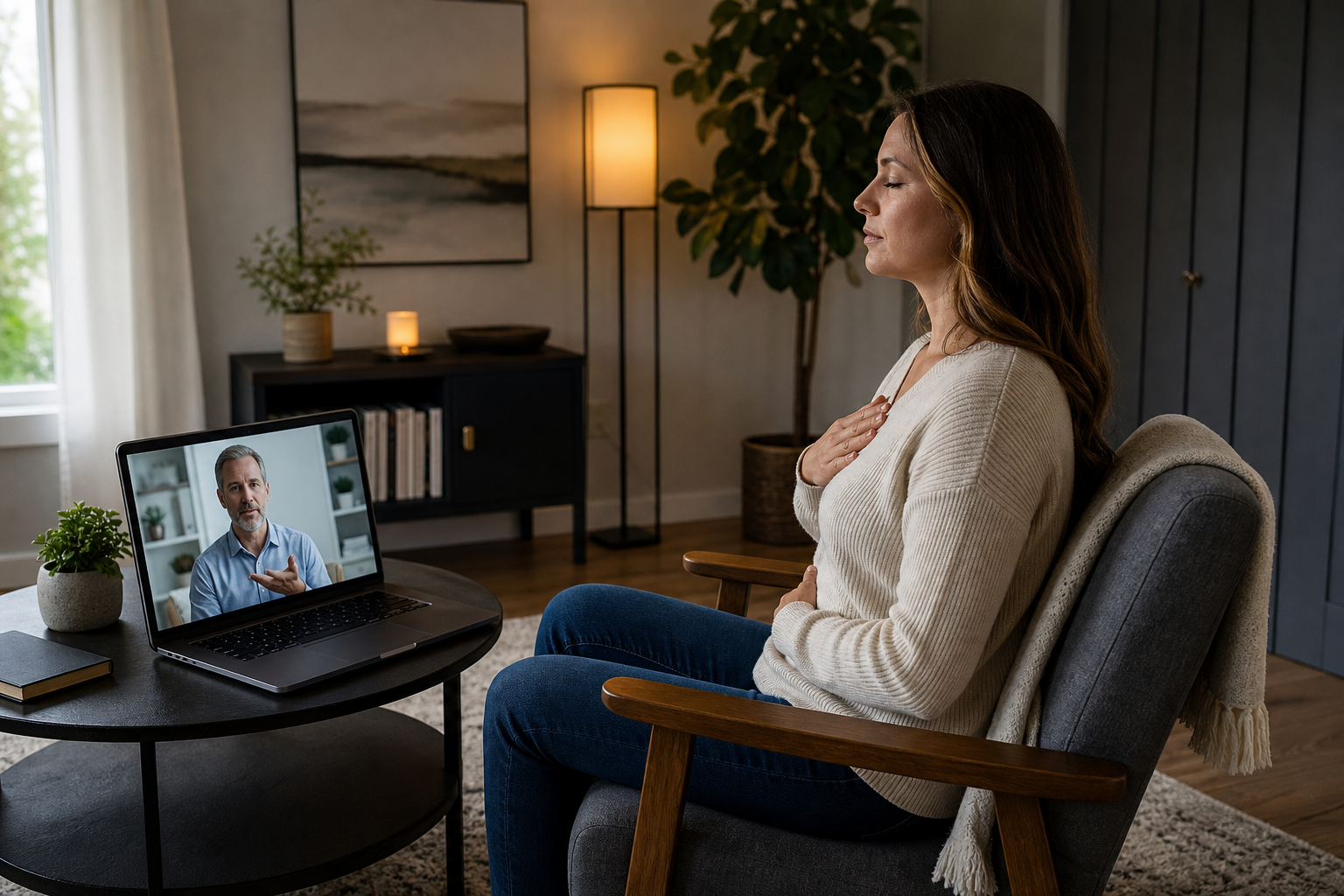
If you are curious about hypnotherapy but not quite ready to call, congratulations: you are behaving like a perfectly normal human with a browser, a question, and perhaps three tabs open about whether hypnosis is real. Around Columbus, many people want practical answers before they schedule anything. They want to know what happens, whether they will be in control, whether virtual sessions can actually work, and whether they have to drive across town at 5:15 p.m. on I-270 just to relax.
At Columbus Hypnotherapy, the answer to that last one is refreshingly simple: remote hypnotherapy can be a very convenient first choice. Meeting virtually lets you settle in from your own home, keep your privacy, avoid the weather, skip Columbus traffic, and create a calm environment where change-work can feel less like an appointment and more like a focused reset. Whether you are in Reynoldsburg, Blacklick, Powell, Canal Winchester, Pickerington, Hilliard, Gahanna, Dublin, Clintonville, Polaris, or near the OSU Campus area, the goal is to make the next step easier, not add one more errand to your week.
Direct answer: what are the most commonly asked questions about hypnotherapy?
The most commonly asked questions about hypnotherapy are: Will I lose control? What does hypnosis feel like? Does remote hypnotherapy work? How many sessions will I need? Can hypnosis help with habits, stress, confidence, or performance? Is it safe? What if I cannot be hypnotized? Is it like stage hypnosis? And how do I know whether it is the right fit for me?
The short version: hypnotherapy is typically a collaborative, guided process that uses focused attention, relaxation, imagery, and suggestion to support personal change. You are not unconscious. You are not giving up your will. You are participating. It is not a magic button, and it should not replace appropriate medical or mental-health care. But for many people, it can be a practical tool for working with patterns, habits, motivation, confidence, and emotional responses in a calmer, more focused way. Now let’s answer the questions Columbus-area clients tend to ask before requesting a callback.
1. What is hypnotherapy, in plain English?
Hypnotherapy is the use of hypnosis in a structured, goal-oriented session. Hypnosis is often described as a state of focused attention and increased responsiveness to helpful suggestions. That may sound mysterious until you remember that your mind already does focused states all the time.
You know that moment when you drive from Clintonville to Dublin and realize you were thinking so deeply you barely remember the last few exits? Or when you are so absorbed in a movie that your living room temporarily disappears? Or when you are staring at your phone in a grocery line and someone says your name twice before you hear them? Those are not hypnotherapy, but they are everyday examples of attention narrowing and imagination becoming more vivid.
In a session, that natural ability is used intentionally. You and the hypnotherapist identify a goal, quiet some of the mental noise, and work with the thoughts, associations, and automatic patterns that may be keeping you stuck. The process is usually calm, conversational, and much less dramatic than television has trained people to expect.
2. Does remote hypnotherapy really work?
Remote hypnotherapy can be a strong fit for many clients. In fact, for some people, being at home makes the process easier. You can choose your chair, your blanket, your lighting, and your level of privacy. You do not have to sit in traffic from Pickerington to Polaris, hunt for parking, or arrive slightly frazzled and pretend you are relaxed.
A good remote session still has structure. You need a quiet, safe place where you will not be interrupted. You should not be driving, cooking, supervising small children in another room, or pretending the dog will definitely stay quiet because the dog has made no such promise. Headphones may help. A stable internet connection helps. A comfortable upright or reclined position helps. For service-specific context, review Columbus Hypnotherapy services before deciding what questions to bring into a consultation.
Remote work is also practical for Central Ohio schedules. If you live in Hilliard but work near the OSU Campus area, or you are in Canal Winchester with a packed family calendar, virtual sessions remove one of the biggest barriers: logistics. When the process is easier to attend, it is easier to follow through.
3. Will I be asleep or unconscious?
Usually, no. Most people are awake and aware during hypnosis. Some feel deeply relaxed. Some feel mentally alert but physically calm. Some drift in and out a bit, the way you might while resting with your eyes closed. People often remember most or all of the session, though some parts may feel dreamlike or less sharply detailed.
Hypnosis is not the same as sleep. It is more like focused absorption. Your attention turns inward, and your mind becomes more available for useful imagery, reframing, and suggestion. If something important happens, you can respond. If you need to adjust your position, cough, scratch your nose, or say something, you can. In other words, you do not become a helpless potato. A relaxed potato, maybe. But still very much you.

4. Will I lose control? No. This is probably the most common fear, and it deserves a direct answer. Hypnotherapy is not mind control. You do not surrender your values, your judgment, or your ability to say no. A hypnotherapist cannot force you to do something that violates your beliefs or intentions.
The stage-hypnosis image has done a lot of heavy lifting here, and not all of it helpful. Stage hypnosis is entertainment. People who volunteer for it are usually willing to be playful, social, and responsive in front of an audience. Clinical or personal-change hypnotherapy is different. It is private, collaborative, and focused on your goals. At Columbus Hypnotherapy, the work is not about overpowering you. It is about helping you access your own attention, motivation, imagination, and internal resources more effectively.
5. What does hypnosis feel like? People describe it in different ways. Some say it feels like meditation. Others say it feels like daydreaming with a purpose. Some notice heaviness in the body, lightness, warmth, tingling, or a comfortable stillness. Others do not feel especially relaxed but notice they are very focused.
A common surprise is that hypnosis can feel ordinary. People sometimes expect fireworks, violins, or a cinematic fog machine. Instead, they may think, Wait, I can still hear the furnace and the neighbor’s leaf blower. That is fine. You do not need to vanish into another dimension for useful work to happen. The key is not whether you feel a particular sensation. The key is whether you can participate, follow along, and engage with the process.
6. What can hypnotherapy help with?
People often seek hypnotherapy for habit change, smoking cessation support, weight-related behavior patterns, confidence, public speaking, stress management, test performance, sleep routines, motivation, procrastination, sports or performance mindset, fears, and general personal growth. That said, careful wording matters. Hypnotherapy is not a guaranteed cure, and no ethical provider should promise instant results for every person. Human beings are not vending machines where you insert one session and receive a brand-new personality. Change can be quick for some goals and gradual for others.
Hypnotherapy may support change by helping you rehearse new responses, interrupt old associations, calm the body’s stress response, strengthen motivation, and align conscious goals with automatic behavior. It can be a helpful part of a broader plan, especially when the goal involves patterns you already understand but have had trouble changing through willpower alone.
7. When should I talk to a doctor or licensed mental-health professional first? This is important. If you have symptoms that are sudden, severe, dangerous, medically unexplained, or worsening, start with appropriate medical care. If you are experiencing chest pain, fainting, neurological symptoms, severe depression, suicidal thoughts, psychosis, uncontrolled panic, trauma symptoms that feel unmanageable, or any condition that may require diagnosis or treatment, please contact a qualified medical or mental-health professional first.
Hypnotherapy can be supportive, but it is not emergency care. It is not a substitute for prescribed medication, psychotherapy, medical evaluation, or treatment from a licensed clinician when those are needed. If you are already under care, it may be wise to ask your provider whether hypnotherapy is appropriate as a complementary support. A grounded hypnotherapy practice should respect the limits of the work. That is not a weakness. It is part of keeping clients safe.
8. How many sessions will I need? The honest answer is: it depends. Some goals are focused and may respond in a small number of sessions. Other goals involve layered habits, long-standing emotions, environmental triggers, or multiple life stressors, and those may benefit from a more gradual plan.
Factors that can affect the number of sessions include your goal, your readiness, your consistency between sessions, your stress level, your support system, and whether the issue is simple or complex. For example, building confidence for a presentation may be different from untangling years of emotional eating patterns during a stressful season of life.
A free evaluation is useful because it gives you a chance to discuss what you want, ask questions, and get a clearer sense of what a reasonable next step may look like. No one should need a crystal ball or a 47-session contract to begin with practical clarity.
9. What if I cannot be hypnotized?
Most people can experience some form of hypnotic focus if they are willing, able to follow instructions, and comfortable enough to participate. But people vary. Some respond very vividly. Some are more analytical and need a little time to settle in. Some do better with conversational approaches than with long relaxation inductions.
If you are the kind of person who thinks, I am too logical for hypnosis, you may still do perfectly well. Hypnosis does not require you to stop thinking. It often works best when your thinking mind is invited into the process instead of treated like a bouncer at the door.

What matters most is willingness, rapport, and a method that fits you. If you are determined to prove nothing can happen, you may succeed at proving it. The mind is talented like that. But if you are curious and cooperative, there is usually room to work.
10. Is hypnotherapy safe? For many people, hypnotherapy is considered a low-risk approach when practiced responsibly and used for appropriate goals. Sessions are typically relaxing and noninvasive. However, suitability matters. People with certain psychiatric conditions, severe trauma symptoms, dissociation concerns, or unstable medical conditions should seek guidance from qualified healthcare professionals before beginning.
If this topic overlaps with stress, habits, or appointment fit, the Columbus Hypnotherapy services page can help frame the next conversation. A responsible hypnotherapist will not diagnose medical conditions, tell you to stop medication, promise a cure, or claim that hypnosis replaces healthcare. The safer approach is collaborative, transparent, and practical.
Before your session, you should feel comfortable asking about the process, your goal, what to expect, and what happens if you feel uncomfortable. You should never feel pressured to proceed.
11. How should I prepare for a remote session? Preparation is simple, but it matters. Choose a private location where you can sit or recline safely. Silence notifications. Let other people in the home know you need uninterrupted time. If you have pets, negotiate with them in advance, though cats are famously unwilling to sign agreements.
Use headphones if possible. Keep water nearby. Avoid alcohol or recreational substances before the session. Make sure your device is charged. If you wear contacts and prefer closing your eyes for a while, plan accordingly. You may want a notebook for insights afterward.
Also, spend a few minutes thinking about what you want instead of only what you want to stop. The mind responds well to direction. Instead of I do not want to be so nervous, you might explore I want to feel steadier, prepared, and more comfortable speaking up. That shift gives the session a clearer target.
12. How is Columbus Hypnotherapy different from just listening to a recording?
Recordings can be useful for general relaxation or reinforcement. But personalized hypnotherapy is interactive. It is shaped around your goal, your language, your objections, your history, and your responses. If your mind says, Nice suggestion, but absolutely not, a recording cannot pause and work with that resistance. A live session can. The conversation before hypnosis is also valuable. Many clients clarify their goal just by talking it through. They discover patterns, triggers, and motivations they had not fully named. Then the hypnosis portion can be more targeted.
Columbus Hypnotherapy’s remote-first approach keeps that personal attention while making access easier across Central Ohio. You can learn more or request a callback through the Columbus Hypnotherapy home page at www.columbushypnotherapy.com.
13. What happens during a typical session? A typical session may begin with conversation about your goal, what has been happening, what you have tried, and what you would like to experience instead. Then you are guided into a focused, relaxed state. The hypnotherapist may use imagery, suggestion, metaphor, rehearsal, future pacing, or other techniques to support the change you want.
Afterward, there is usually time to reorient, discuss what you noticed, and identify any practical next steps. Some clients leave with a simple exercise, reflection, or reinforcement strategy. The point is not to create a mysterious experience and send you back into life wondering what just happened. The point is to help you move forward in a way that makes sense.

14. How do I choose a hypnotherapy option in Columbus? If you are comparing options around Columbus, look for clarity, professionalism, and a tone that feels respectful. You should be able to understand how to get started, what the service is designed to do, and what it is not designed to do. Be cautious with anyone promising guaranteed cures, diagnosing conditions outside their scope, or using pressure tactics.
Also consider convenience. If remote sessions mean you are more likely to attend, more relaxed when you begin, and less stressed afterward, that is not a small detail. It may be the difference between thinking about change and actually scheduling it. Whether you are in Gahanna between meetings, in Powell after school drop-off, near Polaris after a long retail shift, or in Blacklick trying to protect one quiet hour in your week, the process should feel accessible.
If you are still reading, you probably have a goal in mind. Maybe it is a habit you are tired of negotiating with. Maybe it is stress, confidence, motivation, or a pattern that keeps showing up like an unwanted calendar reminder. You do not need to have everything figured out before you ask questions. That is what the evaluation is for. Free Your Mind, Change Your World. Call 380-233-8070 to schedule a free evaluation, or visit www.columbushypnotherapy.com and complete the brief callback form.
Can hypnotherapy work over Zoom or by phone?
Yes, many people find remote hypnotherapy comfortable and effective because they can relax in a familiar space without commuting. A stable connection, a quiet room, and a safe place to sit or recline are important. Remote sessions are especially convenient for Columbus-area clients who would rather not build their personal growth plan around traffic patterns.
Will I lose control during hypnosis? No. Hypnosis is not mind control. Most clients remain aware, can respond if needed, and can stop the process at any time. Hypnotherapy is collaborative. You are not being overpowered; you are being guided.
How many hypnotherapy sessions will I need? It depends on your goal, history, readiness, and the complexity of the issue. Some goals are brief and focused, while others benefit from a series of sessions. A free evaluation can help clarify a sensible starting point.
Is hypnotherapy a replacement for medical or mental-health care?
No. Hypnotherapy can be a supportive personal-change approach, but it is not a substitute for medical diagnosis, emergency care, therapy, or prescribed treatment. If symptoms are severe, sudden, dangerous, or medically unexplained, contact an appropriate licensed professional first.
Bottom line
The most common questions about hypnotherapy usually come down to trust: Can I trust the process? Can I trust myself to stay in control? Can I trust that this will be practical and not weird? Those are fair questions.
Hypnotherapy is not magic, and it is not a medical cure-all. It is a focused, collaborative method that may help people work with habits, stress responses, confidence, motivation, and personal change. With remote sessions, Columbus Hypnotherapy makes that work easier to access from home, whether home is in Reynoldsburg, Dublin, Hilliard, Canal Winchester, Pickerington, Gahanna, Powell, Blacklick, Clintonville, Polaris, or the OSU Campus area. If you are curious, the next step does not have to be dramatic. It can simply be a conversation.
Related local resources: Columbus Hypnotherapy services and Hypnosis to stop smoking in Columbus.
Questions Columbus Clients Ask
Can hypnotherapy work over Zoom or by phone?
Yes, many people find remote hypnotherapy comfortable and effective because they can relax in a familiar space without commuting. A stable connection, a quiet room, and a safe place to sit or recline are important.
Will I lose control during hypnosis?
No. Hypnosis is not mind control. Most clients remain aware, can respond if needed, and can stop the process at any time. The work is collaborative, not something done to you against your will.
How many hypnotherapy sessions will I need?
It depends on your goal, history, readiness, and the complexity of the issue. Some goals are brief and focused, while others benefit from a series of sessions. A free evaluation can help clarify a sensible starting point.
Is hypnotherapy a replacement for medical or mental-health care?
No. Hypnotherapy can be a supportive personal-change approach, but it is not a substitute for medical diagnosis, emergency care, therapy, or prescribed treatment. If symptoms are severe, sudden, dangerous, or medically unexplained, contact an appropriate licensed professional first.