
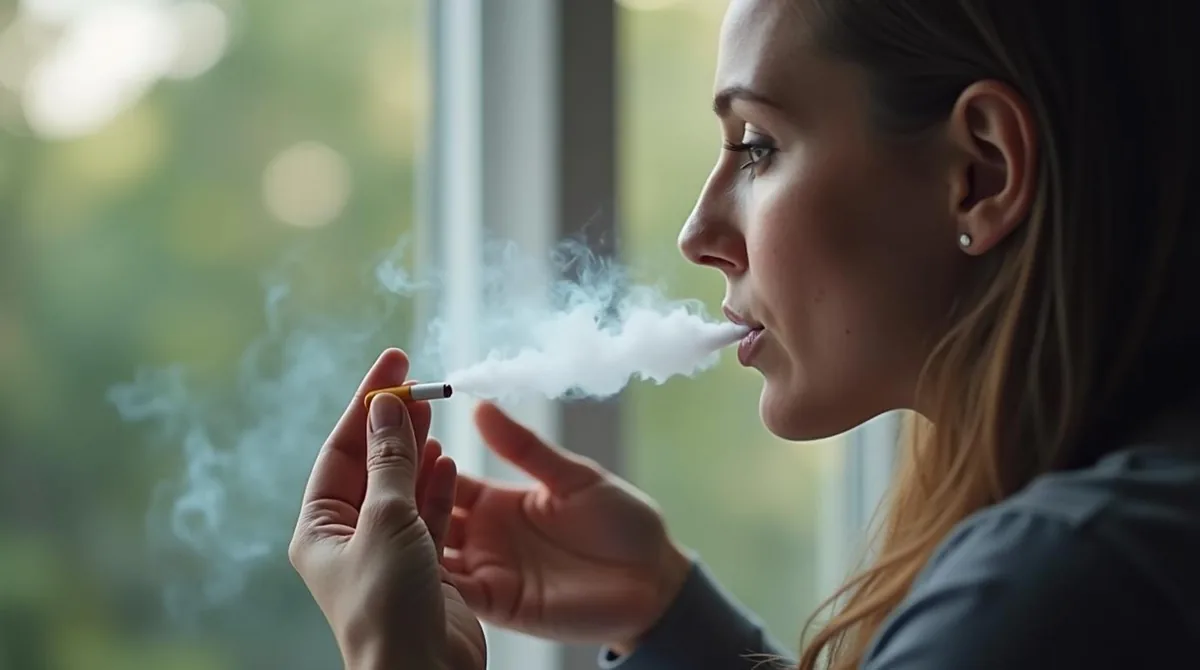
Does Hypnosis Work for Quitting Smoking in Dayton?
A direct answer for Dayton-area readers asking whether hypnosis can help with smoking or vaping, what the evidence says, and when to contact Everleigh Hypnosis.
People in Dayton, Centerville, Beavercreek, and nearby suburbs often ask Everleigh Hypnosis a direct question: does hypnosis actually work for quitting smoking or vaping?
The direct answer is this: hypnosis may help some people change smoking or vaping habits, especially when the habit is tied to stress, routine, boredom, driving, after-meal cues, or automatic cravings. But hypnosis should not be treated as a guaranteed cure, and the research does not prove that it is better than every other quit-smoking method.
That means the practical question is not, "Will hypnosis magically make me quit?" A better question is, "Could hypnosis be a useful support if I am ready to change the habit and want help interrupting the triggers that keep pulling me back?"
For many people across Dayton, Centerville, Beavercreek, Kettering, Oakwood, Bellbrook, Miamisburg, Huber Heights, Vandalia, Englewood, and surrounding Miami Valley communities, that is the more useful way to think about it.
What Hypnosis Is Trying to Help With
Smoking and vaping are rarely just about nicotine. People often describe a layered pattern:
- A physical urge or craving
- A familiar hand-to-mouth routine
- A stress response
- A reward after work, meals, driving, or conflict
- A social cue
- A fear of being uncomfortable without the habit
Hypnosis for smoking cessation usually focuses on the habit loop. The goal is to help the person become more responsive to new suggestions, new associations, and new mental rehearsals while they are in a focused, receptive state.
That does not remove personal responsibility. It does not erase biology. It does not mean someone is asleep or controlled. A practical hypnosis session is usually aimed at helping the person strengthen motivation, picture life without the habit, rehearse healthier responses to triggers, and reduce the automatic pull of old cues.
What the Evidence Says
The evidence should be discussed carefully.
The National Center for Complementary and Integrative Health notes that there is some evidence suggesting hypnotherapy may help smoking cessation, but the data are not definitive. Cochrane's evidence summary is also cautious: there is not enough evidence to determine whether hypnotherapy is more effective than other behavioral support or quitting without assistance.
That matters because local guidance still needs to be honest. If an article promises that hypnosis will make every Dayton smoker quit, it is not useful, credible, or responsible.
A better evidence-based position is:
- Hypnosis is a real method used in clinical and behavior-change settings.
- It has been studied for smoking cessation.
- Some people report benefit.
- The current evidence does not support guaranteed outcomes.
- People should compare hypnosis with other supports and choose a path that fits their needs.
That answer is less flashy, but it is more trustworthy.
Who May Be a Better Fit for Quit-Smoking Hypnosis?
Someone may be a reasonable fit to ask about hypnosis for quitting smoking, vaping, chew, or marijuana habits if they already know they want to quit and want help with the mental and behavioral side of the habit.
Common reasons people ask about hypnosis include:
- "I quit for a while, then stress pulls me back."
- "I smoke automatically when I drive."
- "I vape without thinking about it."
- "I use cigarettes as a break or reward."
- "I am embarrassed that I still do this."
- "I want to stop, but part of me still wants the habit."
Those are the kinds of patterns hypnosis is often designed to address: triggers, associations, internal resistance, and repeated mental rehearsal.

Smoking, Vaping, Chew, and Marijuana Are Not Always the Same Question
Local readers often group these together because they are all habit questions, but the details can be different:
- Cigarettes may be tied to breaks, driving, coffee, or after-meal routines.
- Vaping may happen more frequently because the device is easy to reach throughout the day.
- Chew may be tied to work routines, long drives, or specific social settings.
- Marijuana use may be tied to sleep, boredom, stress, or unwinding at night.
That is why a useful consult question is not just "can hypnosis make me stop?" A better question is: what pattern is keeping this habit in place, and what would I need to rehearse differently?
Who Should Be More Careful?
Hypnosis is not the right first answer for every situation.
If someone has urgent medical symptoms, severe withdrawal concerns, pregnancy-related questions, medication questions, severe anxiety, trauma symptoms, self-harm thoughts, or another significant mental health concern, they should talk with an appropriate licensed medical or mental health professional. This article is educational and should not replace medical care.
People who use tobacco heavily may also want to ask a clinician about evidence-based smoking cessation supports, nicotine replacement, medications, counseling, quitlines, or combined approaches.
Hypnosis may still be part of a plan for some people, but it should not be positioned as the only possible tool.
Local Questions Dayton-Area Readers Should Ask
Before scheduling quit-smoking hypnosis in Dayton or a nearby suburb, ask practical questions:
- What happens during the session?
- How should I prepare before I arrive?
- Will the session focus on smoking, vaping, or both?
- How are cravings and trigger moments addressed?
- What should I do after the session?
- Is this a one-session approach or a multi-session process?
- When would you recommend medical or counseling support instead?
Those questions help separate serious support from vague claims.

What to Notice Before You Ask
Before contacting Everleigh Hypnosis, notice:
- The time of day the urge is strongest
- Whether the habit is linked to driving, work, meals, stress, or boredom
- Whether you are using nicotine, THC, chew, or more than one product
- What you have already tried
- Whether medical or mental health concerns should be mentioned
This makes the first conversation more useful and keeps the page focused on real quit-smoking decisions instead of broad promises.
How This Connects to Everleigh Hypnosis
Everleigh Hypnosis serves readers across Dayton and nearby suburbs who want direct, practical answers before scheduling. If your main question is whether hypnosis might be a fit for smoking, vaping, chew, or related habit patterns, start by reviewing Everleigh's quit smoking and vaping hypnosis information.
If you are ready to ask about your specific situation, use the Everleigh Hypnosis contact page or call 937-777-9293.
Quick Local Fit Table
| Dayton-area question | What it may mean | Useful next step |
|---|---|---|
| I smoke on the drive between work and home. | The habit may be tied to commute timing, stress, or a transition ritual. | Notice the exact stretch of the drive, time of day, and feeling before the urge. |
| I vape after meals or while watching TV. | The pattern may be connected to routine, boredom, or reward. | Track the three strongest repeat triggers for one week. |
| I use chew or marijuana in specific situations. | The behavior may be situational rather than constant. | Identify whether the urge is tied to people, places, stress, or sleep. |
| I already tried to quit and restarted. | Relapse information can help clarify which trigger was underestimated. | Bring the restart story into the consult instead of treating it as failure. |

Decision Checklist Before Asking About Quit-Smoking Hypnosis
- Know whether the main issue is cigarettes, vaping, chew, marijuana habits, or more than one pattern.
- Write down the top three moments when the urge is strongest.
- Note whether the urge is physical, emotional, social, or automatic.
- Decide what would count as progress in the first week.
- Ask whether hypnosis should be paired with medical cessation support, nicotine guidance, or another professional resource.
How to Make This Question More Specific
A stronger question than "does hypnosis work?" is: "Could hypnosis help with the specific trigger that keeps pulling me back into smoking or vaping?" That is more useful for people in Dayton, Centerville, Beavercreek, Kettering, Oakwood, Miamisburg, Huber Heights, Vandalia, Englewood, and nearby communities because it focuses the conversation on daily life rather than a generic promise.
If the trigger is driving, the conversation should connect to local commute routines. If the trigger is stress after work, the focus should include the transition from work to home. If the trigger is social, the discussion should include evenings, weekends, and the people or places that make the habit feel normal.
Experience and Local Context
Everleigh Hypnosis hears quit-smoking questions from people who already know the habit is hurting them, but still feel pulled back by driving routines, work stress, after-meal cravings, or evening reward patterns. The local question is usually not whether smoking is unhealthy. Readers already know that. The useful question is what keeps the habit repeating in ordinary Dayton-area life.
Expertise, Scope, and Trust Notes
This article treats smoking, vaping, chew, and marijuana habits as behavior-change questions with medical and addiction-related boundaries. It uses cautious language because hypnosis should not be promoted as a guaranteed cure or a replacement for evidence-based cessation support.
This article is reviewed for local clarity, realistic hypnosis language, and reader safety. It is educational content from Everleigh Hypnosis, not medical advice, mental health diagnosis, emergency guidance, or a guarantee of results.
Public Experience Signal From Everleigh Hypnosis
Everleigh Hypnosis publishes testimonials on its main website, including a quit-smoking testimonial where the client says they are "finally smoke-free." That kind of public experience signal is useful for trust, but it should still be read carefully: one person's experience does not guarantee the same result for every smoker, vaper, or tobacco user.
For this article, the responsible takeaway is that Everleigh Hypnosis has public client-experience content related to smoking cessation, and readers should still ask practical questions about fit, preparation, triggers, and whether medical cessation support should also be involved.
Case-Study Style Details Worth Collecting Before Publication
- Was the person working on cigarettes, vaping, chew, marijuana habits, or more than one pattern?
- What trigger changed first: driving, stress, meals, work breaks, or evening routines?
- Was the quote approved for public use by the client?
- Does the case study avoid promising that every person will get the same result?
- Does the story point readers to a consult rather than making a medical claim?
A practical next step for quitting smoking
Hypnosis may be useful for some people who want to quit smoking or vaping, especially when the habit is tied to automatic triggers, stress, or repeated routines. It should be described as a focused support option, not a guaranteed cure.
For people in Dayton, Centerville, Beavercreek, Kettering, Oakwood, Bellbrook, Miamisburg, Huber Heights, Vandalia, Englewood, and nearby communities, the best next step is to ask a specific question: what keeps the habit going for me, and would hypnosis be a reasonable way to work with that pattern?
That is the kind of question Everleigh Hypnosis can help you explore before scheduling.
FAQ
Does hypnosis guarantee that someone will quit smoking?
No. Hypnosis should not be presented as a guaranteed cure. It may help some people work with cravings, triggers, and automatic smoking patterns, but results vary and the evidence is not definitive.
Is hypnosis better than nicotine replacement, counseling, or other smoking cessation support?
Current evidence does not prove that hypnosis is more effective than other smoking cessation approaches. Some people still choose hypnosis because they want focused help with habit patterns, motivation, and triggers.
Can someone in Dayton ask Everleigh Hypnosis about smoking or vaping before scheduling?
Yes. Dayton-area readers can ask about smoking, vaping, preparation, expectations, and whether hypnosis seems like a reasonable support option for their situation before scheduling.
Should someone with medical concerns talk to a clinician before using hypnosis to quit smoking?
Yes. People with medical, mental health, medication, pregnancy, severe anxiety, trauma, or urgent concerns should speak with an appropriate licensed professional. This article is educational and does not replace medical care.
Sources
These source links are included to support careful, educational hypnosis content and avoid unsupported health claims.