
Direct answer
If you are in Columbus, Ohio or a surrounding Central Ohio community and you are looking for hypnosis to stop smoking, Columbus Hypnotherapy offers stop-smoking hypnotherapy with a strong remote option. That means you can work on quitting from home, in a private space, without driving across town, hunting for parking, or white-knuckling your way through I-270 traffic after a stressful day.
The service page to start with is Hypnotherapy to Stop Smoking in Columbus, OH. From there, the next step is simple: request a free evaluation so you can talk through your smoking pattern, your goals, and whether hypnotherapy is a reasonable fit. Hypnosis is not magic, and it is not a medical cure. It may, however, help many people work with the automatic parts of smoking: the hand-to-mouth habit, the after-meal routine, the drive-home cigarette, the stress response, the social cue, the I-already-blew-it spiral, and the mental bargaining that can show up when cravings get loud.
If you need medical help, nicotine replacement therapy, prescription medication, or mental-health support, those can matter too. A practical quit plan does not have to be either hypnosis or healthcare. Often, the smartest plan is the one that respects both the mind and the body.
Why this question is harder than it should be
When Columbus-area readers search for where to get hypnosis to stop smoking, the results can feel oddly incomplete. You may see a few local providers, directories, review sites, broad hypnosis pages, and national quit-smoking information. Some pages talk about hypnosis in general. Some lean hard on big promises. Others give you a phone number but not much help deciding what to do next. That leaves the real question unanswered: Where can I go, locally, if I want a clear, low-pressure conversation about whether hypnosis can help me stop smoking?
For many people in Columbus, the answer starts with comfort and convenience. If you live in Clintonville, Dublin, Westerville, Grove City, Hilliard, Gahanna, Reynoldsburg, Upper Arlington, Worthington, Pickerington, New Albany, or anywhere else in the Central Ohio orbit, getting across town can be its own stress event. Remote hypnotherapy can remove that barrier. You can be in your own chair, with your own water, your own blanket, and zero need to explain to a coworker why you are leaving early.
That privacy matters. Quitting smoking can feel personal. Some people feel embarrassed that they still smoke. Some have quit before and restarted. Some hide it from family. Some only smoke at work, in the car, or when drinking. A remote appointment can make it easier to be honest because you are not sitting in a waiting room wondering who will see you. For service-specific context, review stop-smoking hypnotherapy in Columbus before deciding what questions to bring into a consultation.
What stop-smoking hypnosis is trying to change
Smoking is rarely just one thing. Yes, nicotine dependence is physical. But the day-to-day pattern usually has layers. There is the chemical pull. There is the emotional routine. There is the identity piece: I am a smoker, I am trying to quit, I always fail, I need this to calm down. There are environmental cues: coffee, commutes, breaks, arguments, alcohol, boredom, late-night scrolling, or a certain friend who always has a lighter.
Stop-smoking hypnosis focuses on the learned and automatic side of that pattern. In a hypnotic state, people are usually relaxed but alert. You are not unconscious. You are not under someone else’s control. You are focusing your attention in a way that can make suggestions, imagery, rehearsal, and new associations feel more vivid and usable.
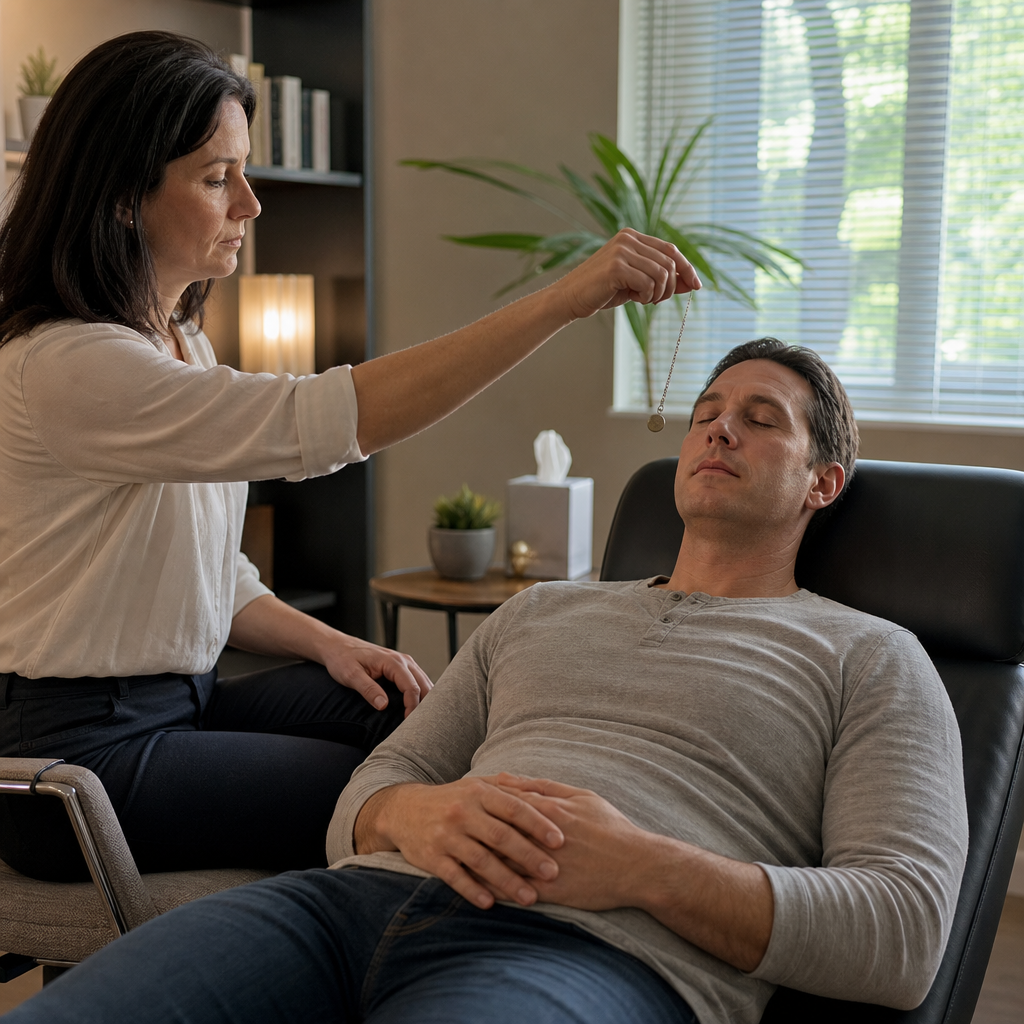
For example, hypnotherapy may help you rehearse yourself moving through a craving without lighting up. It may help you mentally unlink cigarettes from stress relief. It may help you picture your quit date with more confidence and less dread. It may help you build a new response to the moment when your hand reaches for the pack before your conscious brain has voted on it. That is the practical territory: patterns, cues, attention, motivation, self-talk, and follow-through.
Why remote sessions can be a good fit for Columbus clients
Remote stop-smoking hypnotherapy is not a second-best option. For many clients, it is the better option.
You do not have to plan around rush hour on 315. You do not have to sit in a parking lot feeling tense before the session. You do not have to add another errand to a packed day. And after the appointment, you can stay in a calm environment instead of immediately re-entering traffic, noise, and the temptation loop of a convenience store stop.
There is also a useful psychological benefit: the work happens in your real life. If your main smoking trigger is your back porch, your garage, your home office, or your evening routine, then doing change work from home can feel relevant and grounded. You are not practicing change in a distant office and hoping it transfers later. You are building a new association closer to the place where the habit often lives.
A good remote session still needs the basics. You need a quiet space, a stable connection, headphones if possible, and enough privacy to speak honestly. You should not be driving, multitasking, cooking dinner, or half-listening while answering emails. Hypnotherapy is active participation, not background audio.
What to ask before you schedule
Before choosing hypnosis to stop smoking, ask a few plain questions. You do not need to become a professional researcher. You just need enough information to feel comfortable. Ask whether the provider works with smoking cessation specifically. Ask what the evaluation includes. Ask how they handle cravings, triggers, relapse prevention, and follow-up. Ask whether remote sessions are available. Ask what you should do before the first appointment. Ask what hypnosis can and cannot reasonably do.
A grounded answer should sound practical, not theatrical. Be cautious with anyone who guarantees a cure, shames you for smoking, tells you to avoid medical advice, or acts as if nicotine dependence is simply a lack of willpower. Smoking is a real behavior pattern with physical, emotional, social, and environmental parts. You deserve help that treats it that way. It is also fair to ask yourself a few questions:
- Do I actually want to stop, or am I mainly trying to satisfy someone else?
- What are my top three smoking triggers?
- When have I quit before, and what pulled me back?
- Do I want to stop completely, or am I still negotiating with the habit?
- Would I benefit from combining hypnosis with medical quit-smoking tools?
Honest answers are more useful than perfect answers.
Does hypnosis replace nicotine patches, medication, or counseling?
No. Hypnosis should not be presented as a replacement for appropriate medical care, mental-health care, or evidence-based quit-smoking tools. The CDC points people toward proven quit-smoking supports, including counseling, quitlines, medications, and practical planning. Smokefree.gov also offers tools for cravings, quit plans, texting support, and everyday strategies. Those resources can be valuable, especially for people with heavy nicotine dependence, long smoking histories, health concerns, or repeated relapses.
Hypnotherapy can fit into that bigger picture by focusing on the mental and behavioral side of quitting. It may help you strengthen motivation, interrupt routines, reduce the emotional charge around cravings, and rehearse better responses. But if you are using nicotine replacement therapy or prescription medication, talk with a qualified healthcare professional about what is right for you.
If you have chest pain, trouble breathing, severe withdrawal symptoms, pregnancy-related concerns, major depression, panic symptoms, substance-use concerns, or any other significant medical or mental-health issue, please involve a licensed healthcare provider. Hypnosis can be supportive, but it is not emergency care and it is not a substitute for diagnosis or treatment.
What a practical quit-smoking hypnosis plan may include

Every provider works a little differently, but a sensible plan usually starts with a conversation. You should be able to talk about when you smoke, why you smoke, what you have tried, what worked briefly, what failed spectacularly, and what you want life to look like after cigarettes. If this topic overlaps with stress, habits, or appointment fit, the Columbus Hypnotherapy services page can help frame the next conversation.
From there, hypnotherapy may include several pieces. First, there is the quit identity. Many smokers get stuck in the identity of someone trying not to smoke. That sounds harmless, but it can keep the cigarette at the center of the story. Hypnosis may help you rehearse the identity of someone who is done, someone who handles stress differently, someone who does not need to check pockets before leaving the house.
Second, there are trigger rehearsals. If coffee is a trigger, your mind may need a new coffee routine. If driving is a trigger, you may need a new car ritual. If stress is a trigger, you may need a response that is faster than lighting up. Hypnosis can use mental rehearsal to make those alternatives feel more familiar before the real test arrives.
Third, there is craving management. A craving can feel like a command, but it is usually more like a wave. It rises, peaks, and falls. Hypnotherapy may help you notice that wave without treating it as an emergency. That matters because many people do not relapse after hours of careful debate. They relapse in a fast, automatic moment.
Fourth, there is future pacing. This is a fancy way of saying you mentally practice upcoming situations: the first smoke-free commute, the first cookout, the first argument, the first patio drink, the first bad day at work. Your brain learns through rehearsal. If you only rehearse failure, the old pattern stays polished. If you rehearse success in a believable way, you give yourself more options.
How to know whether you are ready
You do not have to feel 100 percent confident before you schedule. Most people do not. If confidence were enough, fewer people would be searching for help. Readiness is more about willingness. Are you willing to stop treating cigarettes as your best stress tool? Are you willing to be honest about the situations where you are most vulnerable? Are you willing to practice a new response even when the old one feels easier? Are you willing to get support instead of turning quitting into a private wrestling match?
It is fine if part of you wants to quit and part of you is nervous. That ambivalence is common. Hypnotherapy can be useful precisely because it works with the part of change that does not respond well to lectures, scare tactics, or another list of reasons smoking is bad. Most smokers already know the reasons. The missing piece is often how to get through the moments when knowing is not enough.

Where Columbus Hypnotherapy fits. Columbus Hypnotherapy is a local option for Columbus and Central Ohio clients who want a practical, private way to explore stop-smoking hypnosis. The remote-first convenience is especially helpful if your schedule is full, you prefer privacy, or you simply do not want your quit plan to depend on whether traffic cooperates.
The first step is not a dramatic commitment. It is a free evaluation. That conversation helps clarify your goal, your smoking pattern, and whether hypnotherapy is a sensible next step. If it is not the right fit, that matters too. Good help should be honest help. You can learn more on the stop-smoking service page here: Hypnotherapy to Stop Smoking in Columbus, OH.
A simple pre-session checklist
Before your evaluation or first session, it can help to write down a few details. Keep it simple. This is not homework for a grade.
- How many cigarettes do you typically smoke in a day?
- When is the first cigarette of the day?
- What are your strongest triggers?
- What have you tried before?
- What helped, even briefly?
- What situations are you worried about after quitting?
- Are you using or considering patches, gum, lozenges, medication, counseling, or a quitline?
- What would be better in your life if smoking were no longer running the schedule?
That last question matters. Quitting is not only about removing cigarettes. It is about getting something back: breath, money, taste, energy, confidence, time, self-respect, freedom from planning the next smoke break. Your reason does not have to impress anyone else. It just has to mean something to you.
Where can I get hypnosis to stop smoking in Columbus?
Columbus-area clients can contact Columbus Hypnotherapy for stop-smoking hypnotherapy, including remote sessions for people in Columbus and surrounding Central Ohio communities. Start with the stop-smoking service page or request a free evaluation by phone or callback form.
Can hypnosis make me stop smoking in one session? Some people experience a strong shift quickly, but a guaranteed one-session cure is not a responsible promise. Smoking involves habit, nicotine dependence, triggers, stress responses, and identity. Hypnosis may help with those patterns, but your results can depend on readiness, follow-through, and whether additional support is needed.
Is virtual hypnosis a real option for quitting smoking? Yes, virtual hypnotherapy can be a strong option when you have a quiet, private space and can participate without distractions. Many Columbus clients prefer remote sessions because they are comfortable, discreet, and do not require travel across Central Ohio traffic.
Should I use hypnosis by itself or combine it with other quit-smoking support? That depends on your situation. Some people choose hypnosis as their main support. Others combine it with medical guidance, nicotine replacement therapy, quitlines, counseling, or digital tools. If you have health concerns, take medication, are pregnant, or have significant withdrawal or mental-health symptoms, involve a qualified healthcare professional.
If you are ready to ask whether this is a good fit, contact Columbus Hypnotherapy or call 380-233-8070 to request a free evaluation.
Questions Columbus Clients Ask
Where can I get hypnosis to stop smoking in Columbus?
Columbus-area clients can contact Columbus Hypnotherapy for stop-smoking hypnotherapy, including remote sessions for people in Columbus and surrounding Central Ohio communities. Call 380-233-8070 or visit www.columbushypnotherapy.com to request a free evaluation.
Can hypnosis make me stop smoking in one session?
Some people report meaningful change quickly, but no ethical hypnotherapist should promise a guaranteed one-session cure. Stop-smoking hypnosis is best viewed as a focused change process that may help with triggers, habits, motivation, and self-control while you also use appropriate medical or behavioral support when needed.
Is virtual hypnosis effective for stopping smoking?
Virtual hypnotherapy can be a strong option because the client can participate from a comfortable, private place without driving across Columbus traffic. The session still depends on attention, cooperation, rapport, and a clear plan for handling real-life smoking triggers.
Should I talk to a doctor before using hypnosis to quit smoking?
If you have a medical condition, take medication, are pregnant, have significant anxiety or depression, or plan to use nicotine replacement or prescription quit-smoking medication, talk with a qualified healthcare professional. Hypnosis may be supportive, but it does not replace medical advice or treatment.